


Conscription’s Cauldron: Israel’s Home Front Braces as IDF Nabs Draft-Dodging Haredi Men
POLICY WIRE — Tel Aviv, Israel — They’re calling it a quiet reckoning, but anyone paying attention sees the fuse sizzling. Israel, still neck-deep in conflict, is tightening the...

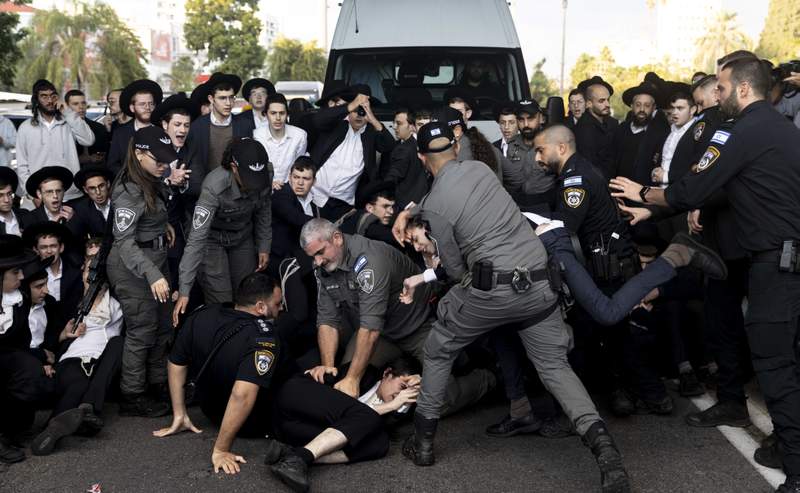
POLICY WIRE — Tel Aviv, Israel — They’re calling it a quiet reckoning, but anyone paying attention sees the fuse sizzling. Israel, still neck-deep in conflict, is tightening the screws on a societal divide that’s been gnawing at its foundations for decades: the selective military service of its ultra-Orthodox citizens. For years, Haredi men have largely sidestepped the draft, dedicating their early lives to religious study under a generations-old exemption. But with the Gaza war grinding on and reservists stretched thin, patience — particularly among the secular and national-religious populace — has run out. And the Israel Defense Forces (IDF) isn’t just grumbling about it; they’re actively preparing to haul in those who fail to report for duty, enlisting the Israel Police to help get the job done.
It’s an open secret that these exemptions have fueled deep resentment. The average Israeli faces three years of mandatory service, sometimes more, followed by years of reserve duty. Many see Haredi men as getting a free pass, often at significant public expense through state-funded religious institutions. But for the ultra-Orthodox community, their devotion to Torah study is viewed as a form of national protection, a spiritual bulwark just as vital as any F-16 or tank brigade. They simply don’t see their lives intersecting with military barracks. It’s a clash of worldviews — — and now, one of enforcement.
Sources within the Defense Ministry — who asked not to be named discussing internal plans — confirmed that the IDF’s personnel directorate has kicked its conscription process into a higher gear for eligible Haredi men. This isn’t about gently coaxing; it’s about compulsory service, backed by the strong arm of the law. “The nation is at war; everyone must contribute,” snapped Defense Minister Yoav Gallant, reflecting a sentiment shared across much of mainstream Israeli society. “We can’t ask soldiers to give their lives while others claim exemption solely based on their lifestyle choice. The law must apply equally, or we risk breaking the social contract.” Harsh words. And quite an indicator of where things stand.
But prominent Haredi figures aren’t budging. Rabbi Yitzchak Goldstein, a well-known voice within the conservative Shas party, dismissed the renewed push as political theater. “Our holy work sustains this land far more effectively than any military might,” Goldstein intoned from his Jerusalem office, the sounds of fervent study faintly audible in the background. “To interrupt sacred learning is to weaken Israel’s soul. We have generations of tradition behind us. The state doesn’t suddenly get to redefine our covenant with God.” A powerful argument, perhaps, for those who share his convictions.
The numbers don’t lie, either. According to a 2023 report from the Israel Democracy Institute, a staggering 66% of Haredi men aged 20-30 are not employed and receive full-time yeshiva exemptions from military service. This translates to tens of thousands of young men effectively outside the conscription pool — a growing burden for a country that prides itself on universal service. What happens when the IDF actually starts making arrests? That’s where it gets messy. Because you’re not just rounding up individuals; you’re challenging an entire communal identity.
It’s an awkward bind for Prime Minister Benjamin Netanyahu. His coalition government leans heavily on ultra-Orthodox parties, whose support is practically oxygen for his political survival. Any robust enforcement against their constituents risks imploding his administration at a time when he needs stability most. But doing nothing alienates everyone else. It’s political jiujitsu — with real lives — and national cohesion on the line.
This internal strife isn’t just an Israeli problem. The world watches. From Jakarta to Lahore, the Muslim world frequently frames Israel as a monolithic, aggressive entity. Such visible internal schisms — religious factions clashing with secular state mandates, protests spilling onto the streets over mandatory service — offer an interesting counter-narrative, or perhaps just another target for external commentary. It weakens the perception of an internally harmonious, unified state. And that can be just as dangerous as external threats. Because if your house isn’t in order, adversaries certainly notice. Libya’s checkpoint conundrum is one thing, but domestic disunity is another altogether.
What This Means
The IDF’s firm hand — and its request for police assistance — isn’t merely a logistical shift; it’s a societal pressure cooker dialed up several notches. Politically, this maneuver threatens to splinter Netanyahu’s delicate coalition, forcing Haredi parties into an uncomfortable corner: support the arrests or endanger the government. If they comply, they risk alienating their base. If they resist, they destabilize a wartime government. It’s a lose-lose proposition for them, creating opportunities for Israel’s political exhaustion to deepen. Economically, integrating more Haredi men into either the military or the workforce could provide a much-needed boost, alleviating the burden on the taxpayer and potentially growing the nation’s productive capacity. However, a widespread Haredi refusal — or outright resistance — could trigger civil unrest, disrupt daily life, and create new legal battles, diverting critical resources and focus during a period of intense regional instability. This isn’t just about who serves; it’s about who defines what service means to a nation fractured by faith and war.