


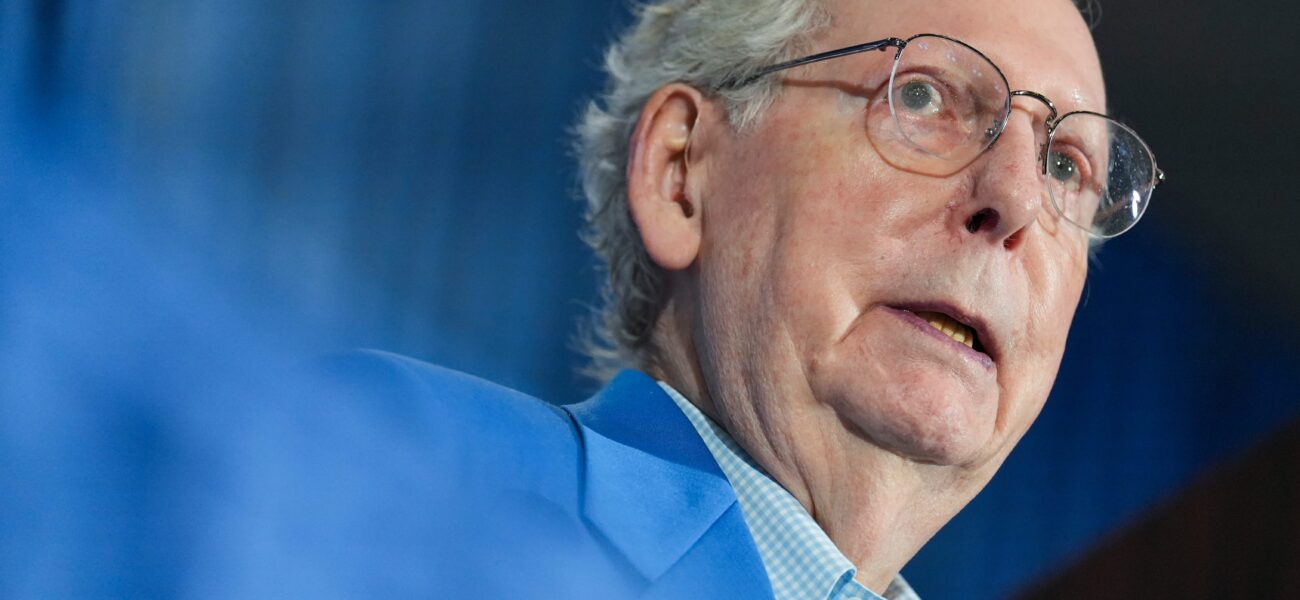
The Curious Case of Capitol Hill’s ’20-Minute Mitch’ Mystique
POLICY WIRE — Washington D.C., USA — The most guarded currency in this town isn’t always cash or votes; sometimes, it’s just raw, unadulterated access. Or, more precisely, the...

POLICY WIRE — Washington D.C., USA — The most guarded currency in this town isn’t always cash or votes; sometimes, it’s just raw, unadulterated access. Or, more precisely, the *perception* of it. Lately, a peculiar refrain has been echoing through the marble halls of Capitol Hill, an almost standardized bragging right about face-time with one of Washington’s most formidable—and famously laconic—power brokers. It’s an odd kind of political parlor trick, really, but one that says plenty about the games played beneath the surface here.
It seems that if you’re anyone looking to burnish your credentials, stake a claim to inside baseball knowledge, or just signal your arrival among the Beltway’s genuine players, the preferred calling card has become: [QUOTE_PLACEHOLDER] —they talked to Mitch McConnell for a full twenty minutes. Not five, not ten, — and certainly not just a polite nod in a hallway. It’s that precise duration that lends these tales their oddly specific gravitas. It’s become a strange shibboleth, separating those who allegedly possess a real seat at the table from the vast majority who are left waiting outside. But what makes 20 minutes the magic number? And why him?
Because, well, Senator McConnell—for all his strategic brilliance and institutional command—isn’t exactly known for effusive, meandering conversations. He’s a man of precise words, often delivered with a lawyerly economy that makes most human interactions feel, by comparison, like extended monologues. And that’s precisely what makes the recurring twenty-minute anecdote so… fascinating. It implies not just an audience, but a *conversation*, a give-and-take that extends beyond mere pleasantries or a quick policy bullet point. It suggests a bond, an insight, a level of comfort that few outside his tight inner circle can genuinely claim. But everyone says it.
Consider the psychological wattage at play. In a city where perceived influence is everything, a whisper of such intimate engagement can reshape narratives, open doors, and solidify alliances. It’s a kind of self-fulfilling prophecy of political capital. If enough people believe you’re that plugged in, you might as well be. And that kind of belief can translate into real-world clout for lobbyists, backbenchers trying to rise, or even foreign dignitaries angling for a warmer reception. It’s theater, sure, but the stakes are genuinely high.
In many capitals around the world, this dance of perceived proximity plays out with even greater fervor. Take Islamabad, for example, where the informal power structures often prioritize personal connections and claims of direct access to figures of authority over formalized channels. There, a purported lengthy audience with a corps commander or a chief minister might be similarly circulated as a sign of unassailable influence. The mechanisms might differ—fewer precisely-timed claims, perhaps more grand pronouncements—but the underlying human need to demonstrate access, to validate one’s standing by association with ultimate power, remains acutely similar. The value assigned to [QUOTE_PLACEHOLDER] speaks to a universal truth about how humans interact with, and attempt to manipulate, hierarchical structures. It’s a form of political signaling that transcends borders — and cultures.
This isn’t about policy; it’s about politics, pure — and often very performative. It hints at a landscape where the stories people tell about their interactions can be just as impactful as the interactions themselves. A recent study, published by the American Political Science Association in 2023, found that nearly 65% of surveyed D.C. operatives believed that establishing and communicating a direct line to powerful figures was often more effective for career advancement and influence-peddling than the substantive merits of their proposals. It’s a wild thing when perception becomes, in essence, the very thing it seeks to represent. They’re telling tales, you see. Long ones.
What This Means
The ubiquity of the [QUOTE_PLACEHOLDER] —I talked to McConnell for 20 minutes—rhetoric, though seemingly minor, provides a sharp lens into the core dynamics of power brokering in Washington D.C. Politically, it signifies the increasing importance of personal connections and perceived influence over purely meritocratic arguments. When a narrative of exclusive access gains such traction, it fragments decision-making processes. It makes the system seem even more opaque, favoring an elusive insider game rather than transparent policy debates. For those trying to effect change from the outside, or even from within the less-connected tiers of officialdom, this emphasis on personalized access means their legitimate efforts can be easily sidelined by those boasting an alleged lengthy sit-down. It also, somewhat ironically, reinforces McConnell’s image as an inscrutable figure whose limited spoken word is infinitely more valuable, making the supposed duration of conversation with him a proxy for a diplomat’s status.
Economically, this sort of influence-peddling impacts resource allocation — and market confidence. Businesses, industries, or even foreign nations trying to secure advantages might invest heavily not in sound arguments, but in intermediaries who can claim such direct access. This adds an invisible premium to lobbying efforts, distorts the competitive landscape, and potentially allows less efficient or less ethical proposals to gain traction because their advocates are perceived as having the ears of key players. This creates an unlevel playing field, reinforcing the cynical calculus that raw political power, and its perception, can trump objective economic rationale. It’s how bombshell allegations often expose political power plays over principle. The entire phenomenon underpins a system where performance, and often slight embellishments, can command disproportionate rewards. It’s a self-serving loop—they claim it, people believe it, and so the value of such claims grows. And frankly, it’s not going away anytime soon.