


Delhi’s Indo-Pacific Strategy: Japan Courts, India Charts Course
As Japan courts India for a strategic Indo-Pacific alliance, Delhi asserts its autonomy. Uncover India's balancing act amidst rising geopolitical tensions.

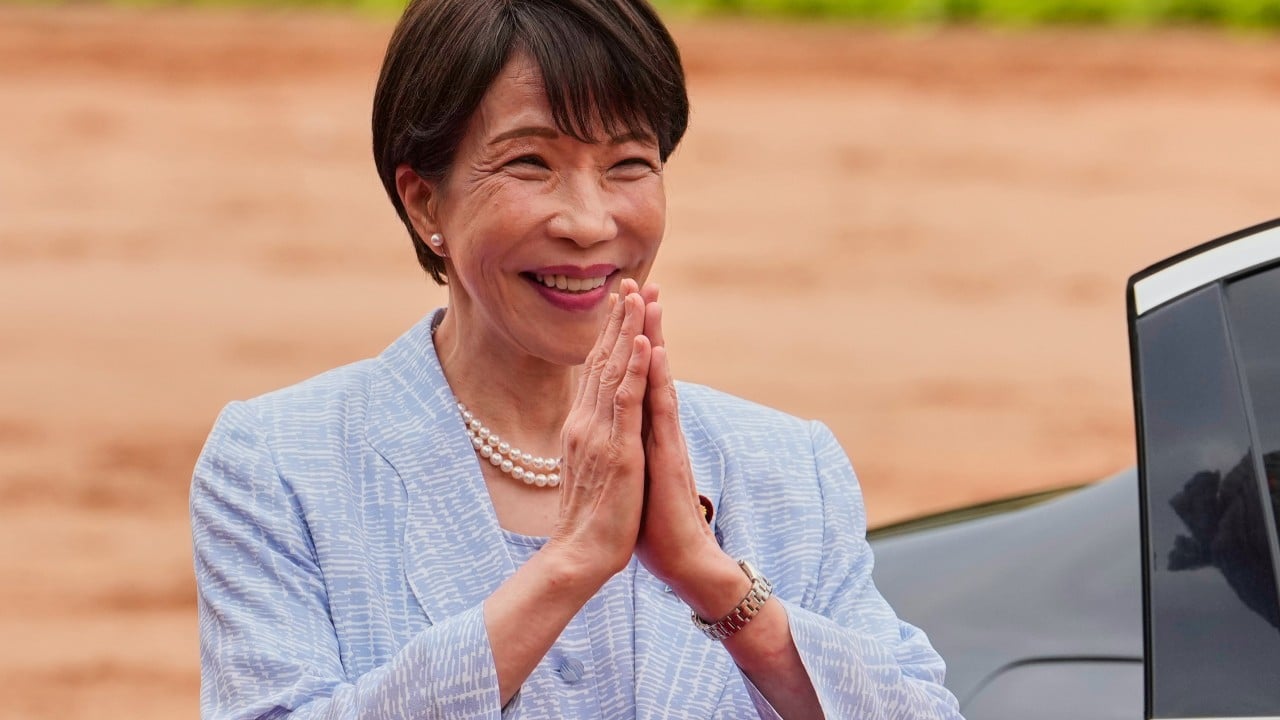
POLICY WIRE — New Delhi, India — The hum of diplomatic activity in New Delhi this week isn’t just about burgeoning economic ties or the usual polite pleasantries. No, when Japanese Prime Minister Sanae Takaichi touches down, the real story unfolds in the silent maneuvering—the complex geopolitical chess game playing out across the vast, strategic canvas of the Indo-Pacific. It’s not simply a trade delegation; it’s a direct appeal, a subtle plea, really, for India to more overtly join Tokyo’s corner in the growing contest for regional dominance.
Takaichi arrived with a clear, albeit unspoken, objective: to draw India closer into a strategic embrace aimed squarely at China’s rising influence. But here’s the rub: New Delhi has always preferred playing its own melody, rather than marching strictly to someone else’s drum. So, while talks with her Indian counterpart, Narendra Modi, covered everything from economic security to innovative tech partnerships, the underlying question gnawing at foreign policy circles is how far India will actually go.
Tokyo isn’t just worried; it’s practically exasperated by Beijing’s aggressive postures in the South China Sea, its expanding naval footprint, and its economic coercion. And who can blame them? But New Delhi’s calculus is different, balancing a volatile border dispute with China, a burgeoning trade relationship, and an unshakeable commitment to what it calls ‘strategic autonomy.’ It’s a tricky path.
During a joint press conference, a stoic Takaichi laid out her vision, emphasizing shared democratic values. “Stability in the Indo-Pacific isn’t just a Japanese concern; it’s a shared imperative. Our economic future, our collective security, depends on upholding a free and open order across these waters,” she asserted, her gaze fixed, one might observe, slightly beyond the assembled cameras. Her emphasis on ‘order’ — and ‘freedom’ isn’t accidental; it’s coded language directed straight at Beijing.
But Indian Prime Minister Modi, ever the diplomat, responded with his characteristic blend of global aspiration and national self-reliance. “India charts its own course,” he declared, nodding congenially. “But common interests, particularly in a multipolar world, naturally lead to stronger partnerships. Our bond with Japan isn’t about countering anyone, but about building a more prosperous and secure region for all.” See? The Indian government rarely speaks of ‘containment,’ even when its actions clearly signal concern.
These visits aren’t just about handshakes — and photo ops. They’re about deepening economic tendrils. Indeed, Japanese investment in India has seen a considerable uptick, reaching approximately $34 billion between 2000 and 2022, making Japan a significant, though not dominant, foreign investor, according to India’s Department for Promotion of Industry and Internal Trade (DPIIT). And they want more of that.
But the road to strategic alignment isn’t exactly smooth. India’s history of non-alignment, its massive defense requirements, and a rather messy domestic agenda often overshadow a bolder international posture. New Delhi frequently plays coy, using partnerships to gain leverage without locking itself into anyone’s ideological bloc. (It’s an art form, really, a sort of geopolitical aikido). You don’t often see India putting all its eggs in one basket; it’s just not their style. India’s Abeyance Problem, as some analysts put it, can also translate into a highly flexible foreign policy.
And then there’s the broader South Asian chessboard. In Islamabad, policy wonks are undoubtedly tracking this evolution. An Indo-Japanese strategic rapprochement complicates Pakistan’s regional outlook, especially given its own robust ‘all-weather friendship’ with Beijing, heavily cemented by the China-Pakistan Economic Corridor (CPEC). Any enhanced naval cooperation between India and Japan in the Arabian Sea or beyond could, for instance, trigger concerns about the security of critical shipping lanes important for Chinese interests, which by extension, affect Pakistan.
What This Means
This Takaichi visit, while framed around trade — and tech, is fundamentally about geopolitical competition. For Japan, India is the strategic anchor it needs in the Indo-Pacific—a massive democracy, a growing economy, and a military capable of projecting significant power. The economic implications are substantial; a more tightly integrated supply chain, particularly in areas like semiconductors and rare earth minerals, would reduce reliance on China for both nations. From a defense standpoint, more frequent joint military drills and intelligence sharing could bolster regional security architectures, making naval patrols in disputed territories a little less lonesome for Japanese warships.
But here’s the kicker: India still prioritizes its own rise above any singular alliance. It’s going to take what it can get—investment, technology, diplomatic support—without giving up its freedom to maneuver. Tokyo wants a full-fledged partner in containment. New Delhi, though wary of China, prefers a world where it isn’t anyone’s junior partner. It’s an unspoken disagreement, certainly, but one that continues to shape every high-level discussion between these two ostensibly friendly powers.