


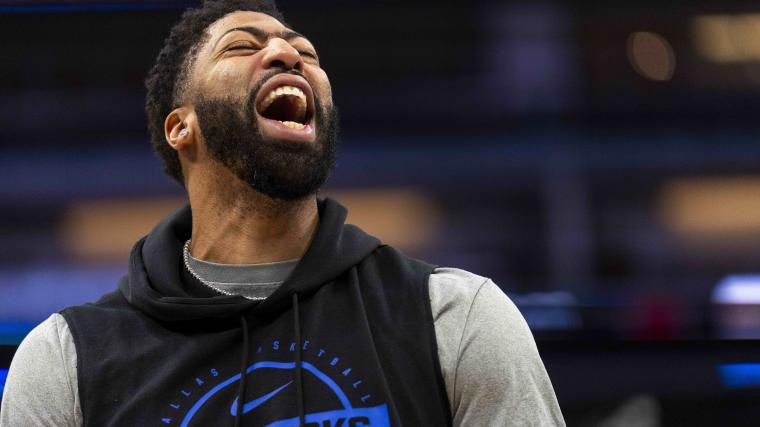
Golden State’s Last Stand: A Dynasty’s Desperate Gamble on Anthony Davis
POLICY WIRE — Oakland, California — The sun always sets, even on golden dynasties. For the Golden State Warriors, that inexorable descent isn’t just looming; it’s practically breathing down...

POLICY WIRE — Oakland, California — The sun always sets, even on golden dynasties. For the Golden State Warriors, that inexorable descent isn’t just looming; it’s practically breathing down their neck. We’re watching a juggernaut—a modern sporting marvel—grapple with its own mortality, trying to stretch a championship window that seems to be closing faster than anyone predicted. The whispers, you see, aren’t just about another star acquisition; they’re about an empire clinging to its last threads of glory, fixated on one man: Anthony Davis.
It’s not just a basketball story; it’s a parable about institutions and the Faustian bargains they strike when faced with their end. You’d think a team that’s amassed four titles in under a decade would have a clear succession plan, a smooth transition. But, nah. This is professional sports. It’s about star power. And when yours starts to dim, you don’t build; you hunt. Fast. And expensive. So, naturally, the Warriors are reportedly fixated on the Washington Wizards’ often-injured but undeniably electric big man. A high-stakes wager, wouldn’t you say?
Davis, a true two-way force when healthy (a mighty big ‘when,’ admittedly), possesses the kind of generational talent that warps salary caps and transforms rosters. He was an All-NBA second-teamer and All-Defensive first-team choice as recently as the 2023-24 season, according to Zach Buckley of Bleacher Report. But his resume also features a rather notorious section on prolonged stints on the sidelines. And that’s the rub, isn’t it?
For the Warriors, though, the cost of inaction likely feels greater than the risk of acquisition. They’re a brand built on spectacle, on winning, on transcendent individuals. Losing that narrative, well, that’s priceless. It means the Warriors’ hierarchy isn’t just looking at Davis’s stat sheet; they’re seeing an extended lease on relevancy. But at what price? What collateral? Sources within the organization, granted anonymity because they’re not cleared to discuss personnel decisions publicly, suggest a palpable tension. They need a game-changer. They need it yesterday.
But the Wizards, surprisingly, aren’t exactly rolling out the red carpet for offers. “Our blueprint for this franchise doesn’t involve asset stripping, no matter how shiny the offer,” offered Michael Winger, General Manager of the Washington Wizards, in a recent private briefing. “We’re building for sustained excellence, and sometimes that means holding onto talent, even if the chatter suggests otherwise. You can’t rebuild a house by selling off the foundational beams.” He makes a decent point. A truly pragmatic one, given the league’s volatile landscape.
And then there’s the money, always the money. The Warriors are not poor, not by any stretch. Sportico’s 2023 valuation data stated the Warriors are worth an estimated $7.56 billion, placing them among the world’s elite sports franchises. But they’ve already pushed the boundaries of fiscal prudence, running up a payroll that regularly flirts with, or exceeds, the luxury tax threshold. Adding Davis — and his expected mega-contract means more tax, more trade concessions, more long-term implications. As one long-time league executive, privy to the Warriors’ internal debates, put it: “We’re not just buying talent; we’re investing in a legacy. Every move now, it’s about cementing our place in history, not just winning a single game. You weigh the cost, sure, but what’s the cost of letting greatness slip away?”
📄 POLICY WIRE WHITEPAPER PUBLISHED: PAKISTAN'S NATIONAL SECURITY POLICY PRIORITIES
👉 READ BY CLICKING HEREThis endless pursuit of star power, this market capitalization of individual athletes, isn’t unique to American sports, by the way. It’s a phenomenon with echoes around the globe. Consider the international cricket circuits, particularly how franchises in lucrative leagues like the Pakistan Super League (PSL) in South Asia or the Indian Premier League (IPL) operate. They too engage in relentless bidding wars for a select few cricketing superstars, often sidelining local talent development in favor of guaranteed immediate returns from established names. The parallels between an NBA dynasty scrambling for its next big star and a PSL team breaking the bank for an overseas paceman are striking—a global obsession with ‘proven commodities’ that sometimes overlooks organic growth and sustainable development. Because in the world of high-stakes sports, and increasingly, in national economies, it’s always about the quickest path to perceived success.
What This Means
This isn’t merely about a basketball trade; it’s a symptom of a much larger economic — and cultural shift. The Warriors’ aggressive pursuit of Davis, despite his injury history and the gargantuan financial commitment, speaks to the immense pressure on established entities—whether sports teams, corporations, or even nations—to maintain relevance and market share. When NBA’s ruthless economics demand instant gratification, long-term strategies often fall by the wayside. The implied message is clear: if you’re not chasing the next big thing, you’re already falling behind. This creates an environment of perpetual bidding wars for scarce, elite talent—a high-stakes bet where the downside can be crippling luxury tax bills, shattered locker room chemistry, and ultimately, an accelerating decline into irrelevance. It’s a model of concentrated power and resources, reinforcing the notion that only the wealthiest can compete, pushing smaller markets or developing franchises into an almost impossible climb. The Davis saga is a financial tightrope walk, one that could secure a future or finally, definitively, signal the end of an era.
So, the Warriors wait. They scheme. They hope. They, like many others caught in the modern talent frenzy, realize that the game isn’t just played on the court anymore; it’s won—or lost—in the murky, cutthroat world of asset management and calculated gambles. And sometimes, you know, those gambles simply don’t pay off. A harsh truth, that one.