

Grand Cosmic Speculation: Famed Investor Trashes SpaceX Amid Market Euphoria
POLICY WIRE — BOSTON, US — Not since the tulip craze or dot-com delirium has the market seen such unbridled, dare one say, cosmic optimism. And no one delivers a colder dose of reality than Jeremy...

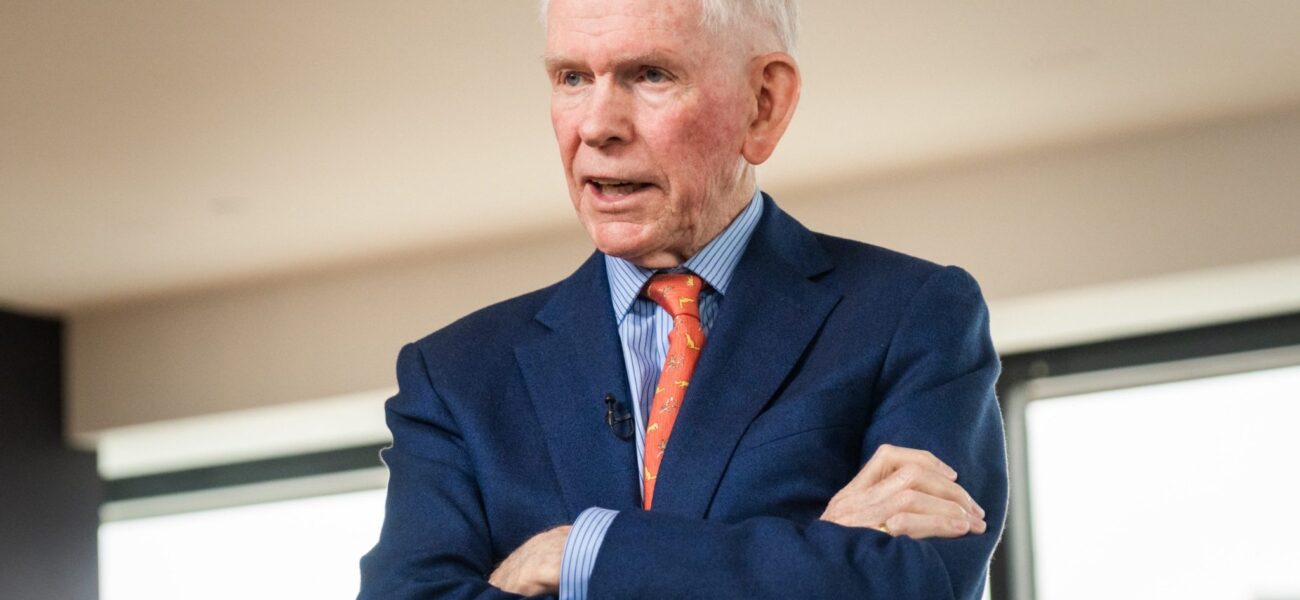
POLICY WIRE — BOSTON, US — Not since the tulip craze or dot-com delirium has the market seen such unbridled, dare one say, cosmic optimism. And no one delivers a colder dose of reality than Jeremy Grantham. He isn’t exactly the kind of guy to cheer from the sidelines. No, he’s more the type to calmly predict financial Armageddon, usually while everyone else is still uncorking the champagne.
Grantham, a figure as consistent in his bearish outlook as gravity itself, just lobbed a verbal grenade at SpaceX. He’s called its potential public offering what some might deem hyperbole. Specifically, he reportedly quipped that history itself will ultimately end up laughing at the enterprise— an investment some might dub [QUOTE_PLACEHOLDER]. Think about that. He sees it, plain as day, as an almost ludicrous overvaluation in a financial world already bursting at its seams with them.
This isn’t some backroom whisper from a junior analyst, either. It’s coming from one of the co-founders of Grantham, Mayo, Van Otterloo & Co. LLC (GMO), a man whose market calls have, over decades, proven unnervingly accurate during periods of irrational exuberance. But his latest pronouncement lands just as SpaceX, the brainchild of tech titan Elon Musk, is seemingly on top of the world. It’s now eyeing a spot among the titans on the Nasdaq 100 Index. That’s a club for the big shots, you know?
And boy, do they hate it when he’s right. When everyone’s clamoring to board the next rocket to Mars, Grantham’s just sitting there, counting the atmospheric re-entries. His firm, GMO, managed a staggering 122 billion dollars in assets as of 2021, according to publicly available data, giving his pronouncements considerable weight—even if they’re often inconvenient truths. But that hasn’t stopped the juggernaut. Musk’s space venture, despite its private status (for now), carries a valuation already in the hundreds of billions. It’s enough to make one wonder if there’s any ceiling anymore.
The juxtaposition is stark. On one side, the relentless march of technological innovation, captivating investors with dreams of extraterrestrial colonization and orbital internet. On the other, the stark, sober realism of an investment legend. He doesn’t just critique; he observes patterns. Bubble patterns. Grantham sees, in the breathless excitement around SpaceX, all the tell-tale signs of market insanity. This isn’t just about a space company; it’s about the broader market dynamics that have inflated asset prices to what he considers absurd levels. It’s about a hunger for growth at any cost—even at the cost of basic economic sense. We’re witnessing something that, to him, feels more like a collective delusion than sound investment strategy.
Look around. There’s plenty of evidence for market exuberance beyond just rocket ships. Take the recent boom in niche tech stocks or even digital collectibles that fetch stratospheric prices for pixelated art. They’re all part of the same current, Grantham argues, one that threatens to drag down even the most seemingly bulletproof enterprises. This isn’t just a concern for day traders in Manhattan. This market froth ripples globally. Pension funds across continents, even those in places like Pakistan, are indirectly exposed to these waves of optimism and despair, via international holdings or the broader economic stability they rely on.
The investment calculus in emerging economies often considers political stability alongside economic opportunity. And while the allure of tech darlings like SpaceX draws headlines, the ripple effects of a potential market correction—which Grantham all but guarantees—could constrain capital flows and economic sentiment in developing regions, slowing down their own growth trajectories. When the global titans wobble, everybody feels the tremor. The idea of space-based internet access via Starlink, a SpaceX subsidiary, also carries implications for digital connectivity and economic empowerment in areas of South Asia previously underserved. So, these pronouncements, far from just being Wall Street fodder, actually hint at much larger, more systemic economic health markers.
📄 POLICY WIRE WHITEPAPER PUBLISHED: PAKISTAN'S NATIONAL SECURITY POLICY PRIORITIES
👉 READ BY CLICKING HEREWhat This Means
Grantham’s assessment, for all its starkness, points to a deeper anxiety bubbling beneath the surface of today’s seemingly robust markets. It’s not just a criticism of one company. Instead, it’s an indictment of the collective psyche, the very engines of speculative capital, especially in an era of cheap money. Economically, this suggests we’re riding the tail-end of a monumental financial cycle, one where investor behavior is driven more by FOMO—fear of missing out—than by fundamentals. That’s a dangerous game. For policy makers, it means treading an incredibly fine line. Interest rate hikes, inflation controls—they’re like trying to land a jumbo jet during a hurricane. Too gentle, — and the bubble gets bigger; too aggressive, and you might crash the entire system.
Politically, the implications are just as complex. Market corrections often breed public discontent, and if the wealth generated by this ‘craziest IPO’ ever evaporates, trust in institutions could fray further. Imagine the outcry if everyday investors, swept up in the space age dream, see their nest eggs incinerated. Governments, from Washington D.C. to Islamabad, might face increasing pressure to stabilize markets, possibly resorting to protectionist measures or direct interventions. It’s a setup where grand technological ambition meets brutal economic reality. Grantham’s not just a doomsayer; he’s a weather vane pointing towards potentially stormy skies. He says we’re flirting with danger—big time. And frankly, after decades of watching this movie, you’d be foolish not to at least listen to his cynical forecast.
Maybe history won’t just laugh, perhaps it’ll weep. The smart money, though, isn’t betting on tears. They’re just waiting for the correction, holding cash. Global market fragility is a recurring theme. After all, what goes up, usually comes down. Fast.