


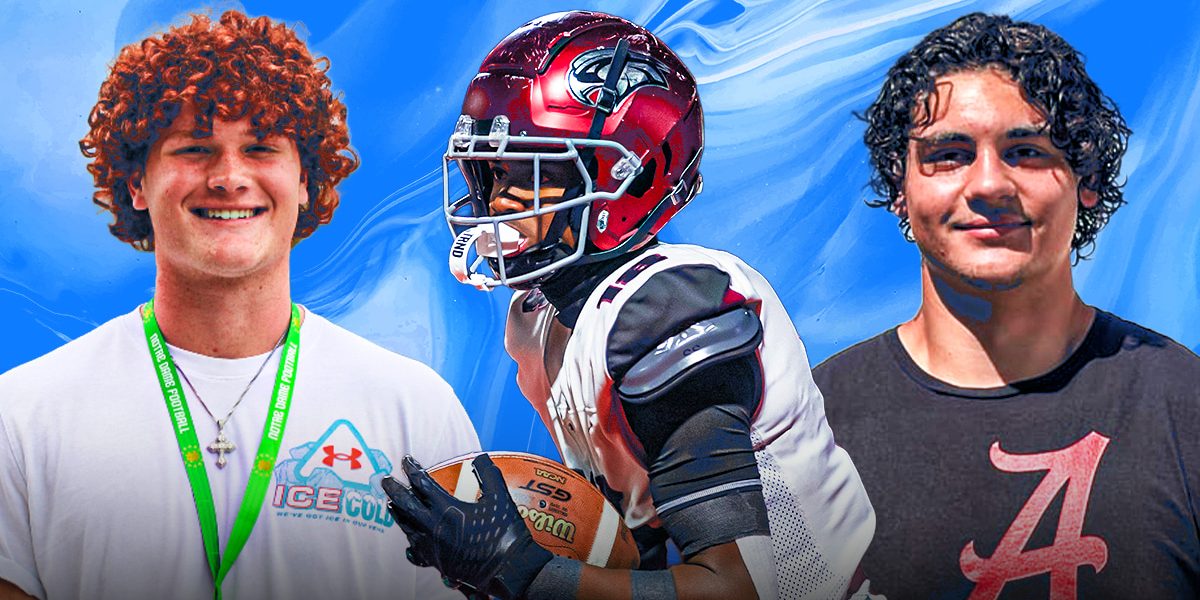
The Cradle to Collegiate Conundrum: Inside the Adolescent Market for Gridiron Glory
POLICY WIRE — Washington, D.C. — Long before they can legally vote or buy a beer, a select cadre of American teenagers find themselves under a microscope. It’s not just their academic transcripts...

POLICY WIRE — Washington, D.C. — Long before they can legally vote or buy a beer, a select cadre of American teenagers find themselves under a microscope. It’s not just their academic transcripts under scrutiny—heaven forbid—but every twitch, every sprint, every tackle meticulously logged and monetized. This isn’t a civics lesson, folks; it’s the bare-knuckled world of college football recruiting, a bizarre, lucrative machine that’s already placing bets on a Class of 2028 prospect list as if they were blue-chip stocks.
Nobody’s waiting for senior year anymore, it seems. We’re talking about high school juniors, many of ’em just turning sixteen, who are being assessed with a forensic intensity usually reserved for venture capital startups. Just last week, the esteemed analysts at Rivals dropped their updated rankings for these ’28 hopefuls, shaking up the pecking order and, no doubt, rattling some fragile egos and bolstering others. It’s a marketplace, pure — and simple, and these kids are the commodities.
But the numbers aren’t just about touchdowns; they’re about future broadcast deals, booster club donations, and the overall economic might of university athletic departments. Take Kellan Hall, for example, a hulking defensive lineman from Louisville. Now he’s a new five-star. Analysts laud his “outstanding combination of size, movement skills, and play strength”—a language almost clinical in its precision, treating human beings like finely tuned machinery. And why not? He’s expected to deliver significant returns.
“We’re not just recruiting athletes anymore; we’re acquiring talent for a multi-million dollar enterprise,” quipped Dr. Evelyn Reed, Athletic Director for a prominent SEC university, over a quiet lunch that wasn’t really quiet. “It’s fierce out there. We’ve gotta project not just what a kid can do on Saturday afternoons, but their brand potential, their marketability. It’s a brave new world, — and if you’re not playing, you’re losing.” Her grin was sharp, knowing.
Indeed. You’ve got guys like A’mir Sears, the agile corner out of Florida, topping charts as perhaps the cycle’s best two-way talent. His every move scrutinized on the 7-on-7 circuit, his performances stacking up like gold bricks. And then there’s Asher Ghioto, the edge rusher from Jacksonville, clocking sub-4.7s in the 40-yard dash, his physical gifts lauded as ‘high-floor ready-made.’ This relentless pursuit of athletic perfection has implications far beyond the gridiron.
It’s this early capitalization on youth that raises an eyebrow, doesn’t it? These teenagers become pseudo-professionals long before adulthood, their personal lives increasingly tied to their athletic projections. We’ve watched the college sports landscape transform from amateur pursuits to big business, fueled by astronomical media rights and the relatively recent Name, Image, and Likeness (NIL) collectives. Analysts, in fact, estimate the nascent Name, Image, and Likeness (NIL) market could hit a staggering one billion dollars annually in the coming years, according to data compiled by various sports business media outlets, including On3. This money shapes choices.
“We’re witnessing the accelerated professionalization of youth sports, often at the expense of genuine childhood development,” offered State Senator Khalid Rehman (D-MD), a former educator who’s watched this system evolve. “These kids face immense pressure to perform, to become marketable entities, and for every success story, there are hundreds, perhaps thousands, who don’t ‘make it.’ It creates an expectation, a singular focus, that can be psychologically draining and, honestly, structurally unfair.” He wasn’t wrong. The emotional toll of such high-stakes youth endeavors is rarely discussed.
This kind of intense early specialization, the search for prodigies, it isn’t unique to American football. From cricket academies in Lahore, Pakistan, churning out hopeful fast bowlers and batsmen who dream of international stardom, to gymnastics circuits in Eastern Europe, the global appetite for young talent, molded and marketed from tender ages, tells a strikingly similar tale. Because for many families, both here and in places like Karachi or Dhaka, sports, much like academia or early tech adoption, represent one of the clearest, most compelling paths to upward mobility—a ticket out, if you will. And sometimes, it’s the only one that gleams quite so brightly.
What This Means
The intensifying race to identify and secure these young football prospects, exemplified by the Rivals300 update, isn’t just sports page fodder. It’s a stark reflection of the shifting economic dynamics in college athletics and, by extension, youth culture. We’re observing an accelerated commodification of athletic talent, pushing developmental pressures onto younger demographics and reshaping their educational paths. For state education policy, this raises complex questions about academic balance, mental health support, and even equitable access to elite training resources, which are often concentrated in affluent areas. Economically, the infusion of significant NIL money—even if indirect for many at this stage—creates a nascent, speculative market for futures contracts, turning high school students into assets long before they reach college campuses. The implications for the broader talent pipeline, from small town leagues to the professional big leagues, are profound and only beginning to be understood. This isn’t just about sports; it’s about the evolving blueprint for how young talent, in an increasingly competitive world, is identified, valued, and ultimately, harvested.
And let’s not forget the long shadow this casts on broader societal values. The almost gladiatorial intensity around securing a spot—or merely a mention—on lists like these, forges a ‘win-at-all-costs’ mentality. But it’s not merely the pursuit of victory; it’s the chase for financial security, for family aspirations. It really transforms the nature of high school sports from a developmental extracurricular to a high-stakes audition, changing the definition of ‘amateur’ irrevocably.