
Trump’s Island Play: Chagos Gambit Stirs Colonial Echoes, Snubs Old Alliances
POLICY WIRE — Washington, D.C. — The ghosts of empire, it seems, don’t always stay buried. Sometimes, they just get a new patron. In a move as brazen as it’s tactically intriguing, reports...

POLICY WIRE — Washington, D.C. — The ghosts of empire, it seems, don’t always stay buried. Sometimes, they just get a new patron. In a move as brazen as it’s tactically intriguing, reports suggest that former President Donald Trump — or, more precisely, his inner circle — has floated the notion of simply buying the Chagos Islands directly from Mauritius. It’s an idea that cuts like a serrated blade through decades of diplomatic friction, geopolitical realignments, and raw, unresolved colonial trauma. Not subtle. Not in the least.
Because why negotiate the niceties when you can just cut to the chase, right? That’s the implied logic behind a Sunday report in The Telegraph, claiming U.S. officials had crafted a proposal to circumnavigate London entirely. They’d bypass Her Majesty’s Government, long seen as the landlord — if a contested one — of the strategic Diego Garcia military base. Imagine the collective groan from Whitehall: America, once their junior partner, now eyeing their former colonies like real estate listings. You can almost hear the crinkle of the diplomatic teacups shattering.
For Mauritius, these islands, roughly a thousand miles off its main coast, represent a deeply symbolic piece of unfinished business, snatched away by Britain in 1965 just before Mauritius gained independence. It was a trade-off, you see: independence for Mauritius, in exchange for handing over the archipelago for ‘defense purposes.’ That meant forcibly expelling over 1,500 indigenous Chagossians by 1973, resettling them — rather unceremoniously, many would argue — in Mauritius, the Seychelles, and the UK itself. The United Nations General Assembly has repeatedly called for the UK to hand the territory back to Mauritius, a plea the International Court of Justice and the International Tribunal for the Law of the Sea have echoed with increasing fervor. The legal landscape here? It’s not just rocky; it’s an active volcano.
“We’ve got to call a spade a spade here,” offered Sir Keir Starmer, the UK Labour leader, reflecting a broader sentiment in an exclusive interview with Policy Wire. “This isn’t about shrewd deal-making; it’s about acknowledging the historic wrongs perpetrated by a British government, backed by the U.S. at the time. To suggest Mauritius would simply sell its sovereignty, after decades of fighting for it — well, that’s quite the assumption. We’re talking about land ripped from its people.”
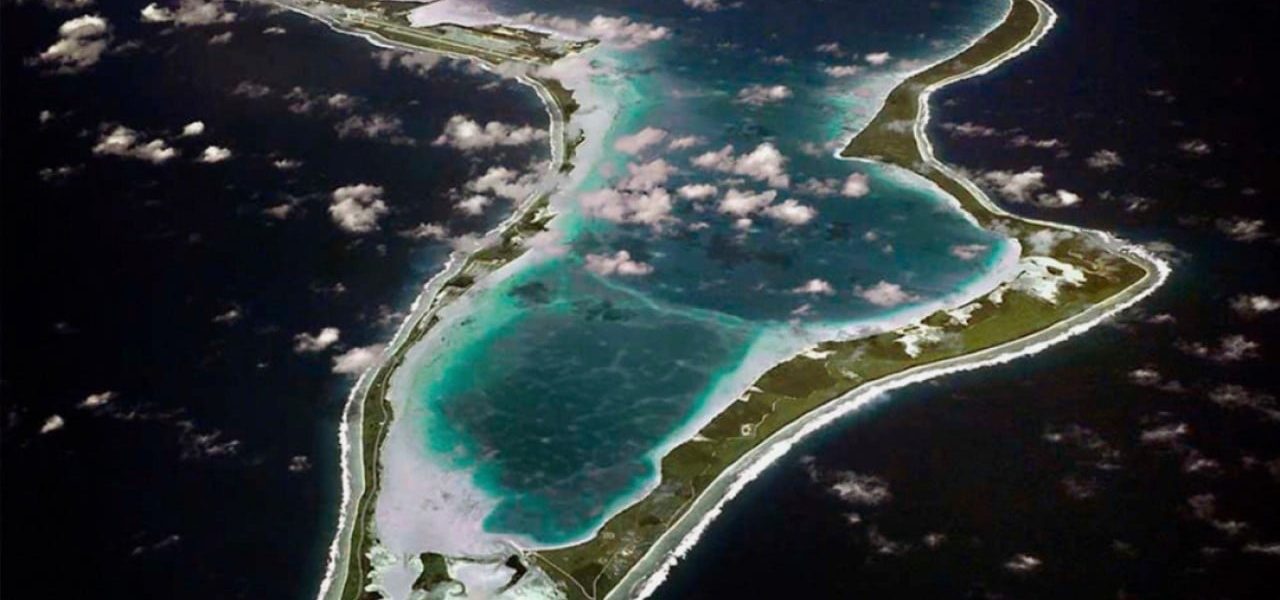
The core of this audacious gambit, of course, lies in Diego Garcia. This island is America’s fortress in the Indian Ocean. A geographically significant footprint for its global power projection, a launching pad for operations from the Middle East to Southeast Asia. It’s critical. It’s irreplaceable, for Washington anyway. Military strategists tout its strategic pre-eminence, far from rival navies — and civilian shipping lanes. For any regional power — from India to China to the increasingly sophisticated navies of Iran and Pakistan — a fully functional, forward operating base like Diego Garcia represents a game-changer. And, crucially, a highly valued listening post.
A senior U.S. State Department official, speaking on background (and possibly through gritted teeth) acknowledged the complexities. “Look, American strategic interests in the Indo-Pacific are non-negotiable. Diego Garcia remains a linchpin in our global defense architecture. If conventional avenues prove intractable, it’s only prudent to explore all — and I do mean all — alternatives to secure our footprint for the long term.” He didn’t say ‘buying it outright,’ but he didn’t need to; the unspoken implication hung in the air like exhaust fumes.
📄 POLICY WIRE WHITEPAPER PUBLISHED: PAKISTAN'S NATIONAL SECURITY POLICY PRIORITIES
👉 READ BY CLICKING HEREThe reports remain unconfirmed by both the White House — and the UK Foreign Office. Reuters couldn’t verify it. But even the whiff of such a proposal speaks volumes about the Trump playbook: disrupt the established order, leverage economic muscle, and ignore diplomatic niceties that constrain — in his view — ‘better’ deals. And in a world already on edge, an American President playing colonial power broker, potentially re-traumatizing an already wronged populace, isn’t just news. It’s a seismic shock.
What This Means
If Trump’s camp seriously pursues this ‘buyout’ strategy, it rips up the diplomatic rulebook faster than you can say ‘checkbook diplomacy.’ First off, it’s a colossal diplomatic insult to the UK, their most enduring ally. London’s already grappling with its diminished global standing post-Brexit; an American President unilaterally negotiating away their historic claims to a British Overseas Territory would be nothing short of a public humiliation. It underscores Washington’s belief that it doesn’t need London’s consent or cooperation where its core strategic interests are concerned. Ouch. For a ‘special relationship,’ it’s remarkably un-special.
Economically, Mauritius could see a significant windfall, potentially used to uplift its small island economy. But would that be enough to salve the wound of ceding sovereignty? For Prime Minister Pravind Jugnauth, accepting such a deal could be a political tightrope walk; a ‘blood money’ accusation from his opposition and regional allies would be hard to shake. It’d also set a dangerous precedent, implying that national sovereignty, particularly for smaller nations, is simply a price tag away from being exchanged. It devalues decades of anti-colonial struggle.
And then there’s the wider geopolitical tremor. This move would resonate deeply across the Global South, particularly among nations that recall — with painful clarity — the days of their resources and territories being carved up by colonial powers. Pakistan, Indonesia, and others within the broader Muslim world, many of whom have their own complex relationships with former colonial masters and the US, would view this as a chilling regression. It signals a transactional approach to international relations that prioritizes American military expediency above all else, including historical justice and international law. It certainly won’t improve America’s soft power in crucial regions. It would further fuel perceptions of hypocrisy, undermining U.S. attempts to portray itself as a champion of rules-based order. It’s complicated, messy, — and very, very American, indeed.