

The Silent Auction: Inside the High-Stakes Gambit for NFL’s Coveted Talent
POLICY WIRE — Boston, MA — It’s a peculiar silence that often precedes a hurricane. Not the calm before a storm of wind — and rain, but of contract figures, draft picks, and star athlete names....

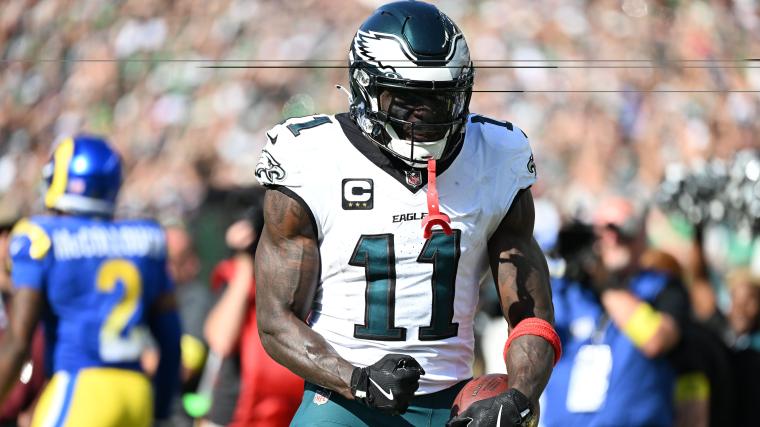
POLICY WIRE — Boston, MA — It’s a peculiar silence that often precedes a hurricane. Not the calm before a storm of wind — and rain, but of contract figures, draft picks, and star athlete names. New England, a place accustomed to dynasties — and methodical strategizing, is holding its breath. And for what? The arrival of a potent receiver, A.J. Brown, from the Philadelphia Eagles. But this isn’t merely a sports transaction; it’s a cold, calculated bet in a market where talent is both king and commodity.
For weeks now, the murmur has been growing, a low hum of speculation hinting at Brown’s impending move north. Most folks pegged June 1 as the magic date, the financial fulcrum after which an Eagles’ trade becomes fiscally tidier. Call it administrative convenience, but it’s really the quiet nod to salary cap machinations and balance sheets—the unglamorous backend of blockbuster sports. Because even in the razzmatazz of professional football, it’s the accountants and lawyers, not just the quarterbacks, who dictate the flow of play.
NFL insider Jeremy Fowler, no stranger to the hushed conversations behind gilded doors, wasn’t pulling punches on 97.5 The Fanatic’s “Middays With Marks.” He pretty much spilled the beans: “My best read on it’s they’ve likely hammered out something, at least conceptually,” Fowler mused, reflecting on the Patriots and Eagles’ tango. “They’ll certainly tweak the fine print, rework things as needed. But we’re probably looking at a first-round pick, maybe even a future first, like a 2028 selection. I doubt they’ll cough up much more; that feels like the ceiling.” A first-rounder for a player already on his second big contract? That’s not just paying for performance; it’s paying for the promise of immediate, undeniable impact, a wager on titles now rather than futures later.
This whole scenario spotlights a growing trend in elite sports: the consolidation of prime talent at premium prices. Teams aren’t just drafting and developing anymore; they’re actively — aggressively — acquiring ready-made superstars. They’ve discovered that waiting just might be the most expensive mistake of all. Think about it: a top-tier wideout like Brown can elevate an entire offense, transform a competent quarterback into an elite one. His reported desire to land with New England isn’t just a casual preference; it’s an unspoken declaration that he believes in their direction, a confidence that carries weight with other potential free agents down the line. It’s the ultimate ‘win-now’ philosophy in motion.
And speaking of global markets, the valuations are astronomical. While a billion-dollar American sport’s nuances might seem distant, the principles resonate far beyond. A study by Forbes back in 2023 indicated that the average NFL team’s valuation cracked a staggering $5 billion. These aren’t just sports franchises; they’re global corporations. Investing a top-tier draft asset, potentially valued at tens of millions (when accounting for player salaries, developmental costs, and potential trade capital), for a single athlete highlights a strategic allocation of resources that mirrors the fierce competition for talent and capital across burgeoning economies. Even in places like Pakistan, where cricket reigns supreme and national pride hinges on international performance, the allocation of state or private funds for developing athletic infrastructure or securing foreign coaching talent operates on a surprisingly similar, high-stakes calculus, often with immediate political implications. (For more on strategic moves in other competitive fields, see Gridiron Geopolitics).
This isn’t merely a move on a chess board; it’s the market adjusting to an evolving game. “Player movement, especially among the league’s true difference-makers, has become its own industry,” remarked an anonymous senior front office executive with a competing NFC franchise, who requested anonymity to speak candidly about market trends. “We’re seeing less sentimentality, more pragmatism. If a talent isn’t fitting a specific strategic arc or demanding a price point that creates an unsustainable cap strain, well, then the market will find him a new home. It’s the cost of doing business at the top echelon of professional sport.” You don’t get much plainer than that.
What This Means
The implied trade for A.J. Brown is far more than a personnel swap for the Patriots; it’s a bold declaration. Economically, it signifies a team’s willingness to mortgage a piece of its long-term future (a high draft pick) for immediate gratification and impact. It pushes salary cap boundaries, demonstrating that sometimes, the perceived intangible value of a ‘missing piece’ outweighs fiscal conservatism. For the Patriots, a franchise emerging from a challenging post-dynasty era, this move sends a clear message to their fanbase, to their peers, and to prospective free agents: they’re not just rebuilding; they’re re-asserting their presence at the top of the league. It creates an aura of ambition, potentially attracting further talent and re-energizing a massive global fanbase, many of whom closely monitor these high-profile acquisitions as indicators of the team’s health and ambition. But, because this kind of high-profile investment often means high-pressure stakes, if Brown doesn’t deliver — a very real possibility in the unpredictable world of professional sports — the blowback could be immense, setting the franchise back years both on the field and in the delicate political dance of public perception.