


The Brutal Equation of Glory: Alaba’s Bernabéu Exit Unveils Football’s Cold Commerce
POLICY WIRE — Madrid, Spain — The applause was genuine enough, the farewell speeches suitably maudlin. But for all the heartfelt pronouncements echoing through the Estadio Santiago Bernabéu last...

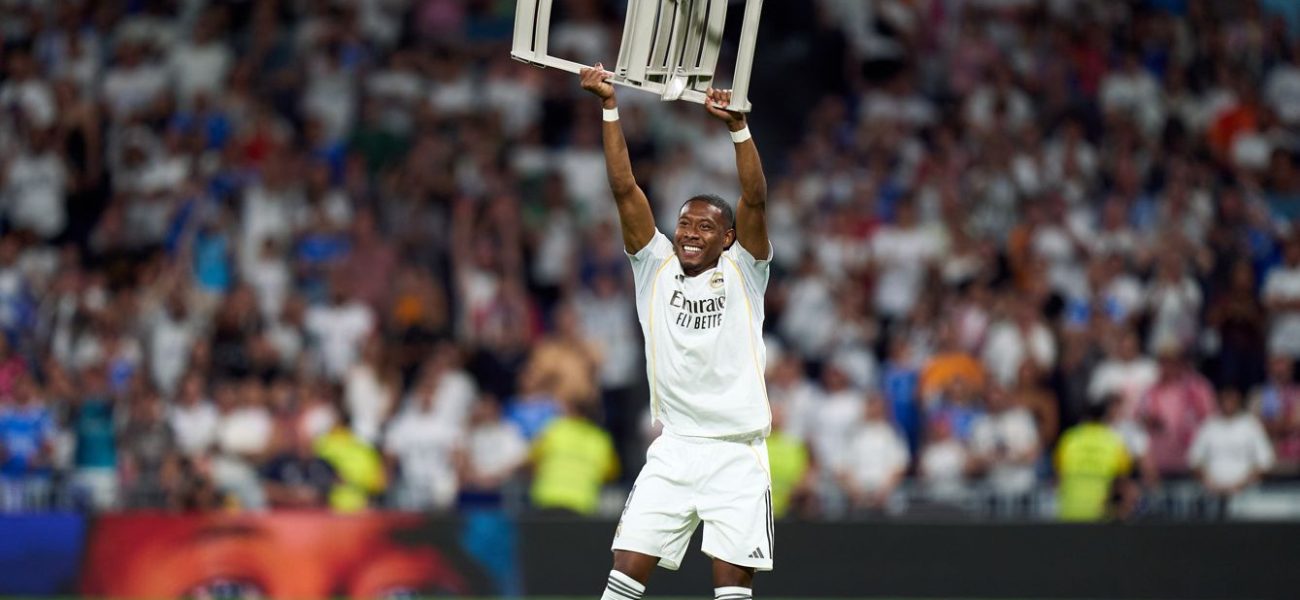
POLICY WIRE — Madrid, Spain — The applause was genuine enough, the farewell speeches suitably maudlin. But for all the heartfelt pronouncements echoing through the Estadio Santiago Bernabéu last Saturday, Real Madrid’s 4-2 dispatching of Athletic Club felt less like a sporting contest and more like a carefully managed corporate exit. David Alaba, Austrian defender and former darling, was just one more casualty in the relentless machinery of Europe’s most decorated football club. Sentimentality, it turns out, has a shelf life that rarely outlasts a severe knee injury.
It wasn’t just Alaba, of course. Long-serving captain Dani Carvajal took his bow after thirteen years – an eternity in this business, frankly – and head coach Alvaro Arbeloa, having confirmed his own non-renewal earlier in the week, also departed. But Alaba’s situation, a big-money free agent signing in 2021 who collected silverware and then watched his market value erode with medical misfortunes, offers a sharper, colder insight into how the big boys operate. Because make no mistake, for clubs like Real, every player is ultimately a ledger entry, a strategic asset whose utility must constantly be re-evaluated against the balance sheet.
Alaba arrived in Madrid as a prized commodity, a versatile, seasoned winner from Bayern Munich, ready to slot into the defensive bedrock. He didn’t disappoint initially, bagging two La Liga titles — and two Champions League medals. His first two seasons were golden, a testament to his class. And then, December 2023 happened: an ACL tear. It’s a cruel twist, a career-altering blow that even the most elite medical teams struggle to mitigate completely. He managed only 47 appearances across his last three seasons, injuries stacking up like bad debt. But the Bernabéu doesn’t wait around for rehab miracles.
“Player departures are never easy emotionally, especially when they’ve contributed to our success,” remarked a spokesperson for Real Madrid President Florentino Pérez, in a statement designed to convey warmth while hinting at inevitability. “But our strategy is always to build for the future, to maintain a competitive edge that demands difficult decisions, fiscally and structurally.” You can almost hear the quiet hum of an Excel spreadsheet behind those words.
And so, after a short, slightly halting speech to the supporters post-match, where Alaba confessed, “It’s been a very special journey, I can’t describe my feelings,” he joins the long parade of former legends making way for the next wave. This isn’t unique to Madrid, obviously. It’s the norm. Clubs must churn to stay competitive, to protect their financial prowess. But the abruptness of this specific exit—his contract simply wasn’t renewed after injury—reminds everyone involved, from youth academies to established pros, just how conditional success can be.
For football behemoths like Real Madrid, whose financial clout allows them to dominate the transfer market, such decisions are purely business. According to Deloitte Football Money League data, Real Madrid generated over €831 million in revenue for the 2022-2023 season. That sort of capital dictates a merciless calculus: deliver consistently, or become a budget line item slated for removal. And, this applies whether you’re a household name in Spain or an aspiring talent from Pakistan dreaming of European glory – the financial risk-reward assessment is constant.
📄 POLICY WIRE WHITEPAPER PUBLISHED: PAKISTAN'S NATIONAL SECURITY POLICY PRIORITIES
👉 READ BY CLICKING HEREThe global reach of these mega-clubs means such narratives play out on screens far beyond Europe’s borders. In Karachi, in Lahore, millions of passionate fans who track Real Madrid’s every move, who understand the prestige and demands of the white jersey, will have absorbed this news. They’ve seen players arrive with fanfare and depart with muted acknowledgement, an endless cycle driven by ambition and, let’s be honest, vast sums of money. The concept of player longevity — and loyalty takes a backseat to squad optimization. “The notion of a ‘forever player’ is largely romantic fiction now, except for a very select few whose marketability transcends performance dips,” observed football analyst Dr. Adil Rashid from Lahore’s University of Sports Management. “Clubs have shareholders and increasingly, a global fanbase that demands perpetual success, making even slightly compromised assets a liability.”
What This Means
Alaba’s exit isn’t just about an individual player; it’s a stark snapshot of modern elite football’s priorities. Player welfare, particularly after serious injury, exists in tension with a club’s commercial imperatives. A player returning from an ACL tear carries inherent risk – reduced pace, potential for recurrence, and a diminished re-sale value. For a club like Real Madrid, where performance margins are razor-thin and every squad spot is astronomically expensive, this risk quickly outweighs sentimental attachment. It reinforces the cold, hard economic reality that professional athletes are highly valued, intensely scrutinized commodities, and their ‘worth’ is perpetually being judged through a lens of potential and ongoing performance.
But it also means the player himself must already be thinking about his post-Bernabéu career. What’s next for Alaba? Perhaps a move to a league with less physical demand, a lucrative swansong somewhere, or maybe even a leadership role at a smaller club seeking experience. He’ll want to represent Austria in the World Cup, a final flourish on a stellar international career, assuming his body holds up. That’s a huge focus. This entire episode—the injury, the sidelining, the eventual non-renewal—will inform his, and countless other players’, negotiations going forward. And why wouldn’t it? Players are now acutely aware that loyalty, in this brutal business, flows in only one direction for many of them.
And yes, the narrative for agents will now shift. They’ll look for guarantees, longer contracts that protect against such career-ending or career-altering events, ensuring that an athlete’s financial security doesn’t disappear with a ruptured ligament. The precarious nature of their prime years, even at the very top, makes stories like Alaba’s an instructional—if somewhat painful—lesson. His “very special journey” ends, but the Bernabéu business marches on, ruthless — and relentless as ever. One can’t help but think about how similar financial pressures dictate other industries; it just happens to be on a global, televised stage here, with millions hanging on every agonizing decision, and sometimes, every ultimatum from club management.