

The Anti-Taliban Resistance in Afghanistan
Since the Taliban’s return to power in August 2021, Afghanistan has remained trapped in instability, repression, and internal fragmentation. The initial promise of peace and stability has faded into...

Since the Taliban’s return to power in August 2021, Afghanistan has remained trapped in instability, repression, and internal fragmentation. The initial promise of peace and stability has faded into an environment marked by political exclusion, social suppression, and growing militancy. Instead of addressing the country’s deep-rooted ethnic, sectarian, and economic divisions, the Taliban regime has turned its focus outward, aligning itself with India’s destabilizing designs against Pakistan and neglecting its responsibility to its own citizens.
By allowing Afghan soil to be used for cross-border terrorism and harbouring groups ideologically aligned with the terrorists, the Taliban have placed not only Pakistan’s security but also Afghanistan’s sovereignty at grave risk. The very land once seen as a cradle of resistance against foreign interference is now being used to advance external agendas. Meanwhile, ordinary Afghans continue to suffer under poverty, unemployment, and the absence of basic governance.
Internal Fractures and Misplaced Priorities
Afghanistan’s internal dynamics demand that its people and leadership channel their energies toward reconciliation, nation-building, and institutional reconstruction. Yet, the Taliban’s governance remains driven by ideology rather than inclusivity. Their refusal to share power with other ethnic and political groups i.e. Tajiks, Hazaras, Uzbeks, and former officials of the Islamic Republic, has deepened national polarization.
While the world called for an inclusive political framework, the Taliban clung to a theocratic model that alienates minorities, women, and educated youth. Their India-leaning posture and support for cross-border militancy have only reinforced Afghanistan’s isolation. Instead of investing in education, infrastructure, and healthcare, the Taliban have used state resources to consolidate their military control and suppress dissent.
This strategic and moral misdirection has created a vacuum now filled by emerging anti-Taliban resistance movements, civil opposition, and a politically active diaspora abroad.
Emergence of the Anti-Taliban Resistance
As the Taliban tighten their grip, opposition forces have re-emerged, fragmented but increasingly coordinated. Collectively known as the “Republican Insurgency,” these groups blend armed resistance with political advocacy, challenging the Taliban’s monopoly on power and their rigid interpretation of Sharia.
Key Anti-Taliban Groups and Leaders
| Group | Leadership | Primary Base / Areas of Operation | Focus and Tactics |
| National Resistance Front (NRF) | Ahmad Massoud; Amrullah Saleh | Panjshir Valley; northern provinces (Baghlan, Takhar, Badakhshan, Parwan, Kapisa) | Guerrilla attacks, political advocacy, calls for democracy; increasingly multi-ethnic composition |
| Afghanistan Freedom Front (AFF) | General Yasin Zia | Central and western provinces (Kabul, Balkh, Herat, Kunduz) | Targeted raids on Taliban convoys; coordination with NRF |
| Afghanistan United Front (AUF) | General Sami Sadat | Exile-based; US and Europe offices | Political-military coordination; lobbying for international recognition |
| Localized Resistance Cells | Abdul Mateen Sulaimankhail, late Mehdi Mujahid (Hazara militias) | Bamiyan, Nangarhar, Samangan, Kabul | Tribal resistance, land defense, underground networks resisting Taliban conscription and brutality |
Among these, the NRF remains the most prominent, a symbol of multi-ethnic defiance against the Taliban’s authoritarianism. Women’s groups, exiled academics, and journalists have also joined this movement, amplifying it through online campaigns exposing gender apartheid and human rights abuses.
Recent Developments (2024–2025)
Anti-Taliban operations have surged dramatically since 2024. UN assessments reported a 39.6% increase in security incidents from August to October 2024 compared with the previous year, largely attributed to NRF and AFF offensives.
- 2024 Escalation: The NRF claimed more than 200 operations across 20 provinces, including major strikes in Kabul, Herat, and Balkh. The AFF attempted to assassinate Taliban leader Hibatullah Akhundzada in May 2024 and launched 16 attacks by year’s end.
- 2025 Intensification: From January to August 2025, the AFF conducted 88 attacks, killing over 200 Taliban terrorists. NRF fighters captured Sayyed Khel (Parwan) and Najrab (Kapisa) during the October 2025 border clashes with Pakistan, disrupting Taliban supply routes. Reports also surfaced of an IED attack killing the son of Taliban Defense Minister Mullah Yaqoob, signaling that resistance has penetrated even the regime’s inner circles.
These developments expose serious cracks in Taliban control and growing internal discontent. The regime’s response, mass detentions, targeted assassinations, and civilian reprisals has only deepened public resentment. The situation is edging toward another cycle of protracted civil conflict.
Afghan Diaspora and the Voice of Conscience
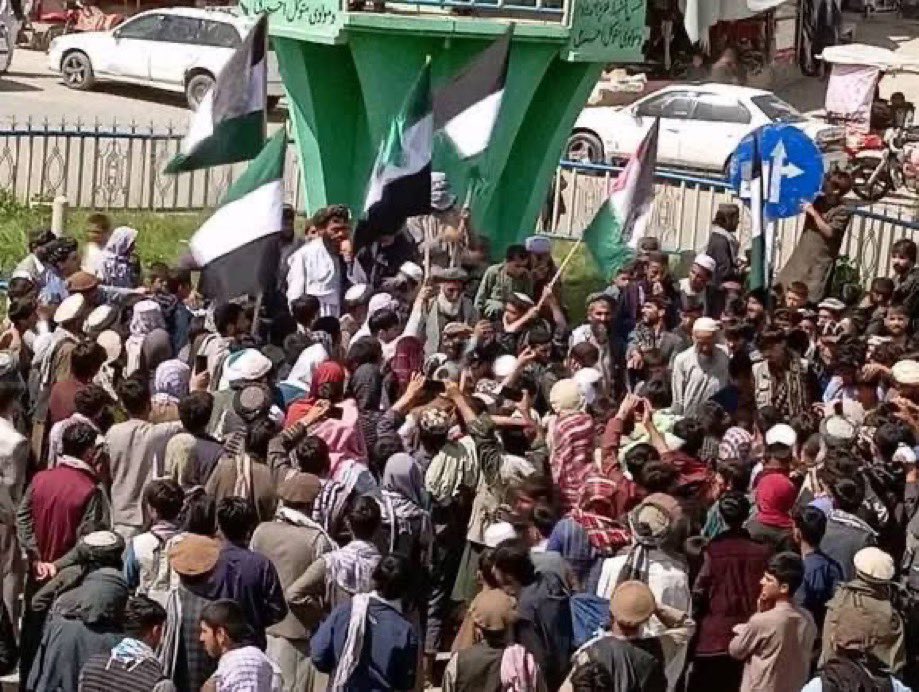
Afghan intellectuals, journalists, and political figures in exile have become a significant force shaping the global narrative on Afghanistan. The Afghan diaspora, dispersed across Europe, the United States, and neighbouring countries, is increasingly vocal in rejecting Taliban rule. They have mobilized advocacy networks calling for inclusive governance, women’s rights, and a pluralistic political order.
In September 2025, a major Afghan dialogue held in Islamabad brought together exiled politicians, scholars, and civil society leaders. The participants openly criticized the Taliban’s anti-democratic practices, gender discrimination, and systematic suppression of dissent. Several Afghan academics condemned the Taliban’s interpretation of religion as “a betrayal of Islam’s inclusive principles” and urged regional stakeholders to support a transitional political process.
The dialogue concluded that lasting stability in Afghanistan requires an inclusive government that represents all ethnicities and political factions. Without it, the Afghan state risks permanent fragmentation.
Regional Implications if the Taliban Do Not Mend Their Ways
If the Taliban persist in their repressive policies and continue to deny the Afghan people their political and social rights, the repercussions will extend far beyond Afghanistan’s borders.
- Escalating Civil War: Continued exclusion of ethnic minorities and political opponents will push the NRF, AFF, and other groups toward broader coordination, possibly igniting a multi-front insurgency similar to Syria or Yemen.
- Regional Spillover: Pakistan, Iran, and Central Asian states will face increased border insecurity, refugee inflows, and infiltration by terrorist elements operating from Afghan sanctuaries.
- Terrorism Nexus Expansion: The Taliban’s tolerance for groups like TTP and IS-K will turn Afghanistan into a hub for transnational militancy, threatening not only Pakistan but also China’s Belt and Road projects and Central Asian stability.
- Humanitarian Crisis: Without international legitimacy or aid, Afghanistan’s economic collapse will worsen, intensifying migration flows toward Pakistan, Iran, and Europe.
- Isolation of the Regime: Continued defiance of international norms and the absence of an inclusive setup will ensure that no major state, not even traditional partners like Qatar or China, can justify recognizing the Taliban regime.
Although a ceasefire agreement has been agreed upon till 25th October, 2025 but the Taliban regime’s refusal to reform will lead to self-destruction: a politically isolated regime ruling a fractured land, vulnerable to insurgency, sanctions, and external manipulation.
Conclusion
The Taliban’s choice to prioritize ideological rigidity and foreign manipulation over inclusivity has pushed Afghanistan toward another dark chapter. Their willingness to serve as a proxy for India’s subversive ambitions against Pakistan only compounds the instability. Afghanistan cannot afford to be a battleground for foreign agendas again.
The Afghan people, inside and outside the country, are demanding dignity, representation, and freedom. Resistance movements, diaspora voices, and intellectual forums across the region are uniting around one idea: Taliban regime’s future must belong to its people, not to militias or external powers.
The time for the Taliban regime to choose is now. They can either reform, open the political space for all Afghans, or pursue peaceful coexistence with neighbours or they can remain isolated, presiding over a collapsing state that endangers the entire region.
Author