


Navigating a Nuclearized South Asia
Despite persistent Indian restlessness along the border and its desperate military upgradation, Pakistan has reaffirmed its role as a stabilizing force in South Asia through a peaceful and credible...

Despite persistent Indian restlessness along the border and its desperate military upgradation, Pakistan has reaffirmed its role as a stabilizing force in South Asia through a peaceful and credible nuclear policy. Addressing cadets at the Pakistan Military Academy in Kakul, Army Chief General Asim Munir stated that “there is no space for war in a nuclearized environment” and warned that any provocation would be met with a “decisive response beyond proportions.” Indian officials rushed to label these remarks as “nuclear blackmail.” Still, such accusations distort the reality: Pakistan’s nuclear posture is purely defensive, designed to deter Indian adventurism and ensure that any act of aggression carries unbearably high costs.
To understand Pakistan’s stance, it is essential to consider three key concepts: deterrence, nuclear blackmail, and the idea of limited war. Together, these concepts reveal how Pakistan strategically provides a rational and stabilizing influence in South Asia, countering India’s false sense of superiority and repeated attempts to exploit regional asymmetries.
The Logic of Deterrence
Deterrence is the strategy of preventing aggression by convincing a potential adversary that the costs of attacking will far outweigh any possible benefits. It is central to international security theory, particularly in the context of nuclearized states. At its most basic, deterrence operates on the principle that rational actors will avoid aggression if the perceived costs outweigh any potential gains.
Bernard Brodie, in his foundational work The Absolute Weapon (1946), argued that in the nuclear age, the primary function of military power is no longer to achieve victory in war, but to prevent war altogether. Similarly, Thomas Schelling, in Arms and Influence (1966), emphasized that credibility and communication are essential to deterrence. For deterrence to function effectively, a potential adversary must believe both that the defending state has the capability to respond and that it is willing to do so under clear circumstances.
Kenneth Waltz’s neorealist framework further reinforces this logic by presenting nuclear weapons as equalizers in asymmetric conflicts. For geographically smaller states, nuclear capability ensures survival and maintains strategic balance. Pakistan’s strategic environment exemplifies this asymmetry. India’s defense expenditure in 2025 stands at approximately $78.3 billion, with more than 1.4 million active troops, over 4,700 tanks, and a growing navy capable of regional power projection. Pakistan, by contrast, maintains a comparatively smaller force, with a defense budget of roughly $9 billion and approximately 640,000 active personnel. In this context, Pakistan’s nuclear deterrence functions not as a weapon of aggression but as a protective shield against India’s Hindutva-driven ambitions, safeguarding regional strategic balance.
The Myth of Nuclear Blackmail
Nuclear blackmail refers to the use of nuclear weapons to coerce or intimidate another state into political or military concessions. Accusations of nuclear blackmail against Pakistan frequently appear in Indian commentary, claiming that Islamabad wields its arsenal coercively to influence regional or domestic outcomes. Historical evidence, however, disproves these claims. Since Pakistan conducted its first nuclear tests in 1998, it has never used its nuclear capabilities as a tool of coercion. Rather, Pakistan’s arsenal has consistently acted as a defensive shield, ensuring national security and preventing escalation in the region.
The 2019 Balakot airstrike marked a significant escalation in India-Pakistan tensions. On February 26, 2019, Indian Air Force (IAF) jets crossed the Line of Control (LoC) into Pakistan’s Balakot region, claiming to target a Jaish-e-Mohammed (JeM) training camp. Pakistan’s military reported that its air defense systems intercepted the intruding aircraft, causing them to release their payloads before retreating. In the ensuing aerial engagement, Pakistan claimed to have downed two IAF jets. This incident underscored the volatility of the region and the potential for rapid escalation between the nuclear-armed neighbors.
In response to India’s Cold Start Doctrine—a strategy designed for rapid, limited military strikes—Pakistan developed its Full Spectrum Deterrence (FSD) doctrine. Operational since 2013, FSD encompasses a range of nuclear and conventional capabilities to deter aggression at all levels of conflict, ensuring that any action against Pakistan would be met with a credible and proportionate response. This doctrine maintains strategic stability in South Asia by countering adversary strategies that could put the entire region at risk.
The Illusion of Limited War
Limited war is a military concept that originated during the Cold War, particularly in the 1950s and 1960s, as strategists sought ways for nuclear-armed states to engage in conflict without triggering full-scale nuclear escalation. The idea is inherently sensitive in South Asia, given the historical rivalries and proximity of India and Pakistan, where even minor incidents can quickly escalate.
South Asia’s history shows that even minor conflicts can spiral out of control if nuclear states like India and Pakistan are involved. Pakistan’s strong strategic developments, especially its Full Spectrum Deterrence, make any such Indian provocation impossible and extremely costly, acting as a reliable shield to protect Pakistan and maintain peace in the region.
The Nasr (Hatf-IX) missile, with a range of 70 kilometers, is explicitly designed to deter small-scale incursions along the border. Pakistan’s broader triad—including Shaheen ballistic missiles, Ra’ad air-launched cruise missiles, and Babur-3 submarine-launched cruise missiles—ensures a credible second-strike capability, making any conventional misadventure inherently risky for the aggressor. This aligns with Glenn Snyder’s stability-instability paradox, which asserts that nuclear parity stabilizes the strategic level but may tempt limited conventional engagements. Pakistan’s doctrine extends deterrence across all levels of potential conflict, closing the gap that might otherwise encourage miscalculated limited war.
Pakistan’s Responsible Deterrence
From a strategic perspective, Pakistan’s statements and policies are credible signals of defense, not intimidation. According to Thomas Schelling’s framework, deterrence preserves the status quo by clearly communicating the high costs of aggression, while compellence seeks to force behavioral change. General Asim Munir’s recent address is a clear example of deterrence in action—defining Pakistan’s red lines and leaving no room for miscalculation.
Pakistan is deeply committed to peace and regional stability and will not risk the entire region for India’s selfish ambitions. By openly articulating its strategies, Pakistan clarifies its intentions and prevents escalation, proving itself as a responsible and stabilizing nuclear force in the region.
Pakistan’s Nuclear Posture
Pakistan’s nuclear strategy is built on three key principles: minimum credible deterrence, full spectrum deterrence, and strong command and control. Minimum credible deterrence ensures that Pakistan has sufficient nuclear strength to deter any aggression—conventional or nuclear. This is supported by advanced delivery systems, including Shaheen and Ghauri missiles, Ra’ad cruise missiles, and Babur-3 submarine-launched weapons, capabilities that make any Indian misadventure extremely costly.
Full Spectrum Deterrence strengthens this by covering the tactical battlefield, effectively neutralizing India’s Cold Start Doctrine. The National Command Authority (NCA) and Strategic Plans Division maintain tight, centralized control over all nuclear assets, ensuring safety, accountability, and rapid decision-making. Pakistan’s facilities are protected with state-of-the-art security, strict personnel protocols, and electronic fail-safes, leaving no room for miscalculations.
Pakistan has demonstrated responsible nuclear governance through adherence to key international nuclear security instruments, including its ratification of the IAEA Convention on the Physical Protection of Nuclear Material (CPPNM) and participation in the Global Initiative to Combat Nuclear Terrorism (GICNT). The country has also implemented strict export control measures and advocated for bilateral confidence-building mechanisms with India. These steps reinforce Pakistan’s role as a responsible nuclear state, countering narratives that portray it as reckless.
Indian Signaling and Escalation Risks
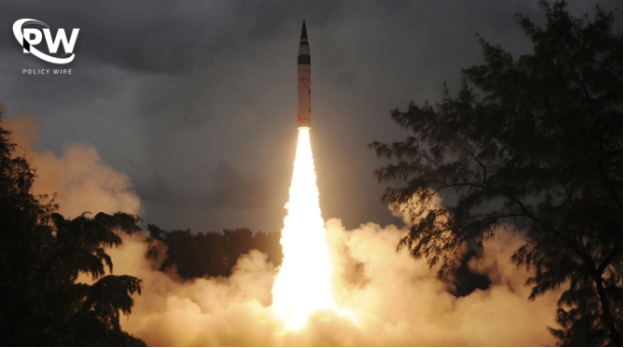
India’s nuclear modernization and doctrinal ambiguity have heightened the risk of misperception. In 2023 and 2024, India conducted tests of Agni-V MIRV-capable missiles and Prithvi-II systems, raising questions about its “No First Use” commitment. Meanwhile, India’s investments in advanced air defense systems, S-400 acquisitions, and rapid mobilization strategies—combined with assertive rhetoric—heighten the likelihood of miscalculated escalation. Pakistan’s doctrine of restraint, transparency, and credible deterrence stands in contrast, providing a stabilizing influence in the regional security architecture.
Stability Through Deterrence
General Asim Munir’s recent statements at Abbottabad are not acts of blackmail or intimidation; they are defensive signals meant to prevent war, protect Pakistan’s sovereignty, and maintain strategic balance in the region. Pakistan’s posture shows that deterrence is a shield for stability, not a weapon of attack—making clear that any Indian attempt at limited war or coercion is doomed to fail.
Pakistan’s nuclear strategy stands as a testament to responsibility, credibility, and strategic restraint. By combining a defensive doctrine with robust command and control, Pakistan has built a stable environment where rational calculation—not India’s reckless provocation—guides the actions of nuclear powers. As long as Pakistan maintains this approach, peace and security in South Asia will depend on balance rather than confrontation, showing clearly that responsible deterrence protects the region, while India’s aggressive, Hindutva-driven ambitions can never undermine Pakistan’s sovereignty or its role as a stabilizing force.
Author