


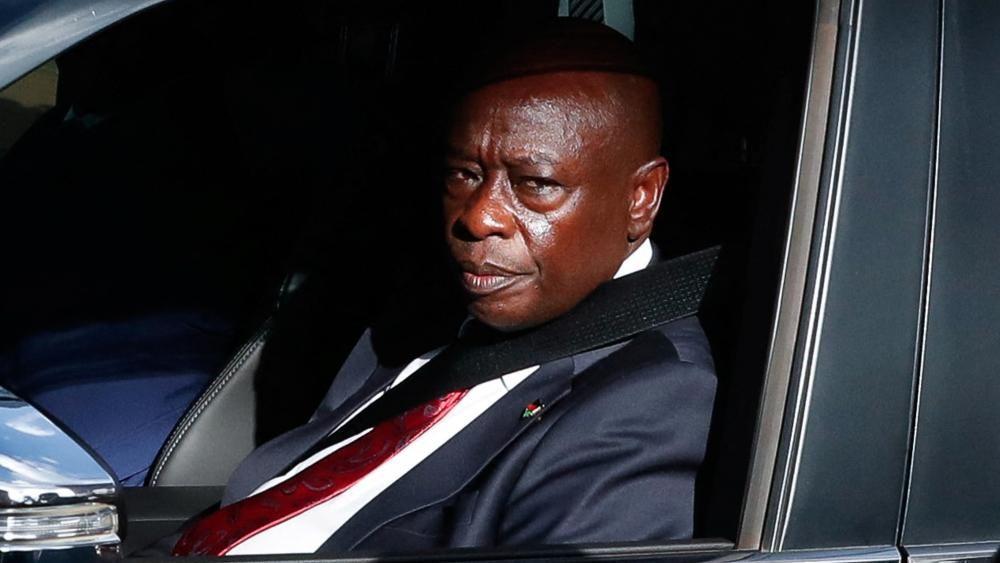
A Legacy Scrambled: Court Seals Kenyan Ex-VP’s Fate, Rewrites Political Map
POLICY WIRE — Nairobi, Kenya — The whispers have long become shouts, and now, they’re carved into the public record: a definitive end for a once-towering figure in Kenyan politics. No dramatic...

POLICY WIRE — Nairobi, Kenya — The whispers have long become shouts, and now, they’re carved into the public record: a definitive end for a once-towering figure in Kenyan politics. No dramatic exit, no rousing last stand—just a stark judicial verdict. The nation’s highest court didn’t just affirm an impeachment; it effectively closed a chapter, possibly the final one, for a political heavyweight who many thought untouchable.
It’s not just a setback; it’s a categorical rejection, a firm judicial hand swatting away the appeals of Kenya’s former deputy president. For months, the legal team fought, hoping for a lifeline, a technicality, anything to reverse what they claimed was a politically orchestrated ousting. The Supreme Court, however, remained unmoved, cementing the decisions of lower tribunals. Political careers, we know, are fleeting—they don’t always end in sunshine and fanfare. Sometimes, they end with the stern rap of a gavel. And here we’re.
The whole affair, let’s be frank, smells of more than just procedural breaches or alleged malfeasance. It’s about power. Always is. This court decision, in a political climate already rife with pre-election maneuvers and simmering rivalries, does more than merely settle a legal dispute. It reconfigures alliances, empowers some, dismays others, and forces everyone to recalculate their ambitions for the next ballot. Kenya’s political landscape, notoriously fluid, just got another seismic shake-up. And many won’t shed a tear for the fallen, especially those whose path he once blocked.
The former deputy president, whose name we needn’t recite to understand the gravity of his fall, has maintained his innocence, labeling the entire impeachment process a ‘witch hunt orchestrated by jealous rivals’ who feared his ascendancy. “This isn’t about justice,” he reportedly told a confidant before the final ruling, “it’s about silencing dissenting voices, preventing a popular mandate from ever reaching State House. They’ll answer to the people, eventually.” A defiant stance, yes, but one now rendered somewhat hollow by the court’s definitive word. The rhetoric plays well to the base, naturally, but it doesn’t change the outcome of a court ruling. Legal battles, unlike political rallies, aren’t won by popular acclamation.
Because let’s not pretend otherwise: the judiciary here, despite its occasional controversies, frequently positions itself as the ultimate arbiter, often walking a tightrope between political pressure and institutional integrity. “Our role is to interpret the law without fear or favor,” stated Justice Anya Oduor, a seasoned legal mind unconnected to this specific case but often quoted on judicial matters, “regardless of the stature of the individual. This judgment isn’t about personality; it’s about upholding the constitutional framework and holding public officials accountable. Every official, from the humblest civil servant to the highest office, must grasp that simple fact.” Simple fact indeed—a fact many in power often find surprisingly hard to swallow.
The ramifications stretch beyond Nairobi’s bustling avenues. Such judicial interventions into high-stakes politics send tremors across the continent — and even further afield. In places like Pakistan, for instance, similar power plays—where elected officials find their tenures cut short by legal challenges, often suspected of being engineered by shadowy forces or opposing camps—are a familiar, almost cyclical, narrative. The battle for influence, the weaponization of legal processes, the jockeying for control of national resources—it’s a global drama, merely performed on different stages. And, frankly, Kenya isn’t alone in its tumultuous script. Just last year, Transparency International reported that nearly 63% of sub-Saharan African countries scored below 50 on its Corruption Perception Index, a figure that starkly illustrates the institutional vulnerabilities that often lead to these kinds of political implosions. It’s an environment where the stakes are perpetually high, and political capital can evaporate quicker than morning mist.
What This Means
This ruling is more than a footnote in an individual’s career; it’s a significant marker in Kenya’s democratic journey. Politically, it consolidates the power of the incumbent administration and its allies, effectively neutralizing a powerful, albeit marginalized, opponent who still commanded significant influence. The electoral landscape for future contests is now fundamentally altered. Those who aligned with the ex-deputy president face an uphill battle, needing to rapidly re-evaluate their strategies and allegiances. Financially, it offers a degree of stability by removing a prominent source of political uncertainty, at least in the short term, but it doesn’t solve deeper issues of governance or resource allocation. Businesses like predictable politics, even if it’s the kind they don’t love.
But the real long-game effect might be on the judiciary itself. Upholding such a high-profile impeachment could either cement its independence, or, if perceived widely as politically motivated despite the legal trappings, erode public trust further. It’s a delicate dance. Either way, for the ambitious politicos plotting their rise in East Africa’s economic powerhouse, this court’s definitive judgment serves as a chilling reminder: no matter how high you fly, gravity—and the law—always has the final say. Or, at least, it purports to. We’ll be watching to see how this reshapes the regional power dynamics too; such domestic upheavals rarely stay contained by national borders. It never really does.