



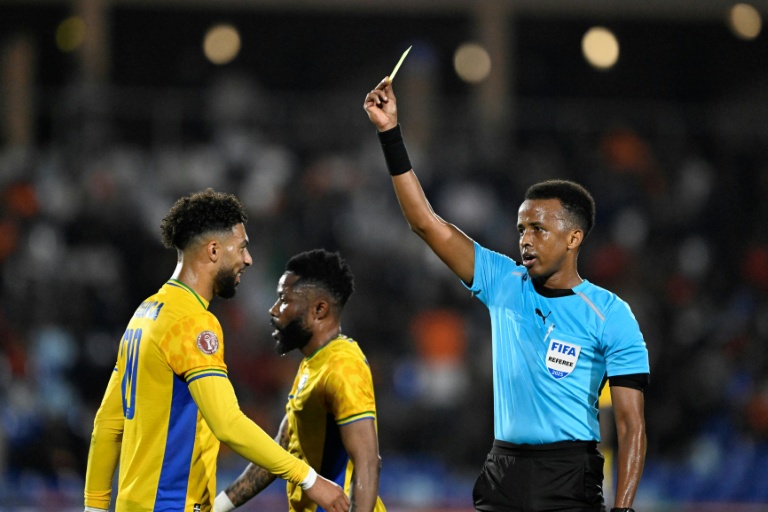
Soccer’s Global Stage Meets Sovereign Borders: A Somali Official’s Unseen Match
POLICY WIRE — Washington, D.C. — Football’s sprawling, unifying global spectacle – that quadrennial tournament that promises to erase lines on maps and bind diverse peoples – sometimes collides...

POLICY WIRE — Washington, D.C. — Football’s sprawling, unifying global spectacle – that quadrennial tournament that promises to erase lines on maps and bind diverse peoples – sometimes collides head-on with an immoveable, distinctly terrestrial object: national sovereignty. We’re not talking about VAR controversies or offside calls here. This collision played out silently, ignominiously, not on a pitch, but at an airport, ending one man’s shot at history before he’d even truly begun. A story, you might say, about who gets to play, and, more importantly, who gets to enter.
Omar Abdulkadir Artan, an award-winning referee from Somalia, wasn’t just another name on FIFA’s prestigious roster for the World Cup. He was poised to be the first Somali national ever to officiate at this grand event, a significant personal achievement, and certainly a moment of immense pride for his home nation. But dreams, apparently, sometimes get clipped by bureaucracy at the border. Artan was summarily denied entry to the United States after landing at Miami International Airport, effectively scrubbing him from the tournament’s officials. [QUOTE_PLACEHOLDER]
FIFA, world football’s big boss, released a statement. You know, the kind of statement designed to say everything — and nothing at once. It can confirm that match official Omar Abdulkadir Artan will be unable to train and officiate at the FIFA World Cup 2026 after he was denied entry into the United States. And they were quick to stress their hands were tied. FIFA is not involved in host country immigration processes, including visa adjudications, and has been informed by authorities that Mr Artan’s status won’t be changed at present. So there’s that.
It’s a peculiar thing, this situation. The man had a valid visa, according to a government adviser in Mogadishu, Ciise Aden Abshir, a senior adviser to Somalia’s Ministry of Youth and Sports and a former national team captain. But the U.S. Customs and Border Protection (CBP) saw things differently, describing a routine inspection where, During processing, the traveler underwent additional inspection, a routine part of CBP’s inspection process when officers need to verify information or determine admissibility. Ultimately, this led to a finding of inadmissibility due to vetting concerns — and a swift denial of entry. The specific nature of these vetting concerns? Well, those details usually stay locked away in a government file cabinet, far from public scrutiny.
The situation casts a long shadow, doesn’t it? Artan’s homeland, Somalia, unfortunately, resides on a list of countries subject to certain travel restrictions — measures originally ushered in by the Trump administration as part of a broader immigration crackdown. This detail, hovering in the background, lends a distinct political tinge to what might otherwise appear to be a straightforward bureaucratic decision. It’s a blunt reminder that sports, for all its idealism about transcending politics, frequently crashes into the hard realities of geopolitics and nationalist policy. It’s hard to ignore that some passports seem to open doors while others, even with valid visas, merely present another barrier.
President Hassan Sheikh Mohamud of Somalia had previously hailed Artan as a symbol of inspiration for the new generation of Somalis. One can’t help but wonder what message this incident now sends. Artan himself, displaying an almost unnatural calm, merely offered, Despite the circumstances I am in a positive mood and I am focused on the next challenges in my refereeing career. That’s resilience, right there.
Abshir, the Somali sports adviser, didn’t mince words, though. He felt that Denying him entry to the United States and preventing him from officiating scheduled matches harms not only him personally but also undermines football’s commitment to fairness, merit, and the spirit of fair play. He’s got a point. You build up talent, you make it onto the world stage, and then, at the very last hurdle, sovereign policy says, ‘Nope.’ But this isn’t just about one man. It’s about perception.
And it’s about precedent. How do you square football’s grand declarations of global unity with individual nations exercising their absolute right to admission—or denial—on grounds that remain opaque to the world body trying to organize the event? It presents a rather thorny problem for future World Cup co-hosts, especially those operating within similar frameworks of strict border controls. The refusal of entry isn’t an isolated incident, either; the U.S. Department of State reported that the worldwide refusal rate for non-immigrant visas stood at 24% in FY2023. That’s a quarter of all applicants, just, you know, summarily dismissed.
For those of us tracking these things, this isn’t merely a sporting snafu. This is a policy flashpoint, dressed in a soccer jersey.
What This Means
This incident, while seemingly minor in the grand scheme of global sports, sends potent political — and economic ripples. Politically, it reasserts the uncompromising nature of national immigration sovereignty—even against institutions as globally powerful as FIFA. It doesn’t just impact Somalia; it broadcasts a clear message to other nations (particularly in the Muslim world and parts of South Asia that face similar scrutiny) that global recognition doesn’t necessarily trump national vetting protocols. If an internationally recognized official can be sidelined like this, what does it mean for academics, business professionals, or even everyday tourists from these regions? It solidifies a perception, already held in many corners, that individuals from certain geographies operate under a heightened, often unexplained, level of scrutiny when interacting with Western borders.
Economically, this sort of high-profile refusal complicates the calculus for large-scale international events, which often rely on smooth talent and personnel movement. For future multi-nation events, organizers might need to factor in complex immigration frameworks, perhaps even requiring diplomatic assurances—or seeking hosts in less restrictive jurisdictions. It could subtly influence decisions on where future World Cups are held, favoring nations with more flexible (or perhaps less controversial) immigration policies. it reinforces a quiet, unquantifiable cost on global exchange—limiting human capital movement for reasons that remain stubbornly unarticulated, dampening opportunities for cultural and professional exchange that such mega-events are supposedly meant to foster. But for now, we’re left to ponder the invisible fences that loom larger than any stadium goalposts. Maybe the real game is always off the field. It’s definitely not always fair, is it?
