


Taliban’s Repatriation Gambit: A Call for Afghans in Qatar, or a Calculated Trap?
POLICY WIRE — Doha, Qatar — The desert wind, a perpetual companion to the thousands of Afghan evacuees languishing in Qatar’s transitional facilities, now carries an unsettling proposition: come...

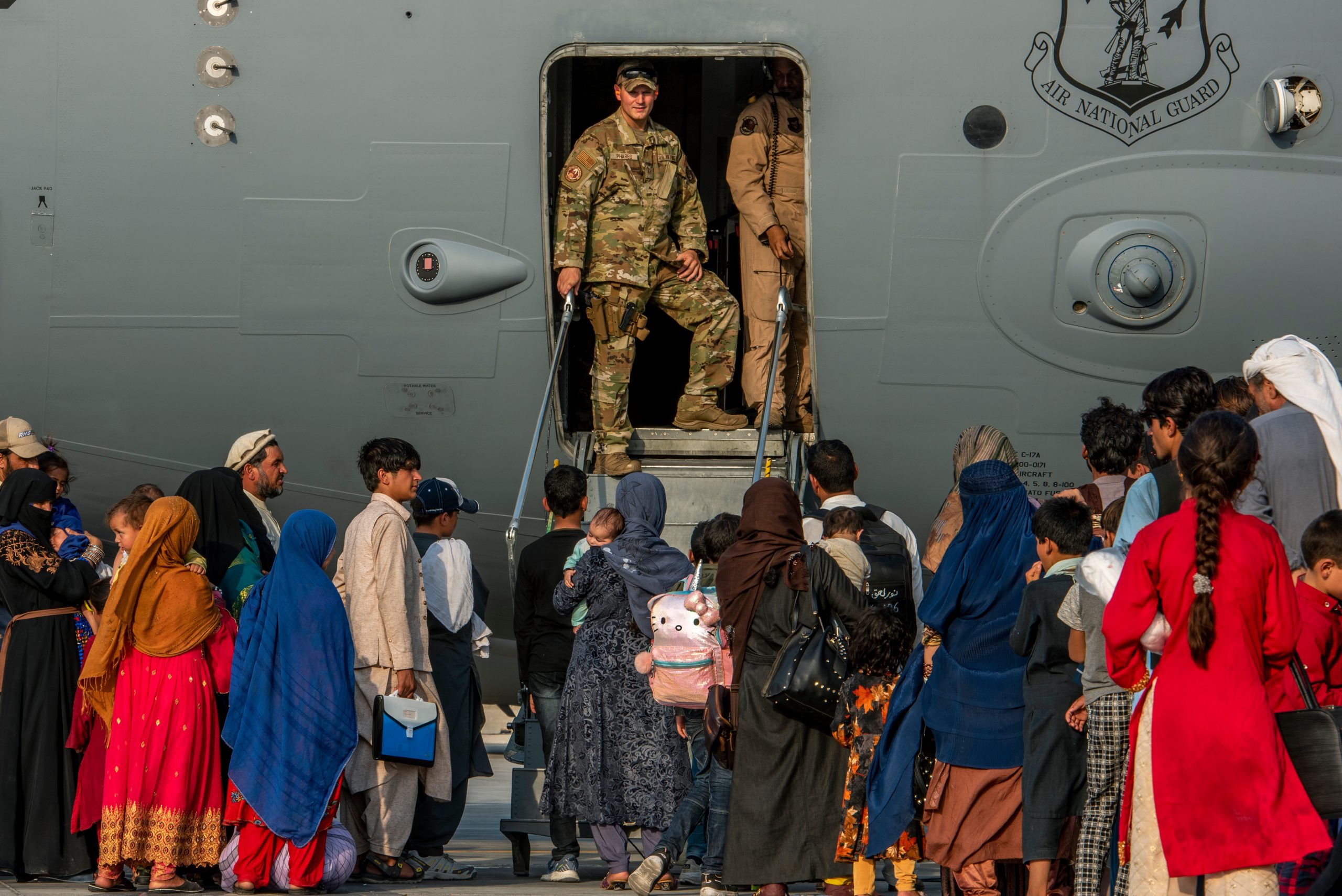
POLICY WIRE — Doha, Qatar — The desert wind, a perpetual companion to the thousands of Afghan evacuees languishing in Qatar’s transitional facilities, now carries an unsettling proposition: come home. Not from the U.S. or Europe, but from the very interim havens where they’ve awaited resettlement for years, their lives suspended in bureaucratic amber. And the invitation isn’t from a grateful ally. It’s proffered by the very entity they fled: the Taliban, whose recent decree urges Afghans who collaborated with the former government or international forces to repatriate.
It’s a bold declaration, isn’t it? A regime still struggling for international legitimacy, one notorious for its stringent interpretations of Islamic law and its often-brutal consolidation of power, now extends an olive branch. Or perhaps, a veiled hand, beckoning those who once aligned with its adversaries back into its fold. The sheer audacity of the call, delivered through official channels, underscores a profound confidence—or perhaps a desperate need—to reassert absolute sovereignty, even over the ghosts of a bygone conflict.
Many of these Afghans, categorized as ‘at-risk’ due to their direct assistance to U.S. and allied forces, initially found refuge in Qatar following the tumultuous August 2021 withdrawal. They weren’t meant to stay indefinitely. But here they remain, caught in a seemingly endless holding pattern, their Special Immigrant Visa (SIV) applications and asylum requests navigating a labyrinthine international bureaucracy. So, this unexpected summons from Kabul. It compels a moment of stark reflection for these individuals, their families, and the international community that pledged their safety.
At its core, the Taliban’s pronouncement is an exercise in political theater, designed to project an image of national unity and magnanimity, despite copious evidence to the contrary. “Our land is their land,” asserted Zabihullah Mujahid, the Islamic Emirate’s chief spokesman, in a recent press conference, his tone unyielding. “The Islamic Emirate has extended a general amnesty; they’ve nothing to fear. Their expertise is needed for rebuilding our nation, shattered by foreign interference.” He spoke of forgiveness, of national reconciliation—a narrative meticulously crafted for both domestic consumption and external perception management.
But the lived reality for many back in Afghanistan tells a different tale. Reports from international organizations consistently document targeted reprisals, restrictions on women’s rights that are unprecedented globally, and a humanitarian crisis of devastating proportions. According to the United Nations Office for the Coordination of Humanitarian Affairs (OCHA), over two-thirds of Afghanistan’s population—roughly 29.2 million people—require humanitarian assistance in 2024. That’s not a homecoming party; it’s an abyss.
Still, the abrupt invitation, extended by a regime yet to secure broad international recognition for its human rights record and exclusionary governance—especially concerning women and minorities—raises more than just eyebrows; it precipitates a maelstrom of ethical and practical quandaries for those caught in this geopolitical limbo. A senior U.S. State Department official, speaking on background, shot back: “The promise made to these individuals was clear: safety for their invaluable service. To suggest a return to an uncertain future, under a regime that’s demonstrated little regard for human rights, is a profound dereliction of that responsibility. We simply can’t condone it.”
And what of Pakistan, a nation grappling with its own internal security challenges and a long history of hosting Afghan refugees? The ripple effects of any mass return, whether voluntary or forced, would inevitably cascade across the porous Durand Line. Pakistan has already repatriated hundreds of thousands of undocumented Afghans, often controversially, creating further instability. The Taliban’s call, however it’s interpreted, adds another layer of complexity to the region’s already volatile demographic and political landscape. It’s not just about individuals; it’s about the broader perception of refugee protection within the Muslim world.
These Afghans in Qatar, having witnessed the swift collapse of the U.S.-backed government, understand the perils firsthand. They’ve already walked a tightrope. To consider returning, even with the Taliban’s proclaimed amnesty, requires a leap of faith that few, having experienced the past two decades of conflict and betrayal, can genuinely afford.
What This Means
This latest move by the Taliban is a multifarious strategic play. Economically, it represents an attempt to reclaim lost human capital—the educated, the skilled, those with international exposure—essential for rebuilding a devastated nation, albeit under stringent ideological constraints. Politically, it’s a shrewd maneuver to project control and normalcy, undermining the narrative of a besieged, isolated regime. By inviting these Afghans back, the Taliban aims to demonstrate an ability to govern, to forgive, and to consolidate its hold, irrespective of international opprobrium. But it also presents an acute dilemma for the U.S. and its allies. Having pledged safe passage and resettlement, the notion of these individuals returning to Taliban rule is an ignominious failure of foreign policy and a profound moral injury. It could further complicate future humanitarian interventions and erode trust with local partners in other volatile regions. Behind the headlines, this episode underscores the enduring fragility of post-conflict reconstruction and the cynical calculus of power, leaving thousands of lives caught in a cruel, interminable purgatory. It’s a digital doorway to potential statelessness or worse for many, a stark reminder that promises made in the heat of evacuation can cool to a harsh reality.