

Oil’s Crucible: Tehran’s Chokehold Warning Rattles Global Energy Nerves
POLICY WIRE — Dubai, UAE — The whispers started almost imperceptibly, a nervous tremor rippling through commodity markets long before the official word hit the airwaves. Not a crash, not yet. But an...

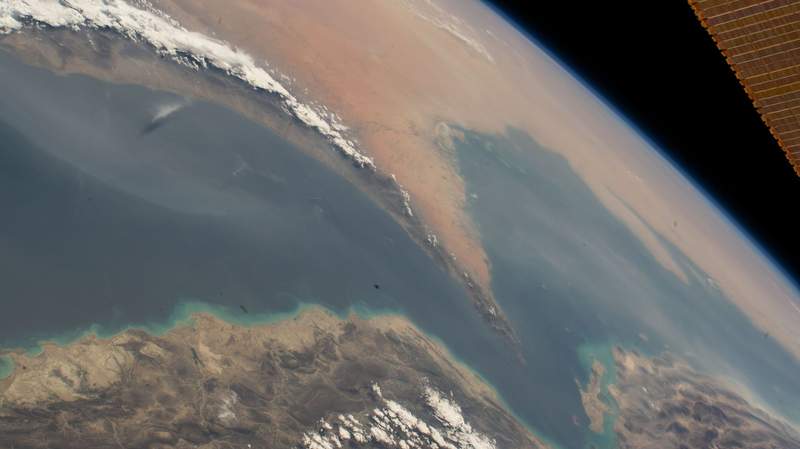
POLICY WIRE — Dubai, UAE — The whispers started almost imperceptibly, a nervous tremor rippling through commodity markets long before the official word hit the airwaves. Not a crash, not yet. But an unease, a sort of geopolitical atmospheric pressure building. It’s the silent anxiety that always stalks the Strait of Hormuz, that slender maritime bottleneck through which the lifeblood of much of the global economy silently flows—or could, on a bad day, abruptly cease.
Iran, never one to shy from a loud declaration, decided it wasn’t enough for the world to merely infer its intent. Tehran made it explicit: the Strait is theirs, an open artery only for friends, a fortified barricade for foes. Or, as state media quoted General Qassem Rezaei, a spokesman for Iran’s Islamic Revolutionary Guard Corps, rather bluntly, “Our waterways are sovereign. Any hostile intent will find them swiftly, unequivocally shut. We don’t mince words. We simply don’t.”
This isn’t just bombast, you know? It’s a calculated flex of strategic muscle. Roughly one-fifth of the world’s total petroleum liquids consumption—about 21 million barrels per day in 2018, according to the U.S. Energy Information Administration (EIA)—flowed through this 21-mile-wide passage. That’s a lot of black gold. It’s the global economy’s jugular, exposed — and forever a subject of a high-stakes staring contest. Because when Iran talks like this, everyone from Riyadh to Rotterdam sits up — and pays attention. Even Pakistan, whose rapidly industrializing economy hums largely on imported crude from the Gulf, understands intimately that such rhetoric isn’t merely geopolitical posturing; it’s a stark reminder of economic fragility and how quickly their domestic price stability can vanish.
It’s the familiar tune, replayed with escalating urgency. Sanctions tighten, diplomatic efforts falter, — and then comes the threat, hovering like a thunderhead. A senior U.S. State Department official, speaking on background and clearly irritated, observed, “We view these statements with serious concern. Unimpeded maritime passage is an international imperative, not a bargaining chip for regional grievances. The economic costs would be astronomical for everyone, Iran included, but particularly for the consumers who depend on this supply.” He didn’t need to specify; we all know who’d get hammered hardest.
And let’s be real: this isn’t about naval capacity as much as it’s about perception management—or, perhaps, anxiety management for Tehran. They’re telling the world, yet again, that they hold a certain lever. A mighty big one, at that. It’s part of a larger pattern of regional maneuvering, shadow games playing out with profound implications far beyond the immediate region. Sometimes, you see the real strategy not in grand announcements, but in the subtle shifts, the unspoken threats, the actual geopolitical deals stirring amidst all the public theatre.
📄 POLICY WIRE WHITEPAPER PUBLISHED: PAKISTAN'S NATIONAL SECURITY POLICY PRIORITIES
👉 READ BY CLICKING HEREThey know the West, — and indeed most of Asia, needs that oil to keep the lights on and the factories running. And they also know the international community, for all its bluster, remains remarkably skittish about any actual confrontation that could spike prices beyond imagination. So, Iran tests the limits. They push. They prod. They make sure everyone understands their unique brand of leverage. It’s an old dance, but the music always feels new, fresh with danger.
What This Means
The latest Iranian warning signals not just a deeper commitment to its current posture but also a clear attempt to reset bargaining terms. Politically, it’s a move designed to raise the international stakes of continued economic pressure, daring the global community to consider the alternative—a ruptured energy market. For the United States and its Gulf allies, it translates into heightened vigilance and perhaps more aggressive naval deployments in the Persian Gulf. They’re trying to send a message that, despite all their economic struggles, Iran can still inflict a significant amount of pain, financially, across continents.
Economically, the impact, even without an actual closure, is immediate, if subtle. Oil prices tick up. Insurance premiums for tankers traversing the Strait swell. Shipping lanes get scrutinized, contingency plans dusted off. Investors, already on edge from other global instabilities, grow even more wary, pulling capital from risky ventures. Because even the remote possibility of this choke point being throttled sends ripples throughout the energy ecosystem, raising the cost of doing business for virtually everyone dependent on maritime trade, which, let’s face it, is almost everyone. It won’t bring the world to its knees overnight, but it adds another layer of deep uncertainty to an already fragile global economy. And in these times, that’s almost as damaging as an actual crisis.