

World Cup’s Commercial Embrace: When Global Icons Become Brand Ambassadors Amidst Sporting Spectacle
POLICY WIRE — New York, USA — Another World Cup looms, not just as a grand celebration of athletic prowess, but as a meticulously engineered ecosystem where sporting legends seamlessly morph into...

POLICY WIRE — New York, USA — Another World Cup looms, not just as a grand celebration of athletic prowess, but as a meticulously engineered ecosystem where sporting legends seamlessly morph into commercial commodities. It’s a testament, perhaps, to our era’s curious blend of hero-worship and rampant consumerism—where the very athletes we lionize become spokesmen for everything from fizzy drinks to sneakers. And why wouldn’t they?
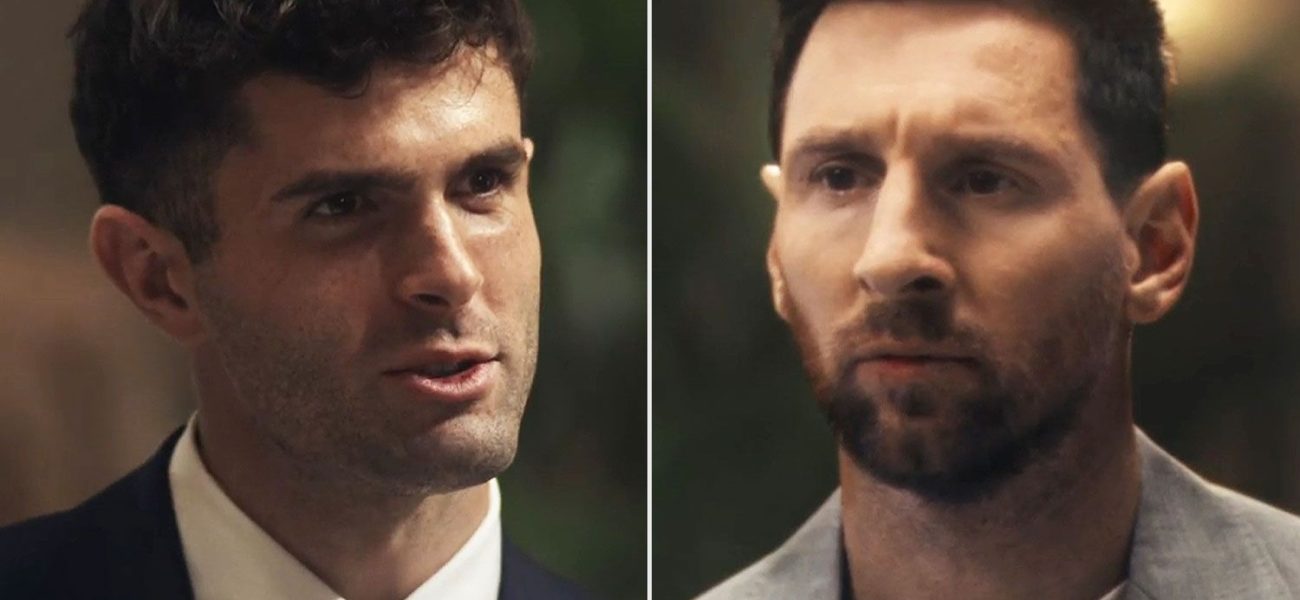
This dynamic plays out vividly in a new advertisement for Michelob Ultra, a sprawling, star-studded affair set to amplify the buzz for next month’s FIFA World Cup. In this high-gloss short film, Christian Pulisic, the United States Men’s National Team captain, finds himself playfully clashing with none other than Lionel Messi—an eight-time Ballon d’Or recipient and a name synonymous with footballing genius. Alex Morgan, a titan of the women’s game, and actor Billy Bob Thornton round out the A-list ensemble, all conspiring in an impromptu, cinematic soccer match that apparently spills from a hotel lobby into, well, everywhere.
It’s not merely an advertisement for beer; it’s a cultural event designed to capture eyeballs globally, a prime example of how major sporting events serve as a conduit for unparalleled corporate reach. But beneath the slick production — and the carefully curated spontaneity, a much bigger game is afoot. These campaigns, they don’t just sell a product; they reinforce the global appeal of football itself, making it accessible—and commercially digestible—to billions.
The 2026 World Cup, slated to be hosted across the U.S., Mexico, and Canada, isn’t just significant for its geographical breadth. It’s also set to be the largest iteration of the tournament in history, by sheer number of participating teams. Because, really, what better platform could you ask for? For Pulisic, this impending domestic spectacle feels like ‘a once-in-a-lifetime kind of thing.’ And it’s not hard to see why. Playing on home turf, in front of a ravenous American audience, amplifies everything: the stakes, the exposure, and certainly, the commercial opportunities.
Dr. Anya Sharma, a prominent sports economist at the University of Maryland, observed, ‘What you’re seeing isn’t just an ad; it’s a strategic fusion of global athletic stardom and corporate branding. They’re selling a lifestyle, not just a product, tapping into collective aspirations around the world, from bustling American cities to the rapidly urbanizing consumer bases in places like Lahore.’ She’s got a point. Even in Pakistan, a nation where cricket traditionally holds almost religious fervor and regional instability can unfortunately overshadow daily life, the ubiquitous presence of global football icons like Messi, beaming from television screens or digital feeds, speaks to a quiet yet undeniable shift. Kids aren’t just idolizing local heroes anymore; they’re connecting with a planetary narrative.
Pulisic, aged 27, appears genuinely stoked. He reportedly told a lifestyle publication, ‘I’m just honored that I get to do it. And I just can’t wait for this tournament to begin.’ The campaign’s premise, which amusingly sees the U.S. contingent (on-screen, anyway) outwit Messi’s squad, playfully nods to American footballing aspirations. After a respectable showing at the 2022 World Cup in Qatar—where they reached the Round of 16—the U.S. side isn’t just hoping for a repeat; they’re aiming to hoist the trophy on July 19 at MetLife Stadium. A grand ambition, indeed.
📄 POLICY WIRE WHITEPAPER PUBLISHED: PAKISTAN'S NATIONAL SECURITY POLICY PRIORITIES
👉 READ BY CLICKING HEREBut the true magnitude of such endorsements? The global sports sponsorship market alone is projected to hit $89.6 billion by 2027, according to a report by Statista. That’s an absurd amount of money changing hands, fueling everything from athlete salaries to extravagant ad buys like this one. It’s a commercial behemoth, with individual athletes becoming multinational corporations unto themselves.
Congressman Julian Rodriguez (D-TX), a seasoned voice on international cultural diplomacy, mused, ‘These campaigns, while purely commercial, possess an undeniable soft power. When a household name like Messi or Pulisic — especially Pulisic, an American— is seen in the homes of families from Jakarta to Casablanca, it’s a small but tangible cultural bridge. It shifts perceptions, albeit subconsciously.’ That’s a fascinating thought, isn’t it? A beer commercial, inadvertently building cultural ties.
What This Means
The melding of sports, celebrity, and corporate sponsorship—as perfectly encapsulated by this Michelob Ultra campaign—illuminates several intersecting realities. Economically, it signifies the maturation of global football into an unparalleled advertising platform, capable of leveraging its biggest stars for brand visibility on a scale few other cultural phenomena can match. The sheer investment in these campaigns—for a beer, no less—underscores the vast financial muscle at play, translating athletic achievement into consumer appeal. And it’s not just about selling a product; it’s about aligning a brand with a feeling, an aspirational identity. This extends beyond established markets; companies are keenly aware of emerging consumer bases, especially in rapidly developing regions of South Asia and the Muslim world, where a burgeoning youth population is increasingly connected to global trends. Though they face challenges like political instability, a common sight in parts of Pakistan, the reach of global brands remains undeterred.
Politically — and culturally, these mega-commercials also wield a quiet soft power. They broadcast a certain kind of globalism, projecting figures like Messi and Pulisic into living rooms across diverse societies. This widespread exposure subtly influences cultural tastes and consumer habits, bridging geographical divides through shared popular culture, even if it’s mediated by a sales pitch. Such endorsements aren’t simply about getting fans to buy a beer; they’re about solidifying football’s dominance as a truly universal language—a beautiful game increasingly defined by the lucrative ballet between athlete, ad agency, and the global consumer. The evolution of sports media, with its digital ascendance and celebrity-driven spectacle, suggests this trend will only intensify.