

Beijing’s Gambit: China Blocks US Sanctions, Igniting a New Front in Economic Warfare
POLICY WIRE — Washington D.C., USA — The geopolitical chessboard just got another king’s move, but it’s not on a battlefield. It’s in the often-overlooked regulatory labyrinths of international...

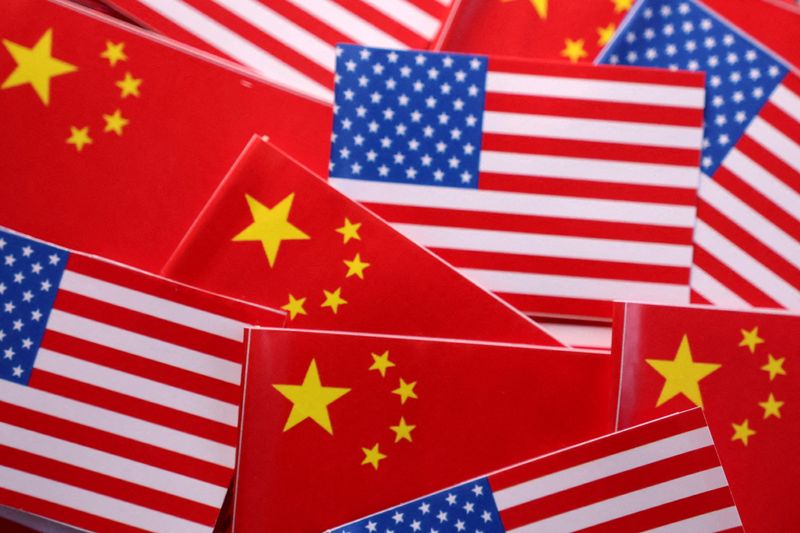
POLICY WIRE — Washington D.C., USA — The geopolitical chessboard just got another king’s move, but it’s not on a battlefield. It’s in the often-overlooked regulatory labyrinths of international trade, where Beijing just delivered a pointed counterpunch. China’s Commerce Ministry, with a brazen flick of its bureaucratic wrist, recently announced it would block Washington’s sanctions targeting five unnamed refineries – a direct, unambiguous challenge to the long arm of U.S. economic statecraft. This isn’t merely a bureaucratic hiccup; it’s a consequential escalation in the protracted economic contest between the world’s two largest economies.
For years, the U.S. Treasury and State Departments have wielded sanctions like a surgical tool, aiming to cripple adversaries or compel policy changes by cutting off access to the global financial system. But China’s new “blocking statute” effectively tells its domestic entities to ignore these directives when they contradict Chinese law or sovereignty. And, boy, does it send a message. This isn’t just about five refineries; it’s about the very efficacy of Washington’s primary non-military leverage.
At its core, this move signals a deepening resolve from Beijing to shield its industries – and by extension, its geopolitical allies – from what it deems extraterritorial coercion. The Ministry’s action empowers Chinese enterprises to seek legal recourse within China for losses incurred by complying with foreign sanctions, creating a thorny legal and commercial dilemma for any firm operating in both jurisdictions. It’s a reciprocal policy, mirroring similar statutes in the European Union, which have long existed to counter U.S. sanctions against Cuba or Iran, for example. But China’s entry into this particular fray carries far greater weight due to its immense economic footprint.
“This isn’t merely a defensive maneuver; it’s a resolute affirmation of our sovereign right to conduct legitimate business unimpeded by extraterritorial coercion,” shot back Chinese Foreign Ministry spokesperson Mao Ning during a regular press briefing in Beijing. “China won’t stand idly by as foreign powers dictate the terms of our economic engagement.” Her words, sharp and unyielding, underscore a newfound assertiveness in Chinese foreign policy, one less about subtle diplomacy and more about direct confrontation when national interests are perceived to be threatened.
Still, the precise implications for global businesses remain murky. Companies with operations in China now face the unenviable task of navigating a contradictory legal landscape. Comply with U.S. sanctions and risk Chinese penalties? Or defy Washington and incur its wrath? It’s a Hobson’s choice, really, designed to fray nerves — and complicate compliance. This legislative counter-offensive isn’t just theoretical; it’s a practical wrench thrown into the gears of international commerce, potentially forcing a painful bifurcation of supply chains and investment strategies.
“Washington’s commitment to holding malign actors accountable remains unwavering,” stated U.S. State Department spokesperson Matthew Miller in an email response. “We’re scrutinizing Beijing’s response closely – it only underscores the systemic challenges inherent in navigating an economic landscape where some actors disregard international norms and actively undermine global stability.” This measured, yet firm, response suggests the U.S. isn’t about to back down, ensuring that this economic tit-for-tat won’t be a one-off.
📄 POLICY WIRE WHITEPAPER PUBLISHED: PAKISTAN'S NATIONAL SECURITY POLICY PRIORITIES
👉 READ BY CLICKING HEREThe ripple effects of such a move could easily extend far beyond the immediate U.S.-China bilateral relationship. Consider South Asia, a region heavily reliant on imported energy and increasingly a focal point of both American and Chinese influence. Nations like Pakistan, navigating complex allegiances, watch developments like this with particular apprehension. If key global oil infrastructure becomes a battleground for competing legal regimes, it could destabilize energy prices and supply chains, impacting everything from national budgets to everyday consumer costs. Securing the Hindu Kush, for instance, isn’t just a military endeavor; it’s also about economic stability and access to resources.
According to the U.S. Energy Information Administration (EIA), China’s refining capacity expanded by an average of 450,000 barrels per day annually between 2017 and 2022, underscoring its pivotal role in global energy markets. Such immense capacity means that any disruption or re-routing of its supply chains – or those of its partners – has colossal ramifications. This isn’t just about crude oil; it’s about the refined products essential for transportation, manufacturing, and power generation across vast swathes of the globe.
What This Means
This blocking statute marks a qualitative shift in the U.S.-China economic rivalry. Previously, China’s responses to U.S. sanctions were often retaliatory tariffs or less direct diplomatic rebukes. This time, it’s a direct challenge to the legitimacy — and enforceability of foreign law within its borders. Politically, it deepens the ideological chasm, painting the U.S. as an overreaching hegemon and China as a defender of national sovereignty – a narrative that resonates well in many developing nations (and even some developed ones, frankly). Economically, it introduces a fresh layer of uncertainty for multinational corporations, forcing them to conduct a painstaking re-evaluation of their risk exposure and operational strategies.
Behind the headlines, it’s also a play for influence. By offering a shield against U.S. sanctions, Beijing subtly — or not so subtly — invites other nations and their entities to align more closely with its legal and financial architecture, creating an alternative to the U.S.-dominated global system. This could have long-term implications for the international rule of law — and the dollar’s supremacy. It’s a high-stakes poker game, — and China just raised the ante, daring Washington to call its bluff. The question isn’t if there’ll be further escalation, but rather, what form it’ll take.