


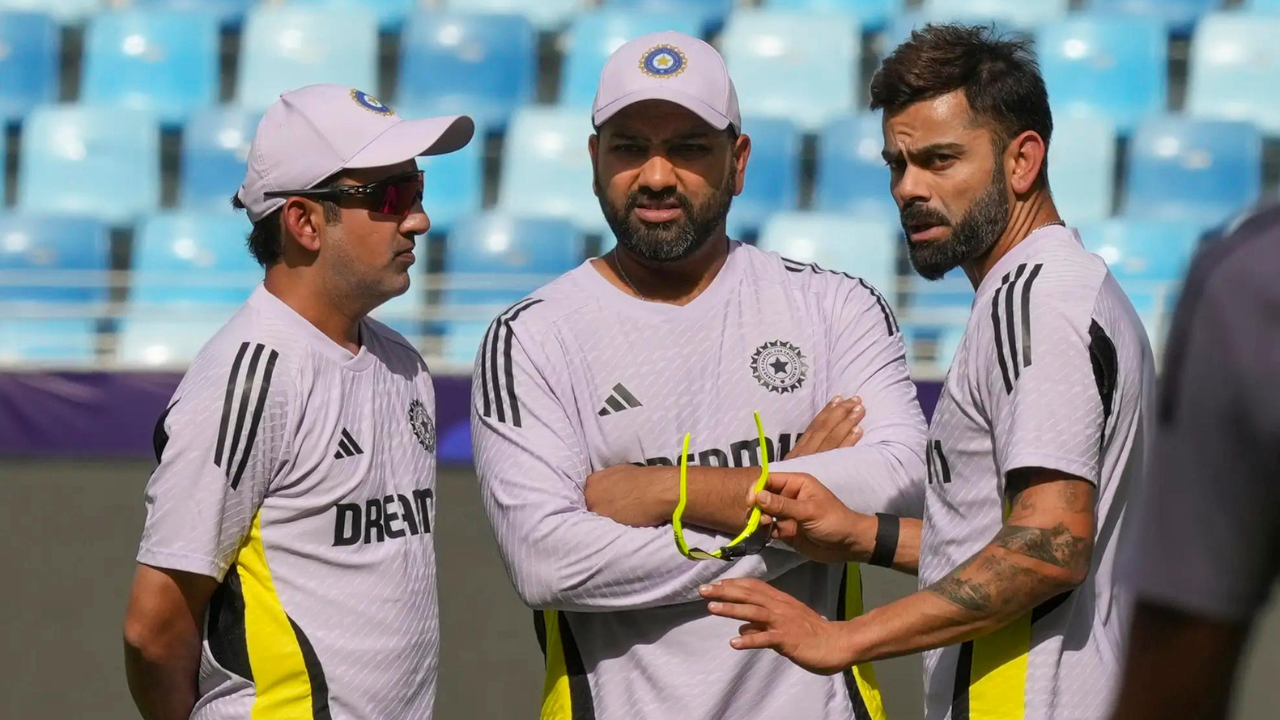
Silent Storm: Gambhir’s Iron Grip Rattles India’s Cricket Pantheon Amidst Strained Success
POLICY WIRE — Mumbai, India — They say winning fixes everything. And if that’s true, Indian cricket should be in absolute bliss. Triumphant on the white-ball circuit, holding simultaneous T20,...

POLICY WIRE — Mumbai, India — They say winning fixes everything. And if that’s true, Indian cricket should be in absolute bliss. Triumphant on the white-ball circuit, holding simultaneous T20, Champions Trophy, and Asia Cup titles—a historic hat-trick not seen before—they’ve built a formidable, seemingly unstoppable machine. But even in victory, some machines just hum with an unsettling undercurrent. And for India, that hum is growing louder, threatening to expose a deeply fractured dressing room presided over by head coach Gautam Gambhir, whose famed intensity appears to be rubbing some stars the wrong way.
It’s a peculiar paradox: unbridled success masking simmering dissent. First, there was Ravichandran Ashwin, stepping away from all international cricket mid-Test series against Australia. Then, the almost casual, yet seismic, double announcement: Virat Kohli and Rohit Sharma, two giants of the game, declared they were done with Test cricket. Rohit, famously, didn’t even keep his ODI captaincy despite leading the team to Champions Trophy glory just weeks prior, swiftly replaced by Shubman Gill. These weren’t quiet retirements; they felt like withdrawals. And their timing? Uncannily proximate to Gambhir’s tenure, which began a mere year ago, on July 10, 2024.
Now, a former India cricketer, Atul Wassan, is pulling back the curtain further. He’s claiming players are effectively ‘sleeping on needles’ under Gambhir’s uncompromising gaze. Wassan, no stranger to public squabbles with Gambhir—he once sat on the Delhi selection committee that controversially removed Gambhir as captain—didn’t mince words on Vickey Lalwani’s YouTube show. He suggested that while the team wins, the coach gets a free pass. But should they stumble? Well, then the ‘leading with a stick’ approach might just crack under pressure.
Wassan’s isn’t just an anecdotal observation, either. He hinted at knowing ‘one or two’ specific players who felt sidelined, though he predictably wouldn’t name names. And it makes sense. Who’d rock the boat when the ship’s currently collecting silverware? But what happens when the waters get choppy?
“Look, winning masks many things,” commented Anurag Thakur, Secretary of the Board of Control for Cricket in India (BCCI), on record in a recent conversation. “It’s a high-pressure job, — and sometimes hard decisions are just that – hard. Our mandate is clear: sustain performance at the highest level, and we’re doing that on several fronts.” He chose his words carefully, like an executive defending a successful yet controversial CEO.
But the numbers tell a story, too. While white-ball glory rained, India’s red-ball record under Gambhir has been – to put it mildly – alarming. They suffered rare home series whitewashes against New Zealand and South Africa, a devastating blow in conditions usually considered impenetrable for visiting teams. And perhaps most painfully, the Border-Gavaskar Trophy was surrendered to Australia for the first time in a decade. Such results for a cricketing superpower are simply unacceptable. The internal churn certainly seems correlated.
Even Gambhir himself has acknowledged his method’s polarizing nature, albeit defiantly. “It isn’t about popularity, it’s about performance. And we don’t pick players based on their comfort, we pick them to win,” he stated during a recent press briefing, his steely gaze unblinking. “If some find that challenging, well, international cricket isn’t a summer camp.” He didn’t have to name names to send a clear message: adapt, or make way.
What This Means
This unfolding drama within the world’s most lucrative cricketing ecosystem carries significant policy implications, not just for the BCCI but for global sports. Economically, prolonged instability, even amidst success, can deter long-term sponsorships — and impact broadcast deals. Star power is the engine of cricket’s commercial machinery; losing legends abruptly, even for apparent performance issues, creates uncertainty in a brand heavily reliant on individual narratives. And culturally, India’s cricket team is more than just a sports outfit; it’s a national emblem. A visibly strained environment, regardless of trophy cabinet fullness, risks eroding public faith and player morale in ways that no financial gain can fully offset.
the intense glare on India’s dressing room offers a mirror to the pressures facing other cricket boards in the subcontinent, including Pakistan, where questions of authority, player welfare, and national pride frequently intertwine with volatile performance. The constant balancing act between demanding performance and fostering team harmony is a pitched battle in itself, echoing the complexities of managing any high-stakes, high-pressure national asset in this region. Gambhir’s ‘my way or the highway’ philosophy, if proven unsustainable, could set a dangerous precedent, privileging dictatorial efficiency over collective psychological well-being. It’s a calculated risk; a gamble that has yielded trophies but might just cost India its soul, or at least a generation of its most beloved cricketers.