


Sudan’s Silent Exodus: Famine’s Inexorable March Amidst Geopolitical Apathy
POLICY WIRE — Khartoum, Sudan — The dust doesn’t just cling to the parched landscape of Sudan; it blankets the collective conscience, obscuring a catastrophe of staggering...

POLICY WIRE — Khartoum, Sudan — The dust doesn’t just cling to the parched landscape of Sudan; it blankets the collective conscience, obscuring a catastrophe of staggering proportions. While headlines fixate on flashpoints elsewhere, an entire nation is quietly succumbing to engineered starvation, its populace driven from homes not by the immediate spray of bullets — though that’s omnipresent — but by the slow, agonizing grip of famine.
It’s a bizarre tableau: a country rich in agricultural potential, now a crucible of destitution. But this isn’t some natural calamity. No, this is a meticulously crafted human-made crisis, a byproduct of a brutal power struggle that has weaponized everything from access roads to humanitarian aid. The numbers, when you bother to look, are stark, chilling. The World Food Programme (WFP) recently detailed that nearly 18 million people — roughly a third of Sudan’s population — are confronting acute food insecurity (IPC3 or higher), with millions teetering on the edge of outright starvation. That’s a staggering indictment of global inaction, isn’t it?
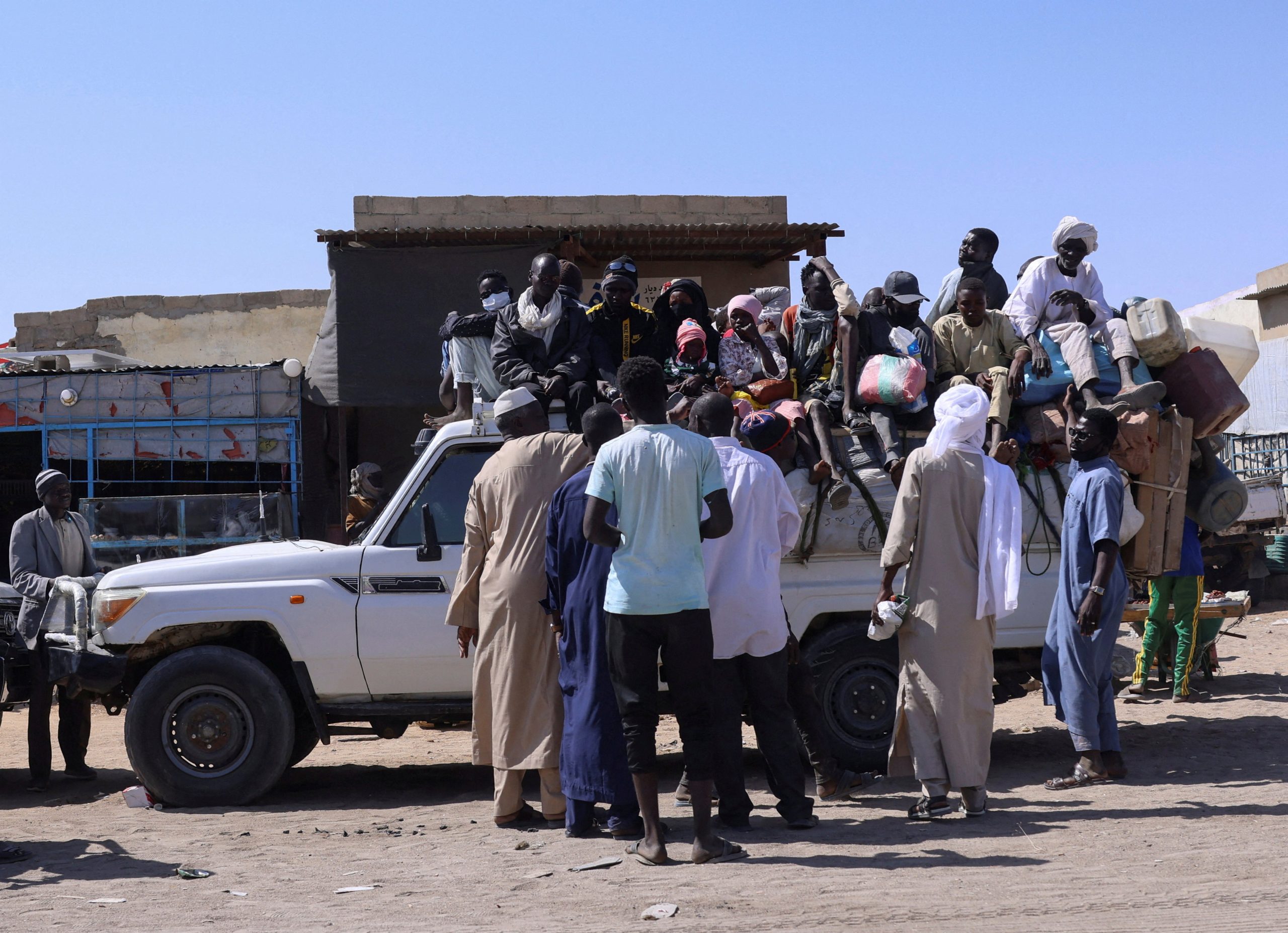
And what do you get when you mix ceaseless conflict with an absence of sustenance? Displacement, on a scale rarely witnessed. Families — parents, children, the elderly — abandon what little they’ve, trudging through vast, unforgiving terrains in search of sanctuary, only to find scarcity. They’re fleeing the relentless fighting between the Sudanese Armed Forces (SAF) and the Rapid Support Forces (RSF), yes, but increasingly, they’re fleeing empty granaries and poisoned wells.
“The world’s attention has drifted, but the suffering in Sudan hasn’t,” lamented Martin Griffiths, the UN Under-Secretary-General for Humanitarian Affairs, in a recent, exasperated briefing. “We’re witnessing a preventable human catastrophe unfold in slow motion, yet the global outcry remains tragically muted.” His words, though delivered with characteristic diplomatic restraint, betray a deep-seated frustration — a feeling shared by every aid worker scrambling to provide a fraction of what’s needed.
Behind the headlines — or the lack thereof — lies a deliberate campaign of disruption. Aid convoys are routinely looted, blocked, or simply can’t navigate the war-torn arteries of the country. Agricultural cycles, the very rhythm of life for millions, have been shattered. Seeds aren’t sown; harvests aren’t reaped. It’s a systemic dismantling of societal infrastructure, designed, it seems, to grind the population into submission.
Neighboring states, already stretched thin, bear the immediate brunt of this exodus. Chad, South Sudan, and Egypt — they’ve become unwilling custodians of Sudan’s unraveling, grappling with an influx that strains their meager resources to breaking point. “Our borders are open, but our resources are finite,” shot back Dr. Faisal Shama, Chad’s Minister of Refugee Affairs, during a regional summit. “The international community simply isn’t doing enough to address the root causes and provide sustained relief for both the displaced and their hosts. We’re facing an environmental — and economic crisis on top of the humanitarian one.”
Still, the question hangs in the air, thick with the stench of neglect: where is the collective conscience of the Muslim world? With shared faith and historical ties, one might expect a more unified, potent response from nations that could conceivably intervene. The Organisation of Islamic Cooperation (OIC) issues statements, yes, but practical, robust aid — the kind that cuts through red tape and armed checkpoints — remains agonizingly slow. One can’t help but draw parallels with other conflict zones where the weaponization of basic necessities becomes a grotesque feature of modern warfare.
And so, the quiet migration continues — families, with children clinging to their parents’ tattered clothes, their eyes reflecting the dust and despair of their journey. They’re walking ghosts in a land of plenty, testament to a global order that has chosen, for now, to look away. It’s a cruel reality, isn’t it?
What This Means
The protracted crisis in Sudan — defined by its lethal cocktail of internal strife, environmental degradation, and deliberate starvation tactics — portends significant geopolitical instability far beyond its immediate borders. Economically, the country’s collapse deepens regional poverty traps; displaced populations become an immense fiscal burden on host nations, diverting crucial development funds. Don’t forget, these are countries often struggling with their own vulnerabilities. Politically, the conflict risks transforming Sudan into a permanent failed state, a vacuum ripe for extremist elements or proxy battles between larger powers, contributing to broader regional instability. For humanitarian organizations, it represents a profound moral failure; the inability to deliver aid at scale not only exacerbates suffering but erodes public trust in international mechanisms. At its core, Sudan’s plight illustrates a disturbing trend: the normalization of mass human suffering when it doesn’t align with immediate strategic interests of powerful nations.