


Queens Miracle: Underdog’s Improbable Stint Lifts Mets From the Brink, If Only For a Night
POLICY WIRE — New York, United States — The air hanging over Citi Field last Saturday wasn’t just thick with a damp, late-spring chill; it was a palpable blanket of accumulated...

POLICY WIRE — New York, United States — The air hanging over Citi Field last Saturday wasn’t just thick with a damp, late-spring chill; it was a palpable blanket of accumulated despair, a “what next?” shroud enveloping a Mets squad whose 2026 campaign has morphed into a public lament. Then, like some unforeseen glitch in the cosmos, came Luke Weaver. One man, pitching against the ghosts of his own past and the overwhelming inertia of a losing season, punched a momentary hole in the gloom. It wasn’t just a baseball game; it was a desperate, primal scream of defiance in a season defined by whimpers.
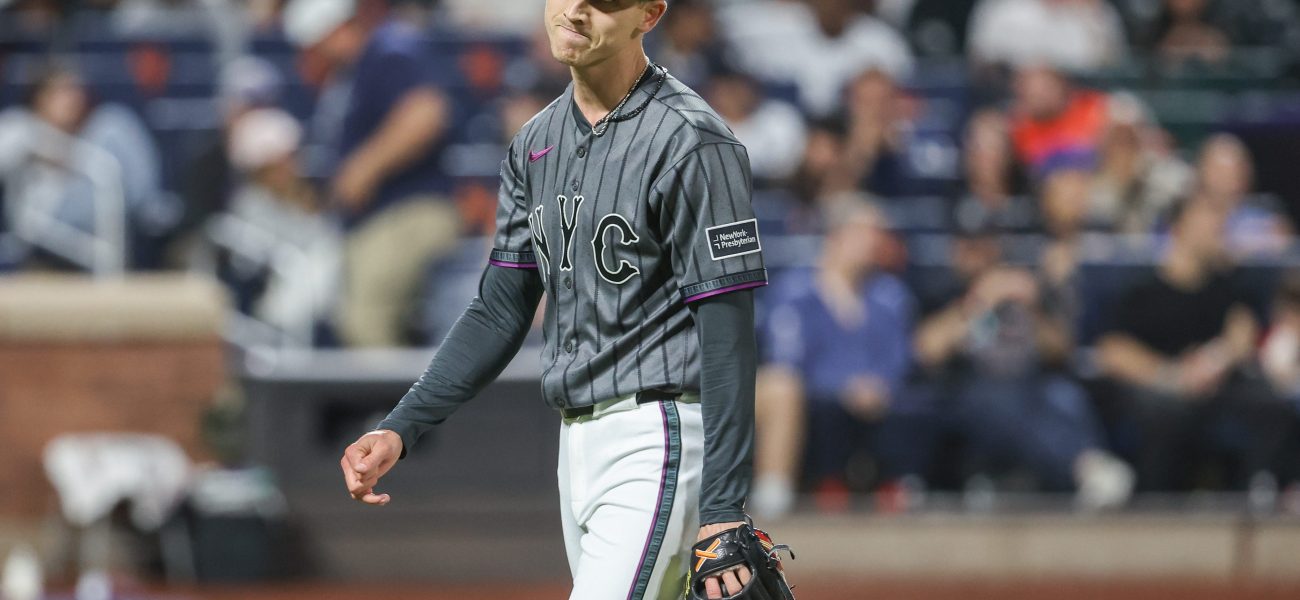
Carlos Mendoza, the Mets’ skipper, knows Weaver. He’d watched the guy ply his trade across the East River — and now, inexplicably, in Flushing. When the seventh inning unfolded with a runner-on-every-base, no-outs nightmare, and a slim two-run lead against the mighty Yankees — Weaver’s previous employer — Mendoza didn’t hedge. He beckoned Weaver from the pen. “It’s just the body language there,” Mendoza told reporters later, still looking a bit shell-shocked. “I think he hit 98 (mph). It’s just the way the ball was coming out. He was attacking. And then executing.” Execute he did. Two strikeouts. A ground ball. Clean. Amed Rosario, Trent Grisham, — and Anthony Volpe — dispatched. You don’t just walk away from that; you sprint.
But wait, there’s more. Weaver wasn’t done. He sauntered back out for the eighth, brushed off a leadoff single like an irritating fly, then induced a rally-killing double play. Aaron Judge, a titan of the sport and an old locker-room mate, stepped in with the potential to ignite yet another Bronx Bombers rally. Weaver got him to pop out, effectively slamming the door. The crowd of 41,067 — largely accustomed to leaving with a taste of ashes in their mouths — actually roared. The Mets clung to a 6-3 victory. This was not the normal cadence of their dreadful 19-26 record; it felt alien, almost subversive.
The layers of irony, or maybe just plain bad luck, here are as rich as a triple-chocolate cake. Weaver, who inked a two-year, $22 million deal to switch boroughs after revitalizing his career across town, performed this feat barely 24 hours after his close friend and former teammate, Clay Holmes, fractured his fibula. Holmes’s injury was just the latest casualty in the Mets’ medical ward, which includes big names like Francisco Lindor and Luis Robert Jr. It’s a “bug,” as Weaver himself called it. And it’s, no doubt, contagious.
“It’s just a cool moment. That’s why you play the game,” Weaver reflected, with an earnestness that almost sounded foreign in the cynical halls of modern sports journalism. “It’s just things that come out of you, the moment gets big, you try to find a way to channel it, not panic, not get stressed out.” Spoken like a true combatant who’d just stared down an overwhelming adversary and, improbably, won. This raw, instinctual grit is what separates fleeting talent from sustained performance, a spirit found in high-stakes arenas globally — from an impromptu Netflix combat arena to the political tightropes walked by leaders navigating fragile coalitions in places like Pakistan. It’s about finding that “one pitch at a time” focus amidst the roar of chaos.
📄 POLICY WIRE WHITEPAPER PUBLISHED: PAKISTAN'S NATIONAL SECURITY POLICY PRIORITIES
👉 READ BY CLICKING HEREWhat This Means
This single outing from Luke Weaver, while certainly not a harbinger of a playoff push — let’s be realistic, they’re 19-26! — offers a fascinating case study in organizational psychology — and market perception. For ownership, it’s a moment to parlay into a narrative of “resilience” and “fight,” however fleeting. Investors, especially those keen on sports franchises as diversified assets, watch these emotional fluctuations closely. A team mired in misery impacts ticket sales, merchandising, — and crucially, long-term brand equity. This lone victory, plucked from the jaws of absolute ignominy, doesn’t just boost player morale; it sends a small, hopeful signal to the fanbase that the machine isn’t entirely broken. From an economic standpoint, consistent failure is a black hole for revenue. Small, unlikely wins are like tiny bursts of corrective thrust, barely measurable but significant in preventing a complete unraveling. It’s a demonstration that even in the bleakest scenarios, a disciplined, focused individual effort can shift the collective momentum, if only for 100 or so pitches.
It means, too, that while the Yankees may view this as an unfortunate blip, for the Mets, it’s oxygen. Their season remains a grueling slog through injuries and underperformance, a journey without a map, a bit like navigating the ever-shifting political landscape of Karachi without a local guide. But because Weaver’s gutsy performance occurred when the chips were down, against the crosstown rivals, it carries disproportionate emotional weight. It reminds everyone — from the front office suits calculating depreciation to the weary fan nursing a warm beer in the stands — that sometimes, just sometimes, even in the depths of what seems a hopeless cause, somebody delivers. And in baseball, just as in politics or international relations, that can be a terribly important thing.