


Rutgers Wrestlers Grapple with the Pecuniary Allure: A New Era of College Sport’s Calculated Commerce
POLICY WIRE — New Brunswick, N.J. — The foundational myth of collegiate athletics — that quaint, sepia-toned ideal of amateurism — continues its slow, public dismemberment....

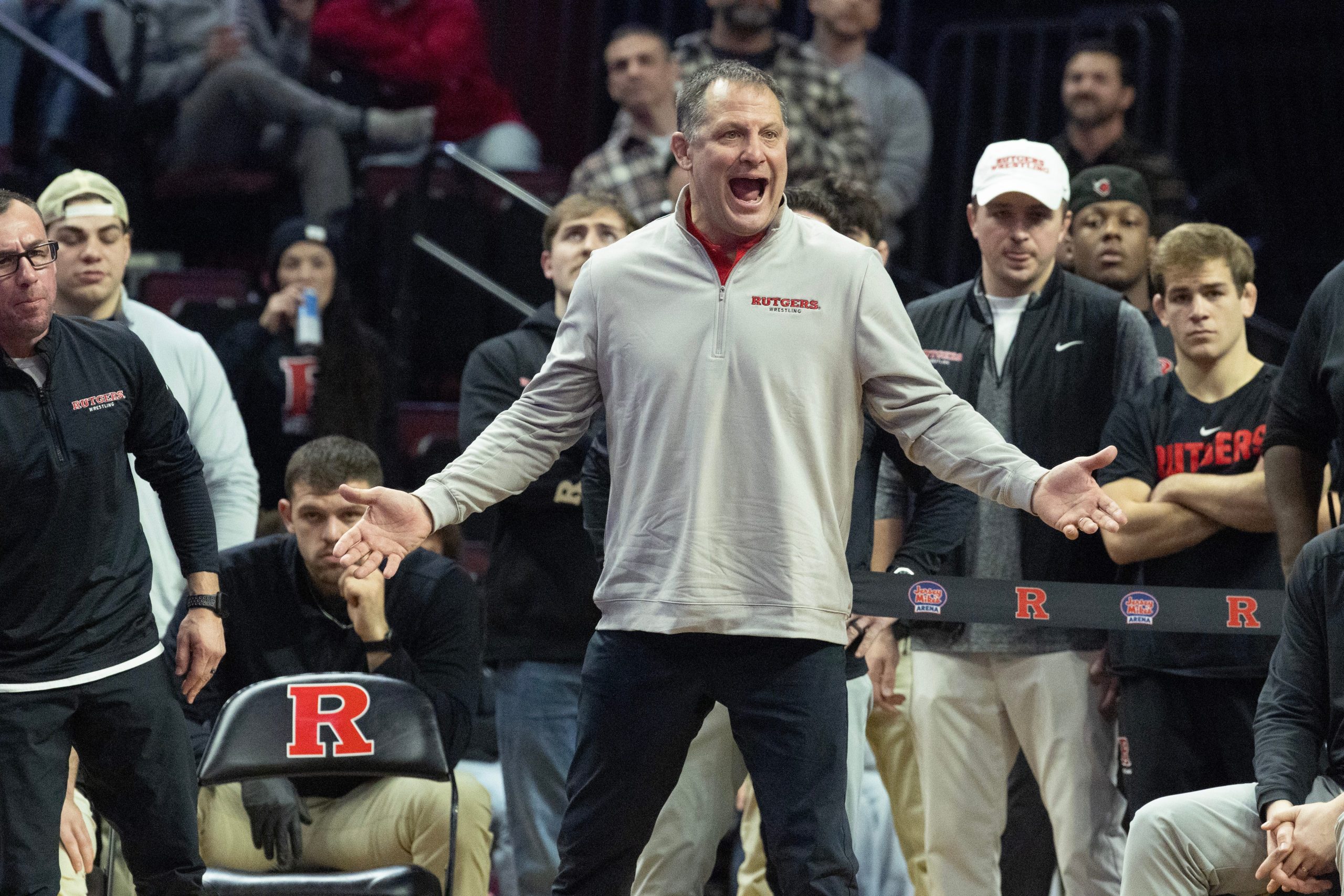
POLICY WIRE — New Brunswick, N.J. — The foundational myth of collegiate athletics — that quaint, sepia-toned ideal of amateurism — continues its slow, public dismemberment. It’s not a sudden rupture, mind you, but a deliberate, often lucrative, evolution. And Rutgers University’s wrestling program has now waded deeper into these burgeoning commercial currents, accepting an invitation to the 2026 National Duels Invitational.
This isn’t merely another tournament; it’s a financial proposition. Scheduled for Tulsa, Oklahoma, this second-ever Invitational, bankrolled by payment processing behemoth Paycom, dangles significant cash incentives before its participants. Rutgers, along with collegiate grappling titans like Minnesota, Missouri, Oklahoma State, and Wyoming, will convene at the BOK Center for what’s less a sporting contest and more a high-stakes economic venture. Each of the 16 invited Division I programs pockets $20,000 just for showing up — a participation trophy with serious purchasing power, you might say — with the ultimate victor set to claim a quarter-million dollars. That’s a handsome sum, isn’t it?
Beyond the winner’s take, the prize structure is a meticulously calculated ladder: $175,000 for second and third place, $100,000 for fourth and fifth, and even a range of $20,000 to $40,000 for those finishing between sixth and eighth. And there’s an additional $50,000 in ‘team takedown bonuses’ on offer, ensuring every grapple holds pecuniary promise. The bottom eight teams, however, receive no bonuses beyond their initial attendance fee. It’s a stark reminder that even in college sports, the market rewards performance — and only to a certain threshold.
“We’re beyond the point of debating whether college athletes should benefit financially from their immense talents and the revenue they generate,” asserted Pat Hobbs, Rutgers’ Director of Athletics, speaking from his campus office. “This Invitational represents a forward-thinking model, one that acknowledges the market value of these young men and provides a tangible return for their dedication. It’s a necessary step, quite frankly, towards modernizing collegiate sports without abandoning our core competitive spirit.” Hobbs — ever the pragmatist — sees this as an undeniable progression.
Yet, the enthusiasm isn’t universally shared. Critics, often ensconced within the increasingly anachronistic halls of traditional sports administration, view these developments with a certain trepidation. “The accelerating commercialization risks distorting the very essence of amateur sport, shifting focus from athletic development and academic pursuit to a winner-take-all scramble for cash,” shot back Dr. Eleanor Vance, a prominent sports ethicist — and former NCAA committee member, during a recent panel discussion. “We’re creating a system where the pursuit of prize money overshadows the educational mission. What happens to the smaller programs, the less visible sports, in this pecuniary arms race?”
At its core, this Paycom-sponsored spectacle mirrors similar ventures, such as the Players’ Era Tournament, which Rutgers’ men’s basketball team has already engaged with. These events aren’t just about athletic prowess; they’re about direct financial reward, transforming college athletes from scholarship recipients into quasi-professional contractors. It’s a profound — some might say irreversible — shift.
This evolution in American collegiate sports isn’t happening in a vacuum. It resonates with a broader global conversation about the professionalization of sport and the monetization of athletic talent, even in regions where infrastructure might be vastly different. Consider nations like Pakistan, where wrestling — or *kushti* — boasts a rich, ancient heritage, deeply embedded in cultural identity but often struggling for professional pathways and significant financial remuneration. While the scales of enterprise are wildly different, the underlying tension between passion, tradition, and the pursuit of economic stability for athletes remains a shared dilemma across continents. The American model, for all its contentious aspects, presents a stark example of how powerful market forces can reshape even the most sacred of institutions.
Behind the headlines — and the prize money, there’s the undeniable fact of the financial might of college athletics. The National Collegiate Athletic Association (NCAA) itself reported an eye-watering $1.3 billion in revenue for the 2022-2023 fiscal year. This figure — largely driven by media rights — underscores the vast sums already circulating within a system ostensibly built on amateur principles. The cash prizes in Tulsa, then, are less a revolutionary injection and more a redistribution, a direct pipeline of that existing wealth to the athletes themselves, bypassing some of the traditional institutional filters. Still, one wonders about equitable access to such lucrative opportunities.
What This Means
The Rutgers wrestling team’s acceptance of this invitation signals more than just another tournament appearance; it’s a tacit endorsement of the rapidly professionalizing landscape of college sports. Economically, these tournaments represent a new frontier for athlete compensation, potentially diverting revenue streams from traditional NCAA structures and into the pockets of the athletes and their programs. This direct financial incentive could profoundly alter recruiting dynamics, making programs that actively participate in such events — and perform well within them — significantly more attractive. It could also exacerbate disparities between well-funded, brand-name programs and those with shallower pockets, further stratifying the competitive playing field. Politically, the NCAA’s increasingly tenuous grip on the definition of ‘amateurism’ continues to loosen, paving the way for further legislative and judicial challenges. Expect to see more of these independently organized, cash-laden tournaments emerge, chipping away at the NCAA’s historical hegemony and forcing a wholesale reevaluation of what it means to be a ‘student-athlete’ in an era where the ‘athlete’ increasingly comes with a price tag. It’s a calculated gamble, certainly, but one that many institutions, like Rutgers, are clearly willing to take, sensing a lucrative opportunity amidst the ethical fog. The collateral damage of loyalty, in this evolving paradigm, might just be the fading ideal of the unpaid amateur.