


Tehran’s Silent Drumbeat: Shaky Ground Rattles a Resilient — Yet Fragile — Nation
POLICY WIRE — Tehran, Iran — It isn’t the loud, violent shudder that truly terrifies. No, it’s the quiet, almost polite nudge. Those tiny, insistent shivers rippling beneath Tehran’s...

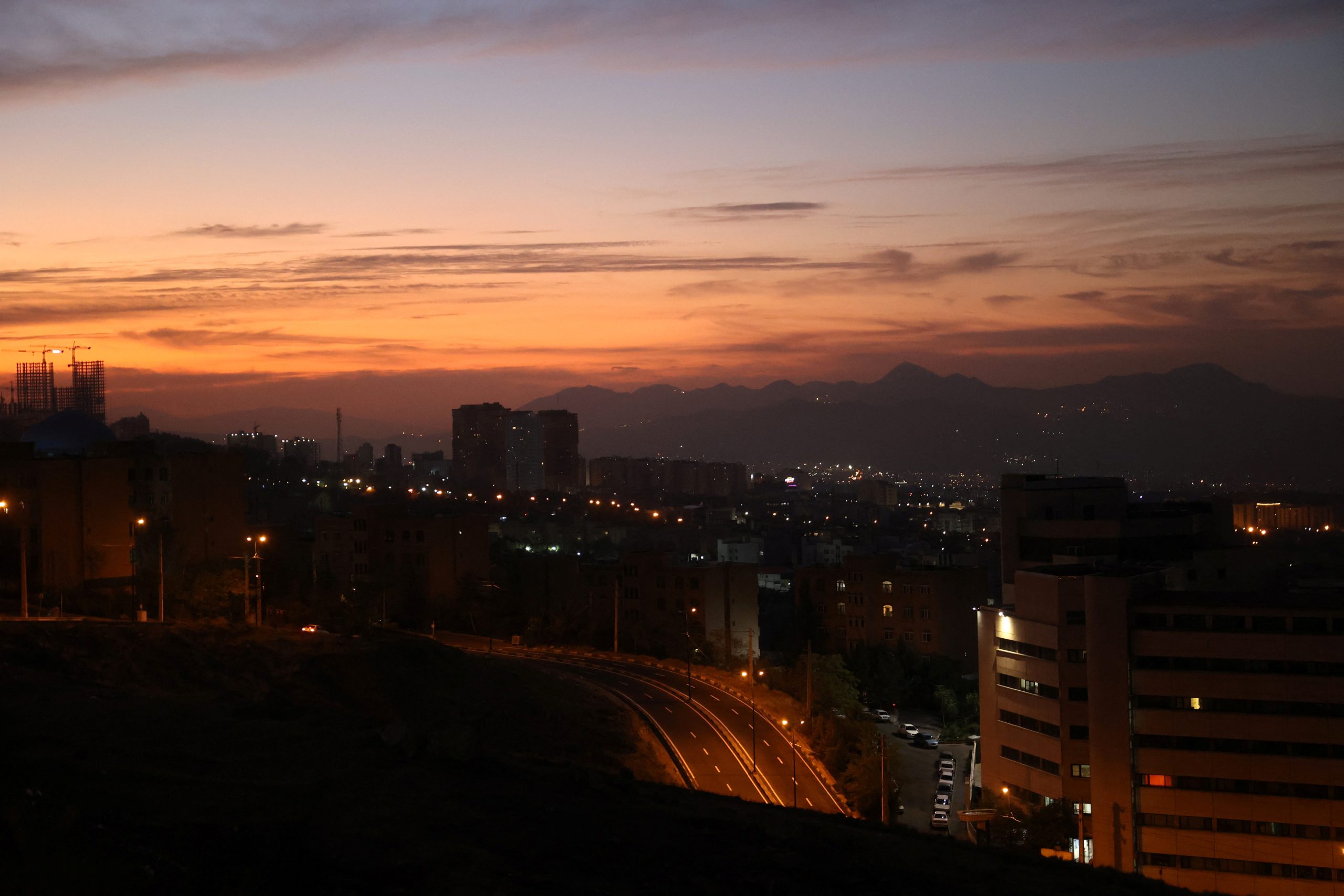
POLICY WIRE — Tehran, Iran — It isn’t the loud, violent shudder that truly terrifies. No, it’s the quiet, almost polite nudge. Those tiny, insistent shivers rippling beneath Tehran’s sprawling, concrete jungle? They’re whispers, really. Whispers of a deeper, far more destructive geological tantrum that officials, engineers, and ordinary folks have long dreaded. Recent, minor tremors—just enough to jiggle a teacup, not quite enough to spill it—have cranked the city’s existential dread up to eleven.
Tehran sits right atop several active fault lines, an inconvenient truth nobody can simply wish away. This isn’t news, of course. For decades, experts have been sketching worst-case scenarios, painting grim pictures of what a truly nasty one (a 7.0 magnitude or higher, say) might unleash on a city where somewhere north of 15 million people live, often in buildings constructed with, let’s call it, ‘variable’ adherence to safety codes. We’re talking about a capital built on a fault, constantly reminded of its precarious perch.
But because humanity is stubborn, or perhaps just profoundly forgetful, real, tangible progress on seismic preparedness often feels like a slow-motion car crash—inevitable, but perpetually deferred. The sheer scale of it, rehousing millions, reinforcing everything from ancient bazaars to gleaming, modern towers, it’s mind-boggling. You can’t just pick up a metropolis — and move it, can you?
“We’ve known this risk for generations,” confessed Sayed Javad Emami, Iran’s Deputy Minister for Urban Development, his voice a weary rasp during a recent, terse press briefing. “The challenge isn’t awareness; it’s the sheer inertia of existing infrastructure and the delicate balance of resources. We’re working on it, constantly, but a city this size, with its history… it’s a colossal undertaking. You don’t just wave a magic wand — and make 30% of the city quake-proof overnight.” He’s not wrong. It’s a bureaucracy battling geology, — and geology doesn’t take lunch breaks.
And those fault lines? They don’t just stop at the Iranian border. Geologically, Iran is part of the larger Alpine-Himalayan seismic belt, stretching across the Eurasian plate. So what happens here tends to reverberate, often literally, through places like Pakistan, Afghanistan, and across other parts of the wider Muslim world. Shared vulnerabilities, shared consequences—a brutal truth that rarely makes headlines until disaster strikes. Think of the 2005 Kashmir earthquake; millions affected, a generation scarred. Lessons were learned, sure, but how deeply do they penetrate? Iran tensions send shockwaves well beyond its borders, not just politically, but tectonically too.
The numbers don’t lie, though they do paint a bleak picture. Dr. Leila Rahmanian, a prominent Professor of Geophysics at Tehran University, often reiterates the science with unnerving calm. “Our models, based on historical seismic activity and current tectonic plate movements, suggest a 70% probability of a magnitude 6.0 or higher earthquake hitting the Tehran region within the next three decades,” she stated plainly, her usual academic reserve tinged with an undercurrent of urgency. That’s a serious gamble for 15 million lives. “It’s not ‘if,’ but ‘when’—and our preparedness efforts, while present, aren’t nearly at the scale required for a city this densely populated and constructed.”
It’s this constant state of semi-crisis, this low hum of anxiety, that really defines modern Tehran. They’ve built their lives, their towering structures, their elaborate systems, on a geographic time bomb. But for now, they simply clean up the dust from the latest tiny tremor and wonder when the really big one decides to announce itself. The country has other problems, certainly, economic sanctions, social unrest—a never-ending parade of headaches. But an earthquake doesn’t care about geopolitics. It just… shakes.
What This Means
A catastrophic earthquake in Tehran wouldn’t just be a local tragedy; it’d trigger a humanitarian crisis of immense proportion, straining Iran’s already fractured infrastructure and healthcare system to the breaking point. The economic fallout, with a significant portion of Iran’s financial and industrial heartland reduced to rubble, would set back the country for decades. International aid efforts would likely be hampered by existing political tensions and logistical nightmares—sanctions, for example, could complicate the swift delivery of essential resources, even for humanitarian purposes.
Politically, the regime’s legitimacy could face an unprecedented challenge if it fails to manage the aftermath effectively. There’d be immense public pressure, probably calls for accountability for perceived shortcomings in preparedness. It wouldn’t surprise anyone if civil unrest flared, creating another headache for a leadership already dealing with plenty of those. And the region? A destabilized Iran, grappling with internal collapse, creates a vacuum—or a whole new set of regional power dynamics—that neighbors, and indeed global powers, would be forced to navigate. It’s an inconvenient reality, sitting there, just beneath the surface. For all its posturing, Tehran’s Achilles’ heel might just be its geology. This isn’t merely about broken buildings; it’s about a nation’s stability, quite literally, being built on sand, or rather, on fault lines.