
Peru’s Tightrope: A High-Stakes Choice Between Left and Right Ideologies
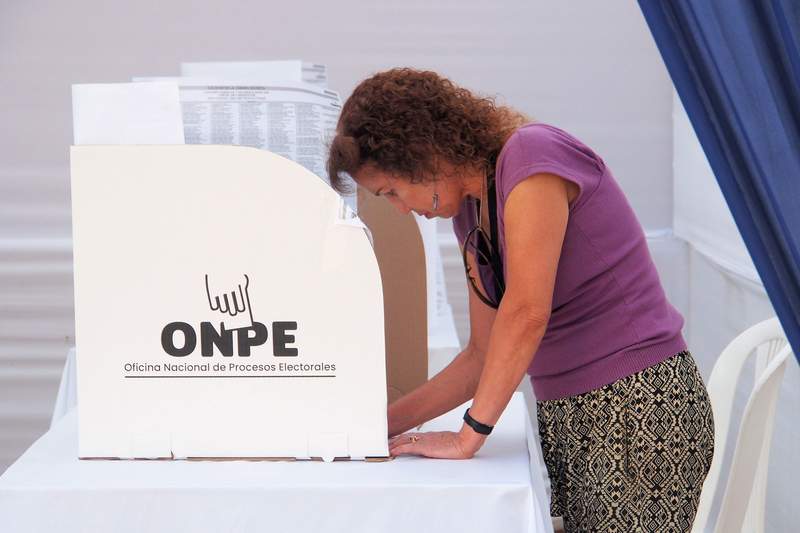
POLICY WIRE — Lima, Peru — It’s an election. That’s the easy bit. But the scent of raw emotion hanging over Peru’s impending presidential run-off?...

POLICY WIRE — Lima, Peru — It’s an election. That’s the easy bit. But the scent of raw emotion hanging over Peru’s impending presidential run-off? That’s something else. For a nation that’s seen its share of political drama — five presidents in five years, if you’re counting — this particular showdown feels less like a simple ballot and more like an economic and social reckoning. It ain’t just about policies; it’s about whether you believe in ghosts or gold, perhaps.
Down on the streets of Lima, there’s a palpable tension, a sense of having arrived at one of those historical junctures where the path splits irrevocably. We’re seeing a political landscape so thoroughly cleaved, you𠆝 think these candidates emerged from different centuries, not just different camps. On one side, the promise of sweeping structural change, a reimagining of wealth distribution, an appeal to the nation’s dispossessed. On the other, the steady hand, or so it’s framed, of market discipline and continued integration with the global capitalist framework. And, folks, that’s the pitch. Both sides are digging in, confident they hold the master key to Peru’s perpetually locked potential. [QUOTE_PLACEHOLDER]
It’s messy, complicated, and utterly Peruvian, but it’s also a story playing out in variations across the Global South. Look at Latin America: for generations, the struggle between populist promises and conservative pragmatism has been a constant. The specifics may differ — lithium mines in Bolivia, oil in Venezuela, or copper and gold in Peru — but the core arguments about who benefits from natural resources remain strikingly similar. The choices presented in this election are being framed by campaign operatives as Peru faces clear choice between right and left in presidential run-off
, a phrase you hear a lot these days.
But choices in democracies rarely arrive as neatly packaged as strategists like to imagine. These campaigns are fierce. Supporters of the leftist candidate are vocal about tackling profound inequality. Poverty in Peru still affects approximately 20.5% of the population, according to data from the National Institute of Statistics and Informatics (INEI) released in 2021. For these folks, market solutions just haven’t cut it. They see a system that’s favored the elites, exploited resources for foreign coffers, and left ordinary citizens battling to make ends meet. They want the state to take a far more aggressive role, to redistribute land, to nationalize key industries — you know, the usual playbook for that particular ideology.
Then you’ve got the right-leaning contenders. They’re warning of economic catastrophe, capital flight, and the chilling of foreign investment should the left gain power. Their campaign focuses on stability, on the tried-and-true path of opening markets, attracting international business, and trusting in the mechanisms of global finance. It’s a battle of competing anxieties, isn’t it? Fear of change versus fear of stagnation.
And what does any of this mean for countries thousands of miles away, in say, Islamabad or Dhaka? More than you𠆝 think. Peru, like many developing nations, finds itself increasingly a battleground for influence. We’ve seen Beijing’s quiet, long-term investments — particularly in resource extraction — reshaping economic realities across Latin America, often in ways that mirror China’s strategy in parts of South Asia and Africa. The decisions made in Lima, whether favoring a more protectionist stance or an open market approach, will ripple outwards, impacting not just trade but also diplomatic alignments. A leftward tilt in Peru could embolden similar movements in other nations wrestling with resource sovereignty, from Indonesia to Pakistan. And that, dear reader, is geopolitics on the ground. For more on such delicate international maneuvers, check out Beijing-New Delhi Tango: Thawing Border Tensions or Just a Diplomatic Distraction?.
📄 POLICY WIRE WHITEPAPER PUBLISHED: PAKISTAN'S NATIONAL SECURITY POLICY PRIORITIES
👉 READ BY CLICKING HEREIt’s not just about what’s happening in Peru; it’s about what it signifies. We’re watching a microcosm of a larger global struggle for definition in the 21st century. Which way will nations, weary of existing models, truly pivot?
What This Means
The impending election result in Peru isn’t just another domestic squabble. It’s going to dictate the future trajectory of its economy for a generation, potentially reshaping its standing on the world stage. A left-leaning government, likely to prioritize resource nationalism and increased state intervention, could see a significant shake-up in foreign investment and trade relations. It could mean capital flight and currency instability in the short term, but also, for its proponents, a rebalancing of power and wealth within Peru itself. Such a move might disrupt global supply chains for key minerals, hitting economies reliant on Peruvian exports, like China and the United States.
Conversely, a victory for the right, promising continuity and market-friendly policies, would probably reassure international investors and commodity markets. However, it risks exacerbating existing social inequalities — and political polarization within the country. It’s a classic Catch-22: maintain stability at the cost of addressing systemic grievances, or radically reorient at the risk of economic disruption. Neither option is simple. Either way, Peru’s election results will offer a real-time case study in the eternal conflict between economic freedom and social justice, reverberating across the developing world and forcing global players to adjust their calculus for resource-rich, politically volatile nations. The outcome here will be a bellwether.