
Europe Conquered, French Crown Still Elusive: Bordeaux’s Post-Glory Grind Begins
POLICY WIRE — Bordeaux, France — Another continental crown sits heavy on the mantelpiece, shining brightly enough to distract from the gnawing truth: domestic glory still eludes Bordeaux-Begles....

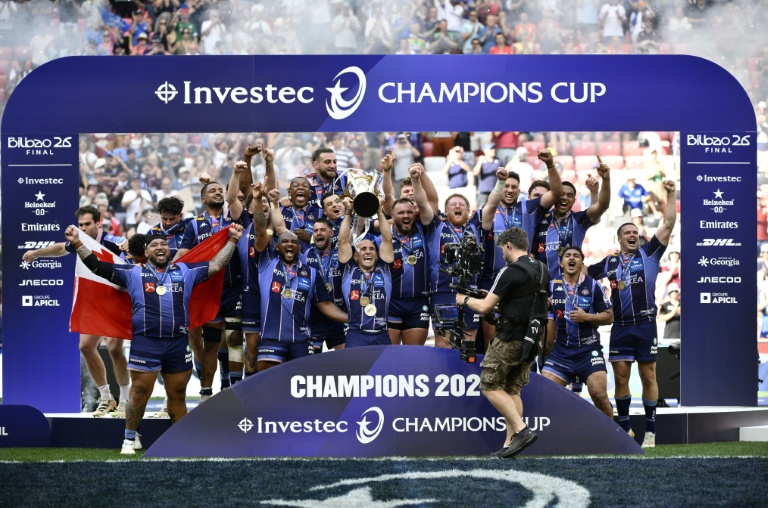
POLICY WIRE — Bordeaux, France — Another continental crown sits heavy on the mantelpiece, shining brightly enough to distract from the gnawing truth: domestic glory still eludes Bordeaux-Begles. While thousands of French fans were still nursing hangovers from Bilbao, reveling in the team’s back-to-back Champions Cup conquest, the squad itself is staring down a brutal, bare-knuckle brawl for France’s Top 14 title. It’s a champagne problem, for sure, but one that coach Yannick Bru won’t let anyone forget.
They’ve done it again, right? Hammered Leinster 41-19, proving Europe is their stomping ground. Yet, what’s it all mean if you can’t master your own backyard? The merger-born club, still seeking its maiden French championship since 2006, finds itself merely in fifth place in the Top 14. They’ve been inconsistent, almost schizophrenic, really, in a league that demands unflinching grit every single week. And now, with just two rounds remaining, it’s clear they’ll need to fight through a grueling playoff schedule.
Bru doesn’t pull punches, literally. He framed the domestic challenge with typical Gallic bluntness. “The Top 14 is a boxing bout every weekend,” the former France hooker declared to reporters, a palpable edge to his voice. He wasn’t talking about strategy as much as pure, unadulterated survival. “I hope we will have all our resources to show our true selves in the Top 14.” It’s a veiled challenge, almost a plea, for his players to replicate their European ruthlessness when facing down their own countrymen.
The triumph in Bilbao’s 52,000-capacity San Mamés stadium—dubbed ‘The Cathedral’ by stadium officials, if you can believe it—was certainly dominant. Winger Louis Bielle-Biarrey snatched two tries, — and captain Maxime Lucu contributed a staggering 21 points. But the narrative darkens when you consider their recent league form. Since dispatching Bath in the semi-finals three weeks ago, Bordeaux-Begles has sputtered, logging only narrow wins against teams that, frankly, shouldn’t be giving them that much trouble: lowly Bayonne and Perpignan. This isn’t the stuff of champions.
📄 POLICY WIRE WHITEPAPER PUBLISHED: PAKISTAN'S NATIONAL SECURITY POLICY PRIORITIES
👉 READ BY CLICKING HEREBen Tameifuna, the Tongan prop who anchors their formidable pack, admitted the European victory brought a mix of elation and exhaustion. “It’s relief,” he told Premier Sports, sounding like a man who’d just finished a 15-rounder. “It’s been a hard few weeks. This is one of the few times that I was nervous in my career. Back-to-back is special.” His weariness speaks volumes. Elite sport, even with a massive economy of hope riding on it, can drain you completely. That sort of relentless pressure isn’t sustainable for long without consequence.
Meanwhile, across the Channel, Leinster—losing a record fifth Champions Cup final—were left to ponder what might have been. Their captain, Caelan Doris, spoke of resilience, but there’s a distinct taste of déjà vu for them, isn’t there? You’d think after so many attempts, they’d figure it out. And they certainly weren’t helped when New Zealand winger Rieko Ioane, a player they’d brought in for a seven-month stint, seemed oddly out of sync. He was even outsmarted defensively for Pablo Uberti’s try just 18 minutes in, an error that cemented Bordeaux’s lead for good. For all the global stars that descend on European leagues, sometimes, it’s the quiet lapses that spell doom. It speaks to a common dilemma faced by teams across various global sports—integrating international talent isn’t just about raw skill; it’s about cultural fit, mental tenacity, and immediate impact.
What This Means
The juxtaposition of Bordeaux-Begles’ European dominance and domestic struggles isn’t just a quirky sports anomaly; it’s a microcosm of deeper structural dynamics in elite professional sports. For France, it’s a moment of immense national pride in a sport that, while not universally loved, commands a fiercely loyal following. But it also highlights the economic demands and talent retention challenges facing clubs trying to excel on multiple fronts. The influx of players like Tameifuna (from Tonga) and Ioane (from New Zealand) isn’t merely about performance; it’s part of a globalized labor market for elite athletes, reflecting migratory patterns that echo policy debates far beyond rugby fields. French clubs, with significant financial backing, become magnets for talent from nations rich in athletic prowess but sometimes short on local opportunities. This mirrors the broader economic ties France cultivates, extending even to the Muslim world, where French cultural and economic influence often intertwines with diasporic communities and their engagement with national successes. This interconnectedness—sporting, economic, and cultural—shapes France’s contemporary identity and international standing, influencing perceptions and soft power much like geopolitical alignments or significant trade agreements might. It’s never just a game; it’s a statement. And it requires shrewd management to convert global renown into domestic stability — and legacy.
📖 GET YOUR FREE COPY NOW OF POLICY WIRE DIGITAL MAGAZINE JULY 2026 EDITION
👉 READ & DOWNLOAD FREE MAGAZINE