


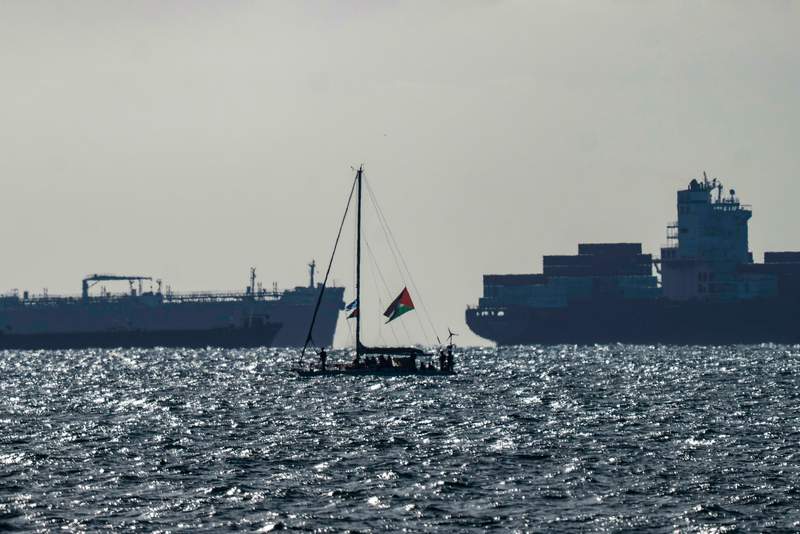
Silent Ripples: Berlin Navigates the Perilous Fallout of a Gaza-Bound Flotilla
POLICY WIRE — BERLIN, GERMANY — Another chapter unfolds in the ongoing saga of the Mideast, but it’s not the thunder of bombs that’s setting nerves on edge this time. It’s the quiet...

POLICY WIRE — BERLIN, GERMANY — Another chapter unfolds in the ongoing saga of the Mideast, but it’s not the thunder of bombs that’s setting nerves on edge this time. It’s the quiet diplomatic disquiet. Berlin, that grand old capital, finds itself performing a delicate international dance, confirming this week that some of the very activists deported to Turkey after attempting to breach the Gaza blockade weren’t just sent home; they were sent home injured. Not exactly a headline grabber, but these are the sort of details that, for seasoned observers, whisper volumes about escalating tensions and fractured narratives.
It’s the kind of confirmation that rips through carefully constructed diplomatic niceties, you know? Like peeling back a thin layer of plaster to expose cracks beneath. The German Foreign Ministry didn’t exactly trumpet the news, opting instead for a cautious disclosure, a stark acknowledgment that humanitarian efforts, no matter how well-intentioned, often collide violently with hard geopolitics. And that collision leaves human wreckage.
Sources within the ministry—the types who prefer their names off the record when discussing such touchy subjects—suggest that Berlin’s internal deliberations weren’t easy. But, what’s a nation to do when its own citizens are caught in the crossfire of someone else’s enduring conflict? It’s complicated, messy business. We’re talking about people who explicitly tried to deliver aid to a territory under siege, then apparently found themselves in a violent confrontation. They paid a price. Germany’s position has always been to uphold international law, even when its application feels…selective, depending on which way the political wind is blowing that day. Germany’s unsettling calm in the face of Middle East upheavals rarely extends to outright condemnation of its allies, so this disclosure itself is noteworthy.
Turkish officials, predictably, have used the revelation as yet another data point in their ongoing critique of Israel’s actions. “This isn’t just about blockades, it’s about human decency,” remarked a senior Turkish diplomatic source, speaking under the customary condition of anonymity but clearly echoing Ankara’s official line. “The international community needs to wake up and see the disproportionate force being used against unarmed civilians simply trying to deliver help. We’ve seen enough bloodshed. We expected better, honestly.” That sentiment reverberates far beyond Ankara’s walls, making waves across the Muslim world.
In Pakistan, for instance, a nation steeped in its own complex relationship with the West and fiercely protective of Islamic causes, reports of injured activists elicit predictable, strong reactions. Newspaper editorials quickly frame the incident as another instance of alleged Western complicity or, at best, a glaring double standard in how human rights are applied depending on the context. And because events in the Middle East often dictate public opinion in South Asia, these incidents don’t just register as news; they inflame deeply held grievances. We’ve seen similar responses whenever there’s an escalation in Gaza, painting broad strokes of global injustice across borders.
A recent United Nations Office for the Coordination of Humanitarian Affairs (OCHA) report from earlier this year highlighted that over 80% of Gaza’s population relied on humanitarian assistance, underscoring the severe need that motivates such desperate flotilla efforts. That’s a grim figure, one that provides stark context to the actions of these activists, injured or not. It’s not just a blockade; it’s a full-blown humanitarian crisis. German Foreign Minister Annalena Baerbock, always carefully treading the diplomatic tightrope, offered a measured response when asked about the specifics, saying, “Our primary concern is the welfare of all individuals involved. We advocate for a solution that respects international humanitarian law and the legitimate security concerns of all parties. These situations are regrettable and underscore the immense challenges facing the region.” But the question remains: is ‘regrettable’ enough?
What This Means
This low-key confirmation by Germany might seem like a minor diplomatic ripple, but it’s actually a sign of deeper currents at play. Politically, it subtly shifts the pressure onto Israel while allowing Germany to maintain its delicate balancing act as a key European power and a staunch ally of Tel Aviv. By acknowledging the injuries, Berlin tacitly validates—at least in part—the claims of excessive force, without having to issue an explicit condemnation. It’s a way of saying, ‘We’re paying attention,’ without making enemies. Economically, while this specific incident won’t shake global markets, it adds another layer of instability to an already volatile region. The constant cycle of confrontation, even on a small scale, keeps investment nervous, prolongs humanitarian aid dependence, and diverts resources from genuine development initiatives. For countries like Turkey, it reinforces a domestic narrative of solidarity and leadership within the Muslim world, often at the expense of already frayed ties with Israel. And it certainly doesn’t make Europe’s job of crafting a coherent Middle East policy any easier, because every nation starts pulling at different ends of the rope. These little tremors? They can morph into quakes, changing alliances, public opinion, — and maybe, just maybe, the course of history.