


Cricket’s New Frontier: India’s Board Bets on Comfort for Child Prodigy
POLICY WIRE — New Delhi, India — The raw business of talent incubation in modern sport just got a whole lot more nuanced, courtesy of India’s cricket overlords. Forget multi-million dollar contracts...

POLICY WIRE — New Delhi, India — The raw business of talent incubation in modern sport just got a whole lot more nuanced, courtesy of India’s cricket overlords. Forget multi-million dollar contracts or lavish training facilities for a moment; the Board of Control for Cricket in India (BCCI) is now in the business of helicopter parenting—by design. They’re footing the bill for a fifteen-year-old wunderkind’s mom and dad to globetrot alongside him as he steps into the ruthless, glaring spotlight of international cricket. It’s an unconventional move, signaling less about a newfound benevolence and more about a strategic recalibration in handling their most precious, and fragile, commodities.
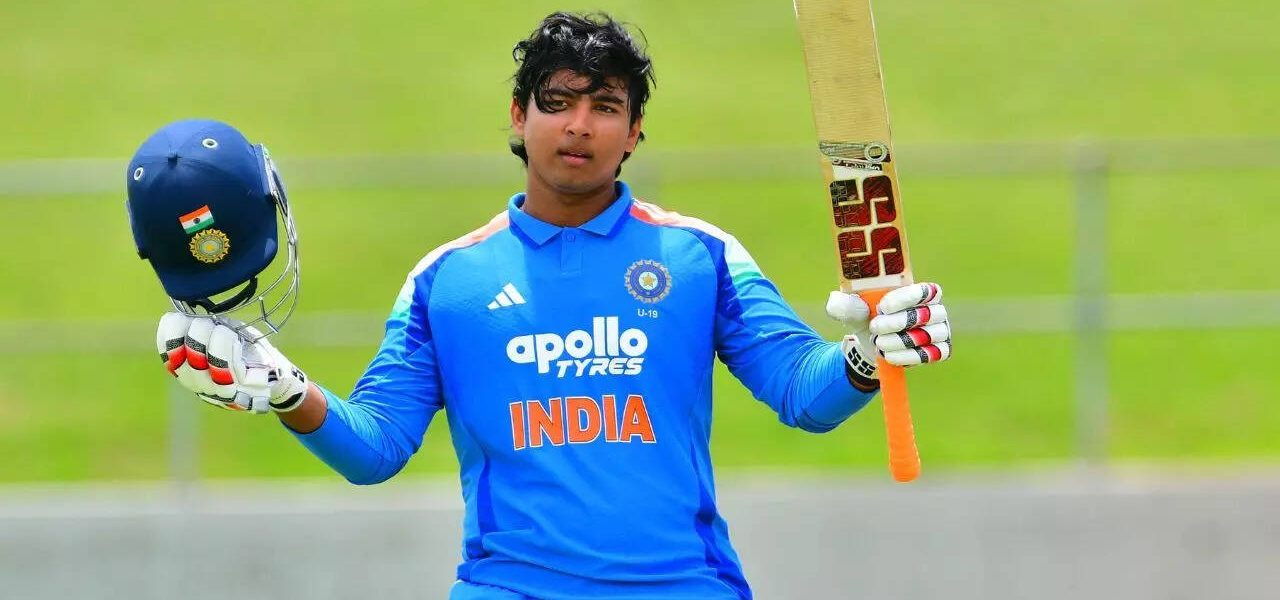
Vaibhav Sooryavanshi, the kid in question, is fresh off a monstrous run in the IPL 2026 season. He piled up 776 runs for the Rajasthan Royals, an astonishing display from someone still theoretically able to be grounded for not doing his homework. He quite literally picked himself, according to chief selector Ajit Agarkar, who commented on Sooryavanshi’s ascent: “We’ve got high hopes of him, and I think he just has picked himself really.” And that, right there, is the rub. When a player’s talent is so undeniable, so economically viable, an institution like the BCCI can’t afford even a flicker of misstep in their transition.
But this isn’t just about runs; it’s about dollars. Global sports, particularly in a market as voracious as India’s, mints stars at an alarming pace. And, you see, these stars burn out just as fast sometimes. Devajit Saikia, the BCCI Secretary, laid bare the pragmatism. “He is a child,” Saikia stated plainly to Sportstar. “We’ve decided to allow his parents to accompany him to Ireland and England, so they can be with him and help him settle in the new environment. The Board will cover all their expenses.” This isn’t a gesture. It’s an investment, a preventative measure to safeguard an asset.
It’s a peculiar sight, parents traveling first-class with their kid’s national team. It flies in the face of the grizzled, tough-love mentality that often characterized player development, not just in India, but across South Asia. Think about the relentless pressures on a young athlete in Pakistan’s perpetual cricket merry-go-round, for instance, where infrastructure might falter, but expectations rarely do. These boards usually prioritize budgets over comfort. Here, the BCCI, a financial juggernaut by comparison, isn’t just spending. They’re redefining the support ecosystem for their future elite.
Saikia reiterated the board’s unusual calculus: “Otherwise, he was always traveling with his under-19, junior boys or sub-junior boys team. It meant that he was in the comfort zone. But now he will be in the adult world — and we want to make him comfortable, as he’s a 15-year-old kid. Definitely with his parents around, he’ll be more comfortable. Subject to his satisfaction and convenience, we’re doing it.” He’s saying, essentially, that the boy’s comfort translates directly to optimized performance. That’s a bold calculation when the stakes are so high.
And it’s not simply the travel. The board first dispatched Sooryavanshi’s father, Sanjeev, to Sri Lanka to be with his son, who’s currently cutting his teeth with the India A squad. This foreshadowed the bigger commitment, establishing a pattern. It suggests a structured, psychological approach, trying to bridge the gap between age-group cricket’s insulated world and the brutal realities of senior competition. It’s not about mollycoddling—that’s what the critics will say, anyway. It’s about protecting future earning potential, both the player’s and, let’s be frank, the board’s.
📄 POLICY WIRE WHITEPAPER PUBLISHED: PAKISTAN'S NATIONAL SECURITY POLICY PRIORITIES
👉 READ BY CLICKING HEREThe unspoken agreement here is that the colossal expectations placed upon a talent like Sooryavanshi are an unavoidable reality. A child prodigy in India, particularly in cricket, carries the hopes of millions. That’s an impossibly heavy load. You don’t just drop a fifteen-year-old, no matter how gifted, into that maelstrom without a net. And, you see, a parental unit, albeit a financially assisted one, is now considered part of that critical safety net. This is modern sports management: part logistics, part psychology, — and all business.
What This Means
This isn’t a mere PR stunt. It’s a carefully considered corporate strategy. First, it hints at the BCCI’s growing recognition of the mental toll exacted on young athletes. They understand, perhaps finally, that raw talent without robust psychological support can shatter under pressure. Expect other financially robust boards to take notice. Perhaps England and Wales Cricket Board might start seeing the benefit for their own young debutantes, given the scrutiny they face.
Second, this move subtly solidifies India’s position as a global leader in cricketing soft power. While other nations might struggle with talent retention or player welfare scandals, India demonstrates a willingness to invest heavily, not just in infrastructure, but in the well-being of its future stars. It sends a message: come to India, perform for India, — and we’ll look after you, even the delicate ones. Because in the cutthroat global arena, an organization that looks after its people, especially its young, vulnerable superstars, often holds the long-term advantage.
Finally, — and more cynically, it reflects the sheer value of these young men as brand assets. A multi-million-dollar future superstar failing to adapt due to homesickness or loneliness is bad for business. Protecting Sooryavanshi’s mental state now is a forward-thinking play, ensuring he doesn’t just debut, but thrives—generating revenue, viewership, and national pride for years to come. It’s less about parental guidance; it’s really about high-performance risk management.