


Kinetic Escalation: Kyiv Extends its Reach Deep into Russian Territory
POLICY WIRE — Kyiv, Ukraine — Forget the predictable drone buzz over border towns. The conflict’s scope has broadened, hasn’t it? Suddenly, Ukraine’s looking less like a static target and more like a...

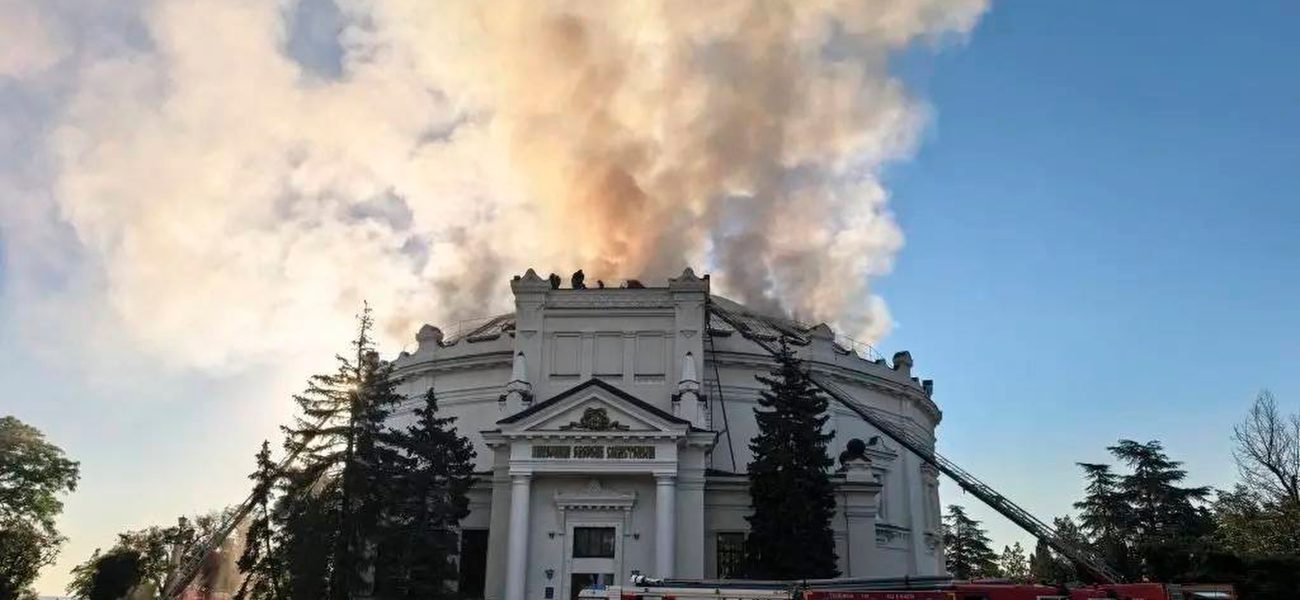
POLICY WIRE — Kyiv, Ukraine — Forget the predictable drone buzz over border towns. The conflict’s scope has broadened, hasn’t it? Suddenly, Ukraine’s looking less like a static target and more like a fighter with unexpectedly long arms, lobbing sophisticated ordinance deep into what Russia once considered its untouchable backyard. These recent long-range attacks, targeting critical military and energy infrastructure, don’t just hit physical assets; they hit Moscow’s carefully constructed narrative of invulnerability, exposing its logistical underbelly in a rather brutal fashion.
It’s a gritty, almost desperate push, you’d think, by Kyiv to reshape the battlefield—or at least the perception of it—as winter thaws and spring promises renewed, hellish offensives. But this isn’t merely about battlefield gains. This is psychological warfare as much as it’s kinetic. The sheer geographical spread of these strikes, reaching targets hundreds of kilometers from the front lines, forces Russia to divert resources, rethink defenses, and perhaps, just perhaps, acknowledge that its imperial project isn’t as neatly contained as Putin would have everyone believe.
Ukrainian officials, understandably buoyant, aren’t holding back on their claims of effectiveness. A spokesperson for their military intelligence suggested the strikes were [QUOTE_PLACEHOLDER]. They’re not just hitting oil depots, mind you, but facilities described by Kyiv as directly supporting Russia’s war machine. But, of course, Russia paints a different picture, routinely downplaying the damage, asserting air defense systems are intercepting the lion’s share of incoming threats. Yet, satellite imagery and local reports often tell a different story, with significant blazes visible at refineries and storage facilities.
These actions, observers say, illustrate Kyiv’s evolving capabilities. They’ve gone from begging for Stingers to crafting or acquiring tools that can genuinely project power beyond the trenches. It’s a costly undertaking, certainly, but one that offers a certain kind of asymmetric leverage against a larger foe. And it reminds us of the delicate balance of deterrence—or lack thereof—in modern warfare. International agencies have taken note, but their reactions have been, shall we say, measured. But really, what’s new there? Nobody’s looking for World War III over a bombed-out refinery.
But the reverberations aren’t contained to Europe. Look, Pakistan, with its own history of complex border dynamics and regional proxy games, understands well the chilling ripple effects of escalating cross-border aggression. While Ukraine and Russia are a continent away, the principles of sovereign defense and the blurred lines of strategic depth resonate deeply. Islamabad constantly monitors tensions in Afghanistan, its long and often volatile western flank, aware that local instability can morph into broader regional confrontations that invite external interference. The sheer brazenness of Kyiv’s new operational methodology will certainly be studied by military strategists across the subcontinent, not least because many nations there live with similar threats on their doorstep—though perhaps of a different geopolitical flavor.
And let’s be frank, the global energy markets are doing their usual anxious twitching, sending oil prices fluttering with each explosion. Because you know what this really comes down to for many? Fuel costs. The Energy Information Administration (EIA) has estimated global crude oil supply to average 102.8 million barrels per day in 2024, yet disruptions in key production or processing regions—like the ones now targeted—can throw that delicate balance into disarray, irrespective of overall supply figures. For ordinary folks everywhere, it’s about what you pay at the pump, not the grand strategy.
📄 POLICY WIRE WHITEPAPER PUBLISHED: PAKISTAN'S NATIONAL SECURITY POLICY PRIORITIES
👉 READ BY CLICKING HERESome strategists warn of potential Russian retaliation, of course—an escalation, perhaps. We’ve heard that song before. Russia’s capacity for sustained precision strikes outside of Ukraine’s immediate vicinity remains a subject of considerable debate in intelligence circles. What’s certain is this new phase of the conflict demands a rethinking of many long-held assumptions about defensive lines and red zones.
Because the real estate of war isn’t just where troops dig in. It’s now factories, airfields, — and pipelines far from any declared front. And Ukraine, it seems, has decided to redraw the map.
What This Means
The geopolitical dominoes from Kyiv’s expanding operational range are already tilting. Economically, we’re talking volatility—particularly for global oil markets. Successful long-range strikes on Russian energy infrastructure can cause spikes, which impacts inflation everywhere. For nations like Iran or other oil-dependent economies, it adds another layer of unpredictable risk to an already shaky financial landscape. Politically, this move serves multiple purposes. Domestically, it’s a morale booster for a Ukrainian populace that’s suffered relentlessly. Internationally, it reminds Kyiv’s Western allies that their aid is producing results, however grim, and provides a powerful, if desperate, argument for continued support—including longer-range weaponry. It also presents a strategic challenge to Russia. They can’t simply ignore these strikes; their legitimacy hinges on being able to protect their own territory, something these attacks directly contradict. This might force Moscow to pull assets back from the front to defend their interior, perhaps creating a breathing room or even vulnerabilities elsewhere. It’s a high-stakes gamble, certainly, but for Ukraine, with its very existence on the line, every card, however dangerous, gets played. This changes the conflict’s fundamental calculus. It’s a new chapter, not just for Ukraine, but for anyone paying attention to the intricate, dangerous dance of modern geopolitics, from Brussels to Islamabad.