


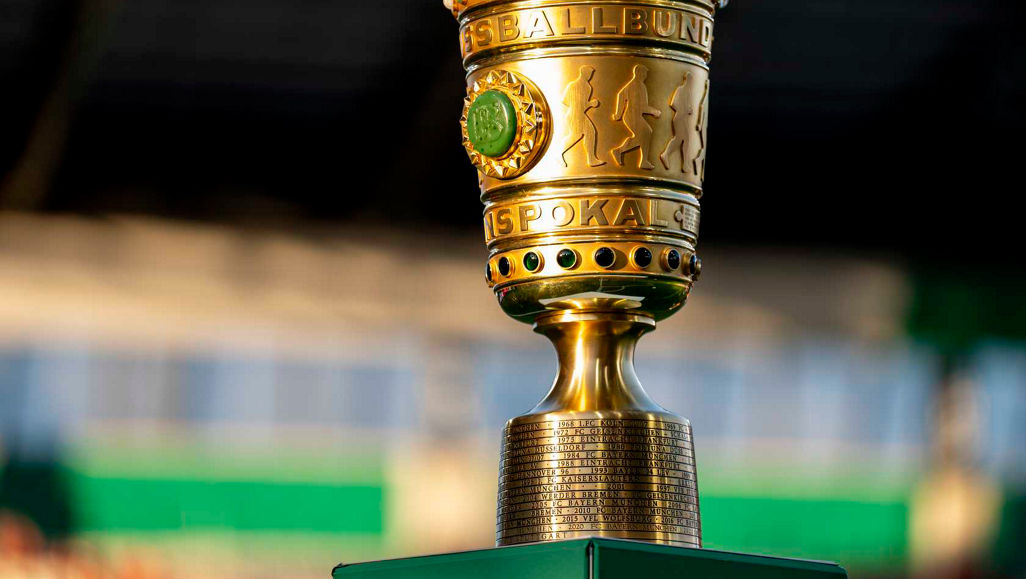
Germany’s Grand Lotto: Pokal Draw Reignites David-and-Goliath Dreams Amidst Looming Disparity
POLICY WIRE — Berlin, Germany — You know, they say football’s a game of two halves. But in Germany’s annual DFB Pokal, it’s always been a game of two wildly disparate halves: the...

POLICY WIRE — Berlin, Germany — You know, they say football’s a game of two halves. But in Germany’s annual DFB Pokal, it’s always been a game of two wildly disparate halves: the gilded elite and the muddy-booted minnows. Forget the glitz of Munich’s Allianz Arena or Dortmund’s Yellow Wall; the true heartbeat of German football – and its perpetual drama – begins where professional contracts thin out, on the cusp of an improbable fairytale. This weekend, the draw for the first round isn’t just pulling balls from pots; it’s tossing financial lifelines, reigniting village dreams, and, for some, merely setting the stage for an inevitable, yet still thrilling, economic massacre.
It’s that time of year when Germany’s sporting architecture, built on grassroots foundations, rubs uncomfortably—or perhaps, deliciously—against its multi-billion-euro professional superstructures. A grand total of 64 teams are in the mix. You’ve got your Bayerns, your Leipzigs, your Dortmunds, all in the ‘professional’ pot. Then there are the ‘amateurs’—a sprawling, hopeful collective comprising lower 2. Bundesliga teams, 3. Liga stalwarts, — and two dozen regional cup winners from towns most people haven’t ever heard of. VfB Krieschow, from Brandenburg, for example. Their grounds don’t usually host international media scrums; they host Sunday league parents shivering on the sidelines.
The mechanics are simple enough, almost quaint in their old-school charm: an amateur team gets drawn, then a professional one. The amateur side gets the home advantage, a concession that occasionally sees a Bundesliga titan slip on a wet, bumpy pitch in some obscure industrial park. This isn’t just about sporting chance; it’s about sheer survival for many of these smaller outfits. The gate receipts from hosting a juggernaut like FC Bayern Munich? They aren’t just extra cash; they’re the difference between keeping the youth academy lights on or letting them go dark, between new training kits and patching up old ones for another season. For some, this one match payout is worth more than their entire annual budget. It’s a colossal gamble, yet it’s all part of the tradition.
“This isn’t just about football; it’s about the democratic spirit of German sport,” said DFB President Bernd Neuendorf, speaking earlier this year about the Pokal’s unique character. “Every season, this cup reminds us that passion — and local pride can still challenge established might. It’s a platform for everyone, from the smallest village club to our global brands.” You hear it, right? That sense of ‘democratic spirit’ in a world increasingly dominated by super-leagues — and offshore money. Because let’s face it, for the big boys, this early round is a glorified pre-season friendly with slightly higher stakes, not a moment of existential dread. They don’t lose sleep over a first-round exit; it’s just a bad day at the office.
But the ‘little guys’? Their hopes hang by a thread. “For us, it’s not just a financial lifeline; it’s everything,” beamed Jan Fischer, manager of a local club that recently secured its regional cup. “It’s the dream of a lifetime for our players, the kind of moment that gets people talking in the pub for decades. It’s proof that if you work hard, if you dream big enough, you might just get to dance with the giants.” His words, folks, they’re the pure, unvarnished truth of lower-league football.
And consider the global gaze. German football isn’t just a domestic affair. Across continents, from Lahore to Leipzig, from Karachi to Kaiserslautern, eyes will follow this draw. It’s not just the millions of migrant workers and diasporic communities in Germany—especially those from South Asia and the Muslim world—who connect with these clubs; it’s a global phenomenon. These expatriates and second-generation Germans often carry the torch for their local German teams, fostering a cultural bridge through sport. The excitement surrounding potential upsets, the ‘David-vs-Goliath’ narratives, resonates deeply within communities where football is more than a game—it’s an emotional conduit. A potential clash between a Bundesliga titan — and a local team like Preußen Münster from the 3. Liga could capture imaginations not just in Germany, but also in drawing rooms across Pakistan where German football has a growing, albeit niche, following.
The financial chasm? It’s not just wide; it’s an abyss. According to recent DFB figures, a single club participating in the Bundesliga last season generated an average revenue of nearly €250 million. Compare that to many regional clubs, some operating on budgets that struggle to crack five or six figures. That, my friends, is the reality.
What This Means
The DFB Pokal, while ostensibly a meritocratic cup competition, operates as a profound mechanism for financial redistribution, however disproportionate it may seem. The mandated home advantage for lower-tier teams is a political concession to maintain goodwill across the entire football pyramid—a nod to the foundational clubs that feed the professional game. Without the allure of such encounters, interest—and crucial gate money—for these struggling clubs would dry up faster than an October pitch in Afghanistan. Economically, a single draw can be the difference between solvency and extinction for an amateur side, transforming a sleepy local club into a temporary, bustling economic hub. From a broader sporting perspective, this inherent financial disparity, masked by a facade of equal opportunity in the draw, serves as a sobering reminder of the increasingly monopolized wealth in modern football, where true competition becomes rarer the higher you climb. This isn’t just a sporting event; it’s a social pressure release valve, allowing the football-loving populace to temporarily imagine a world where the established order might just be upended. It’s German football’s annual attempt to show it hasn’t completely succumbed to the hyper-capitalism epitomized by billion-euro battles in places like Madrid.
So, as those little numbered balls roll across the felt, remember, it’s not just a game; it’s an economic lottery, a political balancing act, and a flickering beacon of hope for hundreds of smaller communities across Germany. A hope that their local heroes might, just might, upset the order, even if it’s only for 90 minutes. Don’t underestimate the power of that dream, even when the odds are so astronomically stacked against it.