

Shadow Games Over the Baltics: Nordic Nations Brush Off Kremlin’s Drone Diversions
POLICY WIRE — Helsinki, Finland — There’s a certain grim predictability to Moscow’s latest public relations offensive, isn’t there? It’s an old play, trotted out with wearying regularity:...

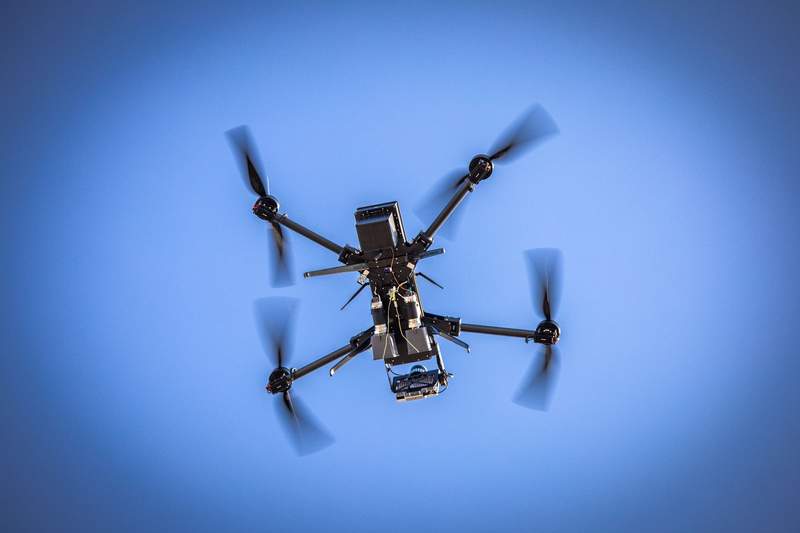
POLICY WIRE — Helsinki, Finland — There’s a certain grim predictability to Moscow’s latest public relations offensive, isn’t there? It’s an old play, trotted out with wearying regularity: stir the pot, make outlandish accusations, then act offended when the alleged victims—the very countries Russia often menaces—don’t roll over. This time, it’s about drones, mysterious aerial happenings, — and finger-pointing directly at Nordic and Baltic states. And as expected, the accused aren’t just denying it; they’re essentially laughing it out of court, if such geopolitical courts even existed.
It began—or, more accurately, resurfaced—with the Kremlin suggesting that recent unexplained drone incidents in its vicinity, some near critical infrastructure, weren’t accidental, weren’t homegrown technical glitches, but rather deliberate acts by its western neighbors. Nonsense, said practically everyone west of St. Petersburg. Lithuania, Latvia, Estonia, Finland, and Norway—all squarely in Russia’s perceived ‘sphere of influence’—have swiftly dismissed these allegations as nothing more than thinly veiled disinformation campaigns, attempts to divert attention, or perhaps, lay groundwork for something more ominous. It’s a classic Kremlin two-step: accuse others of exactly what you yourself are doing, or might plan to do. Gaslighting on a global stage, really.
Lithuanian Foreign Minister Gabrielius Landsbergis, never one to mince words, shot back with typical Baltic bluntness. “Moscow’s theatre of allegations is as predictable as it’s baseless,” he reportedly stated from Vilnius. “They accuse, we deny, the world watches their transparency fade to black. We’re not falling for their gaslighting games—not now, not ever.” Because, frankly, who would? This isn’t their first rodeo with Russian narratives.
And you’ve got to wonder what they expect. Do they honestly believe anyone buys this? Finland, the newest NATO member and historically a master of careful diplomacy with its colossal neighbor, wasn’t much softer. Finnish Defense Minister Antti Häkkänen underscored the systemic nature of the perceived threat. “These aren’t just ‘incidents.’ They’re part of a systematic pattern to test our resolve, sow confusion. Finland remains vigilant. Our skies are our business; Russian claims, frankly, are theirs.” They’re not exactly throwing roses, are they?
The geopolitical chessboard along the Baltic Sea is perpetually tense, a strategic chokepoint often seen as NATO’s soft underbelly. Russian exercises, alleged airspace violations, — and naval maneuvers are standard fare. But drone accusations—particularly involving alleged attacks on Russian soil or infrastructure—ratchet up the stakes. They invite speculation, they breed mistrust, and they serve to justify, in Moscow’s twisted logic, any subsequent ‘defensive’ measures. It’s an exhausting cycle for the states on Russia’s periphery.
Consider the broader implications. This isn’t merely about a few unmanned aerial vehicles. It’s about shaping international narratives, muddying the waters, — and keeping everyone guessing. It’s the same playbook used, albeit with different actors — and motives, in regions thousands of miles away. Think about how various external forces try to control the story, to sow discord, to legitimize their actions—or demonize their opponents—in places like Afghanistan, for example. The echo chamber of disinformation knows no geographical bounds; its effects, however, often lead to real-world destabilization. That’s a lesson Pakistan, with its own history of complex geopolitical maneuvering and internal challenges, understands intimately, grappling as it does with its neighbors and distant power brokers who often have conflicting agendas. When international tensions flare over seemingly localized events, the ripple effect on global supply chains and confidence in diplomatic resolutions impacts economies everywhere, even ones as distant as Karachi or Lahore, where investors might hesitate in uncertain times. Stability—or the lack thereof—has a price, and Pakistan’s $17 Billion Reserve Puzzle shows just how precarious that can be.
📄 POLICY WIRE WHITEPAPER PUBLISHED: PAKISTAN'S NATIONAL SECURITY POLICY PRIORITIES
👉 READ BY CLICKING HEREThe immediate consequence of such accusations is a further erosion of whatever little trust remains between Russia and its western neighbors. It stiffens the spine of the NATO alliance. In fact, alliance members, particularly those sharing a border with Russia, have demonstrably ramped up their military spending and readiness. The Stockholm International Peace Research Institute (SIPRI) reported that global military expenditure soared to an all-time high of $2443 billion in 2023, with European spending increasing by 16% in real terms—a direct response to Russia’s aggressive posture and a clear indication of heightened tensions. This isn’t just theory; it’s tangible, budget-busting reality.
What This Means
This latest salvo from the Kremlin means the digital — and information battleground remains as hot as ever. Politically, it deepens the divide, solidifying NATO’s resolve — and making any de-escalation almost impossible. Every perceived ‘provocation’ by Moscow, whether real or imagined through the lens of Russian state media, simply reinforces the narrative for the Nordics and Balts that their security is best guaranteed through collective defense and unwavering skepticism towards anything emanating from their eastern neighbor. Economically, while not an immediate catastrophe, persistent tensions and the threat of unconventional warfare—drones, cyberattacks, pipeline sabatoge like Nord Stream, or even subtle electromagnetic pulse experiments—cast a long shadow. Shipping in the Baltic, energy security for coastal states, even international investment into the region could be affected by prolonged uncertainty. Companies crave stability; this offers anything but. And these are the very mind games that define this current iteration of global power struggle, one where truth is often the first casualty. Nobody’s winning any friends here; they’re just ensuring the existing animosity grows frostier. It’s an exhausting reality for a world already navigating a volatile geopolitical landscape, where rhetoric can very quickly become precedent, and then, sadly, reality.