


Gaza’s Code Warriors: Crafting Futures Amidst Fallout
POLICY WIRE — Gaza City, Palestinian Territories — It’s a familiar story, etched into the region’s landscape: plumes of smoke, infrastructure pulverized, lives disrupted. But amid the...

POLICY WIRE — Gaza City, Palestinian Territories — It’s a familiar story, etched into the region’s landscape: plumes of smoke, infrastructure pulverized, lives disrupted. But amid the wreckage—literal and metaphorical—something stubbornly unfamiliar persists. In Gaza, where each day feels like an existential wager, a fledgling tech incubator isn’t just surviving; it’s nurturing ambition, churning out code, and pushing against the very idea of surrender. You’d think developing mobile apps would be the last thing on anyone’s mind when basic utilities are a luxury. And yet, here we’re.
The enterprise, focused on cultivating a local startup culture, embodies a particular kind of defiance. It isn’t with bullets or bombs—it’s with bandwidth and breakthroughs. They’re not just trying to build companies; they’re trying to build a future, piece by agonizing piece, often by the light of a flickering generator. One veteran programmer, eyes accustomed to both lines of code and the looming silhouette of drones, often muses that [QUOTE_PLACEHOLDER]. He’s not wrong. It’s a cruel irony, this digital frontier blossoming under the constant specter of older, more brutal forms of conflict.
But how do you even begin to innovate when power outages are scheduled more reliably than ceasefires? When movement is restricted, supplies are scarce, — and psychological fatigue is an omnipresent condition? They do it anyway. They’re tapping into a globalized workforce ethos, recognizing that even if borders remain sealed, digital ones are infinitely porous. Many of these young developers possess a grit—a raw, unpolished determination—that’s born of necessity. It’s a scrappy ecosystem, sure, but it’s proving surprisingly tenacious. Just consider the sheer number of graduates with engineering or IT degrees flooding a job market that simply can’t absorb them, desperate for opportunities.
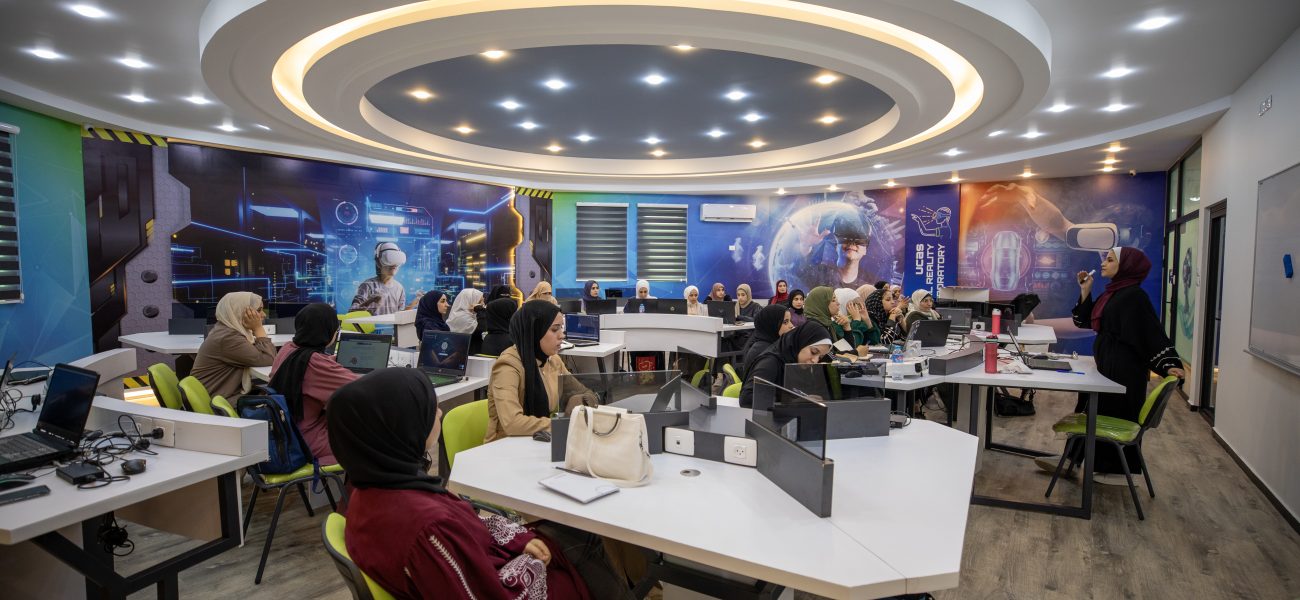
The incubator itself isn’t a sprawling Silicon Valley campus. Forget your beanbags — and kombucha on tap. It’s often cramped, maybe a little too hot, and punctuated by the distant thrum of whatever engine is currently powering the block. Yet, it serves as a nerve center. Here, entrepreneurs, many in their early twenties, find mentors, collaborate on projects, and pitch ideas that range from agri-tech solutions for local farmers to online educational platforms. One founder, after experiencing multiple displacement cycles, simply declared, [QUOTE_PLACEER]. That sort of blunt realism, it’s infectious.
Because, really, what else is there? Pakistan, for example, faces its own set of regional instabilities and economic hurdles, yet its tech startup scene has seen exponential growth in recent years. This isn’t a unique phenomenon; across the Muslim world, and indeed much of the developing world, digital innovation is increasingly viewed as an escape hatch, a path to self-sufficiency that transcends geopolitics. In 2023, venture capital funding for Middle East and North Africa (MENA) startups hit approximately $2.6 billion, as reported by MAGNiTT—a figure demonstrating clear regional appetite for digital disruption, even if Gaza remains on the periphery of that investment landscape.
And it’s a testament to raw human spirit. We don’t often hear about the resilience of ordinary citizens through the lens of economic development when we talk about protracted conflicts. But ignoring this narrative would mean missing the quiet, persistent rebellion of those who insist on building, on creating, on connecting to a wider world despite efforts to isolate them. These aren’t abstract concepts to the incubator’s participants; it’s their lived reality, every single day. They’ve seen things fall apart, only to decide, collectively, to build something new from the wreckage.
📄 POLICY WIRE WHITEPAPER PUBLISHED: PAKISTAN'S NATIONAL SECURITY POLICY PRIORITIES
👉 READ BY CLICKING HEREThey’ve also caught the attention of some international NGOs and development agencies, who recognize the profound symbolic—and potentially practical—value of such initiatives. While large-scale foreign investment remains elusive given the political climate, smaller grants and remote work opportunities provide a critical lifeline. It’s not just about economic survival; it’s about dignity. It’s about proving that even in a place constantly under siege, the human capacity for invention, for entrepreneurship, remains unyielding.
This incubator—and others like it—aren’t just economic ventures; they’re political statements, made not with slogans, but with algorithms. They’re a form of cultural preservation, a desperate clinging to hope, a way of signaling that life, innovation, and a desire for a future won’t be extinguished. The very act of coding becomes an act of political resistance. It’s a nuanced fight, certainly, but an undeniably fierce one.
What This Means
The survival and unexpected growth of tech incubators in places like Gaza carry a layered significance, economically and politically. First, it chips away at the narrative of victimhood, replacing it with one of agency — and productive resilience. From an economic perspective, fostering digital industries offers a rare pathway to economic diversification in a territory suffocated by blockade and unemployment, particularly among its youth. These ventures, however small, demonstrate an indigenous capacity for innovation that foreign aid or traditional humanitarian efforts often miss. They could eventually attract crucial offshore contracts, bypassing some of the physical restrictions. However, that’s a distant hope without a truly stable environment. The continuous geopolitical volatility means any substantive progress is always at risk—a grand gamble, to say the least.
Politically, such initiatives become powerful symbols of national persistence. They challenge perceptions, both regionally and internationally, by showcasing talent and aspiration that refuses to be defined solely by conflict. For the broader Muslim world, Gaza’s tech scene resonates as a story of fortitude, offering a counter-narrative to external portrayals of perennial conflict. It forces a recalibration: how do we talk about populations facing immense hardship when they’re simultaneously building cutting-edge solutions? It’s messy. It complicates simple good-versus-evil frameworks, introducing layers of human ambition and sheer willpower that transcend the usual diplomatic rhetoric. This isn’t just about providing jobs; it’s about preserving a sense of self and community in the face of profound adversity.