


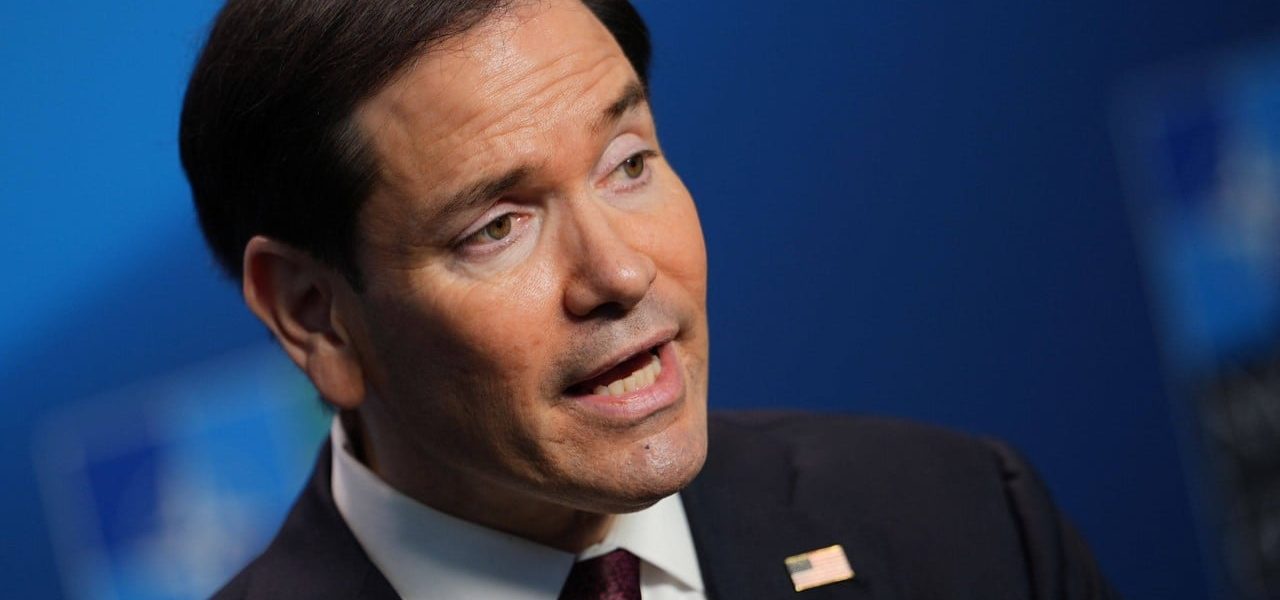
Rubio’s Indian Gambit: Dissonant Diplomacy in a New Cold War
POLICY WIRE — New Delhi, India — The confetti of expectation, scattered barely a year ago when Senator Marco Rubio ascended to Secretary of State, now feels decidedly damp. His reputation as a hawk...

POLICY WIRE — New Delhi, India — The confetti of expectation, scattered barely a year ago when Senator Marco Rubio ascended to Secretary of State, now feels decidedly damp. His reputation as a hawk on Beijing and a cheerleader for New Delhi had conjured visions of an uncomplicated strategic embrace, a natural partnership poised to re-order the Indo-Pacific. And what a mirage that turned out to be. Now, as Secretary Rubio touches down for a four-day diplomatic sprint across Kolkata, Agra, Jaipur, and finally the capital, he isn’t landing in an alliance, but rather navigating a diplomatic thicket choked with realpolitik and mutual suspicion.
It’s an inconvenient truth, perhaps, but Washington and New Delhi find themselves in a relationship best described as ‘transactional’ — and not always transparent. The initial euphoria over a shared nemesis (read: China) has dissolved into a murky tableau of diverging interests and often clumsy diplomatic signaling. The Trump-Xi power dynamics, often veering between outright aggression and unsettling detente, have left allies, India included, wondering just where they stand, or rather, where they should stand. This isn’t a courtship; it’s a delicate balancing act on a very rickety tightrope.
Rubio’s itinerary reads like a tourist’s dream – Agra for the Taj Mahal, Jaipur for its palaces – but make no mistake, this isn’t a cultural exchange. Each stop is carefully choreographed to project familiarity, a casual ease that belies the significant undercurrents of strategic unease. The administration in Washington, for all its rhetoric, appears at times more concerned with short-term wins and bilateral demands than fostering the deep, multilateral strategic convergence New Delhi arguably seeks. One could argue, America often finds its best interests in India when China’s shadows lengthen. And New Delhi knows it.
Because while Washington presses for firmer alignment against China, India remains doggedly committed to its doctrine of strategic autonomy. It’s a complicated dance; America wants a partner to counter Beijing’s ambitions, while India wants technology transfers, defense capabilities, and robust economic ties without compromising its ability to manage its own neighborhood – which, crucially, includes a historically contentious border with Pakistan. “Our commitment to a free and open Indo-Pacific is unshakeable,” Secretary Rubio stated prior to his departure, a line delivered with his characteristic intensity. “But partnerships, even the strongest, require continuous, frank dialogue. We’re here to talk about substance, not just symbolism.” It’s a polite way of saying, ‘let’s get serious, India.’
New Delhi, however, isn’t holding its breath. An anonymous senior official within India’s Ministry of External Affairs, speaking on background, put it more bluntly: “India pursues its national interests with a clear vision. While cooperation with Washington remains key, we don’t tie our strategic posture to any single nation’s short-term interests. Dialogue, however, is always welcome – particularly if it focuses on tangible gains and mutual respect for national sovereignty.” It’s a subtle but potent rebuff to any implied expectation of outright deference. India’s non-oil imports from Russia, for example, surged by over 40% in the last fiscal year, a clear indicator of its strategic autonomy in diversifying economic partners, according to the Ministry of Commerce. They’re not putting all their eggs in one geopolitical basket.
📄 POLICY WIRE WHITEPAPER PUBLISHED: PAKISTAN'S NATIONAL SECURITY POLICY PRIORITIES
👉 READ BY CLICKING HEREAnd that’s the rub. India continues to broaden its global engagement, cultivating ties with Gulf states, expanding its footprint in Africa, and cautiously engaging with Moscow. This multifaceted diplomacy, while pragmatic for New Delhi, presents Washington with a challenge: how to anchor a vital partner without demanding exclusive fealty. The strategic narrative emerging from India itself emphasizes regional leadership, a role that inherently involves navigating—and often softening—geopolitical tensions, rather than exacerbating them. This has ripple effects throughout South Asia; a confident, independent India charting its own course inevitably shifts the regional balance, particularly concerning nations like Pakistan and Bangladesh, and offers a nuanced perspective within the broader Muslim world, distinct from that championed by Washington.
What This Means
This visit isn’t about cementing an iron-clad alliance; it’s about managing expectations — and mitigating irritations. Politically, Rubio will try to coax India into a more overt anti-China stance, a bid likely to meet with polite but firm resistance. New Delhi is deeply invested in playing its own geopolitical chess game, preferring tactical flexibility over rigid alignment. The economic implications are perhaps more direct: discussions will likely center on supply chain resilience, reducing reliance on Chinese manufacturing, and technology sharing, especially in defense. But without substantial U.S. investment and favorable trade terms, India’s drive for economic diversification will continue to look beyond just the American market.
Regionally, the continued high-level engagement between the U.S. and India could fuel anxieties in Islamabad, potentially reinforcing Pakistan’s own alignment choices, while simultaneously providing a certain strategic leverage for India vis-à-vis its neighbors. The implicit message to China, for all the strain, remains one of a strong U.S.-India relationship. It’s less a united front, though, and more a complex tapestry of convenience and necessity, stitched together with fraying threads of expectation. For now, it’s a relationship of subtle calibrations, not bold declarations.