



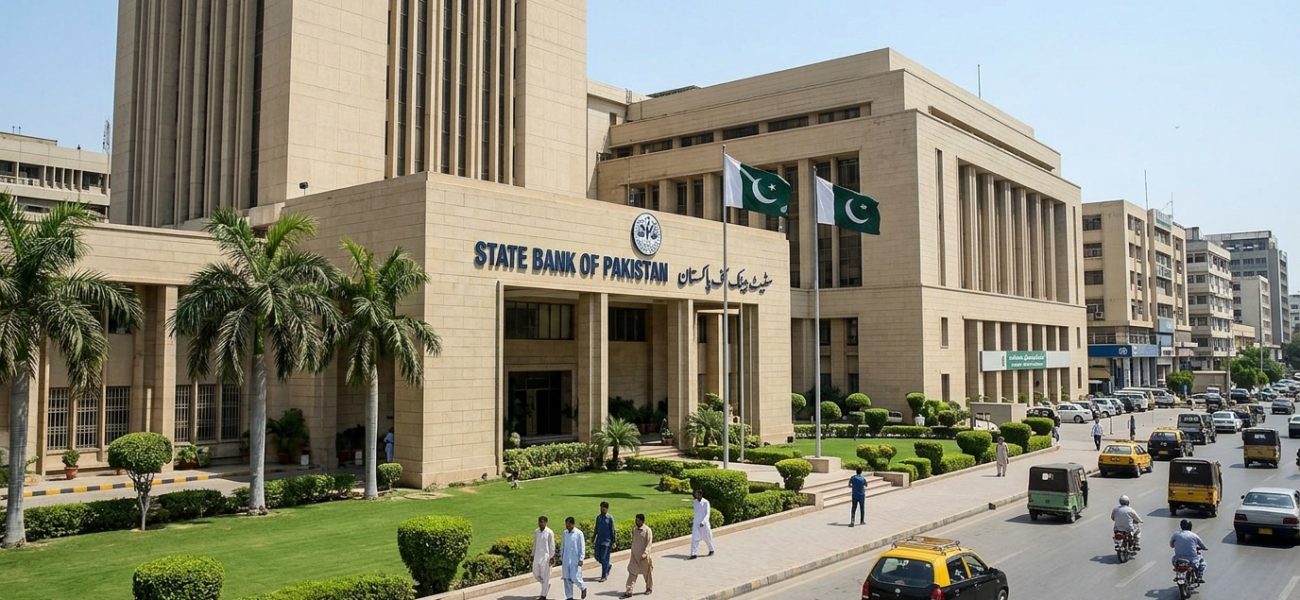
Pakistan’s $17 Billion Reserve Puzzle
Foreign exchange reserve accumulation is, fundamentally, a question of balance of payments, which is basically a record of all transactions made between a country and the rest of the world. If the...

The Architecture of the Inflow: IMF and Panda Bonds
The reserve jump draws from two structurally distinct sources, each carrying its own signal for markets and analysts.The first is multilateral programme financing. The IMF Executive Board completed its third review of Pakistan’s Extended Fund Facility (EFF) on May 8, 2026, approving SDR 760 million, approximately $1.1 billion. Simultaneously, it approved a second tranche of SDR 154 million under the Resilience and Sustainability Facility (RSF), a climate-linked instrument designed to help structurally vulnerable economies build buffers against environmental and macroeconomic shocks. In aggregate, the SBP received SDR 914 million, roughly $1.3 billion, on May 12, which flowed directly into the weekly reserve reading. Pakistan has now drawn approximately $4.5 billion against two IMF packages totalling $8.4 billion, with around $1.2 billion still available. Crucially, the third review’s successful completion signals that Pakistan continues to meet the programme’s structural benchmarks, a signal of credible policy commitment that carries as much weight with investors as the disbursement itself.The second source is arguably the more architecturally significant: Pakistan’s debut issuance in China’s domestic Panda Bond market. The government was able to raise $250 million through issuance of a fixed rate sovereign bond at the interest rate of 2.5% for a period of three years. The interest rate at which the sovereign bond is issued is considerably low compared to other US dollar denominated borrowings as the prevailing interest rates have made it relatively cheaper to raise funds in renminbi currency. This has been evident from the strong response received, with a total value of investor bids exceeding RMB 8.8 billion, giving an oversubscription ratio of more than five times. Investor demand for this first tranche exceeded the size of the overall planned programme amounting to RMB 7.2 billion. This shows strong investor interest in these sovereign bonds. It is the first time that Pakistan has issued sovereign Panda Bonds with the Asian Development Bank and the Asian Infrastructure Investment Bank guaranteeing the bond issuance programme reducing the credit risk margin.Why Panda Bonds Matter Beyond the Balance Sheet
Economist Barry Eichengreen’s work on the “exorbitant privilege” of dollar dominance reminds us that the currency composition of sovereign debt is never merely a financial decision, it is a geopolitical one. Pakistan’s entry into China’s onshore capital market reflects a deliberate effort to diversify its creditor geography at a moment when global financial fragmentation is accelerating.Pakistan’s external financing architecture has historically concentrated around Western multilateral institutions, Gulf bilateral creditors, and dollar-denominated Eurobonds. The Panda Bond does not displace these channels; it supplements them. As the United States maintains elevated interest rates and dollar-denominated borrowing remains expensive, and as Gulf creditors adopt a more selective posture, Beijing’s capital markets, among the world’s largest and most liquid, offer a structurally differentiated alternative. The bond deepens a financial relationship already anchored by the China-Pakistan Economic Corridor (CPEC), and arrives timed to the 75th anniversary of diplomatic ties between the two countries. It is financing and diplomacy in a single instrument.In the language of portfolio theory, Pakistan is reducing its creditor concentration risk. That is rational sovereign debt management under conditions of geopolitical uncertainty.The Credit Upgrade Dimension: Markets Are Watching
Capital markets do not operate in a vacuum, they respond to credible reform signals. In August 2025, Moody’s upgraded Pakistan’s sovereign credit rating by one notch to Caa1 from Caa2, citing the country’s improving external position and reform progress under the IMF EFF. S&P and Fitch had already upgraded their ratings to B-. The convergence of all three major agencies toward improved assessments within a single fiscal year is uncommon and meaningful. It directly lowers the risk premium Pakistan must pay on new issuances and signals to institutional investors that the stabilisation trajectory is credible, a prerequisite for the kind of market access that produced the Panda Bond oversubscription.The reserve recovery itself reinforces this dynamic. Reserves at $17 billion comfortably exceed net external debt obligations, providing what Moody’s itself described as a “surplus” buffer, a concept central to its rating rationale. Each successful IMF review, each new capital market issuance, and each week of reserve accumulation strengthens the feedback loop between policy credibility, sovereign ratings, and financing costs.The Structural Variable That Determines Everything
Reserve adequacy, in modern open-economy macroeconomics, is not assessed by a single stock figure. The IMF’s Assessing Reserve Adequacy (ARA) framework considers import cover, short-term debt exposure, broad money, and export earnings simultaneously. By these composite metrics, Pakistan’s position, while improved, remains one that demands continued discipline.The current account, the broadest measure of a country’s trade and income flows with the world, tells a cautionary tale. Pakistan’s current account recorded a deficit of $1.1 billion in the first seven months of FY2026, a sharp reversal from a $0.6 billion surplus in the same period last year. This deterioration was driven by a 9.8 percent surge in imports against a 5.5 percent contraction in exports, reflecting Pakistan’s continued reliance on imported energy, machinery, and raw materials. Workers’ remittances, at $26.49 billion in July-February FY2026, continued to provide the single largest stabilizing inflow for the external account, effectively financing a substantial portion of the trade gap. Without remittances, the current account deficit would be significantly wider.Yet remittances themselves carry a geopolitical dimension that is increasingly difficult to ignore. A significant share of Pakistan’s diaspora remittances originates from Gulf Cooperation Council (GCC) states, economies whose own stability is intertwined with Middle Eastern energy markets. Any escalation around the Strait of Hormuz that disrupts Gulf economies could simultaneously compress remittance inflows and raise Pakistan’s energy import bill, a double external shock that reserve accumulation alone cannot absorb.Pakistan’s Structural Achilles’ Heel
Pakistan imports 80-85 percent of its petroleum requirements, with most shipments transiting the Strait of Hormuz, the maritime chokepoint through which roughly 20 percent of the world’s oil supply passes. The country maintains strategic petroleum reserves covering only 10-14 days of consumption, a buffer far thinner than regional peers. A Pakistan Institute of Development Economics (PIDE) analysis estimates that a sustained Hormuz closure could raise Pakistan’s monthly oil import bill to between $3.5 and $4.5 billion, while consumer price inflation could climb from the current 7 percent toward 17 percent. At the macro level, the IMF estimates that a 10 percent rise in global oil prices produces a 40 basis-point increase in global inflation, but for import-dependent frontier economies, the localised multiplier is substantially larger.This structural energy exposure intersects with Pakistan’s external debt obligations in a particularly acute way. External debt repayments are projected to exceed $20 billion annually over the next two years, a servicing burden that requires sustained financing inflows simply to keep reserves stable. The SBP has already repaid $3.5 billion to the UAE and $1.3 billion against a Eurobond in recent months, outflows that illustrate the relentless pace of debt servicing running beneath the headline reserve figures.Three Variables That Will Define FY2027
The SBP expects reserves to exceed $18 billion by June 2026, a target now within reach. But the trajectory into FY2027 will hinge on three interlocking variables.First, the pace of IMF programme reviews. With approximately $1.2 billion still available under the EFF and RSF, continued programme compliance unlocks both financing and the signalling value that makes capital market access possible. Each review passed is a credibility dividend.Second, the trajectory of global energy prices. Pakistan’s balance of payments is structurally sensitive to oil price movements in a way that few economies of comparable size are. A sustained energy price spike would widen the current account deficit, pressure the rupee, and complicate reserve management simultaneously.Third, Pakistan’s export performance. Remittances provide a crucial cushion, but they are not a substitute for organic export growth. Closing the trade deficit structurally, through improved export competitiveness in textiles, IT services, and agriculture, remains the only durable path toward a current account position that does not require continuous external financing to sustain.The $17 billion figure is a milestone worth acknowledging. It reflects genuine reform progress, disciplined policy execution, and a broadening of Pakistan’s financing architecture into new and competitive markets. But in open-economy macroeconomics, stock figures tell only half the story. The flows, trade balances, remittances, debt servicing, and investment, determine whether reserve gains can be sustained over the long term.Pakistan is building a foundation. The work of making it permanent has only just begun.Author

📄 POLICY WIRE WHITEPAPER PUBLISHED: PAKISTAN'S NATIONAL SECURITY POLICY PRIORITIES
👉 READ BY CLICKING HERE

Subscribe
Login
0 Comments
Oldest