
The Unforgiving Pitch: Madrid’s Grand Ambitions Threaten to Bench a Star
POLICY WIRE — Madrid, Spain — The gladiatorial roar of the Santiago Bernabéu is often about the next triumph, the next crown jewel in Florentino Pérez’s grand collection. But for Rodrygo Goes,...

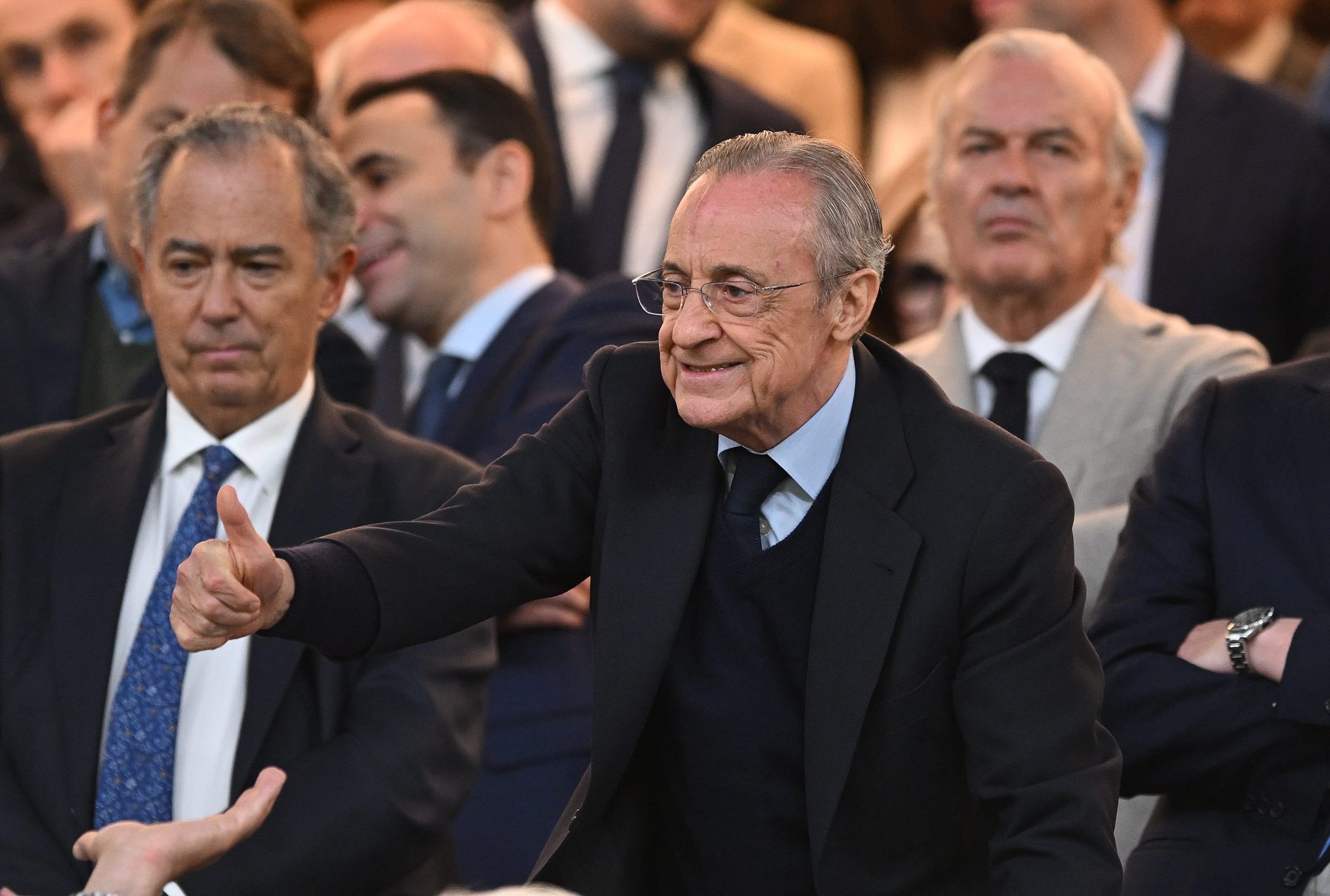
POLICY WIRE — Madrid, Spain — The gladiatorial roar of the Santiago Bernabéu is often about the next triumph, the next crown jewel in Florentino Pérez’s grand collection. But for Rodrygo Goes, that roar might soon sound like a fading echo. As Real Madrid’s president, fresh off his uncontested re-election—a victory so sure, one wonders why they even bothered voting—readies a monumental €150 million bid for a new “Galáctico,” the fate of the Brazilian winger hangs precariously, his injury a cruel backdrop to the club’s relentless ambition.
It’s a stark reminder that in the upper echelons of European football, sentiment often gets benched. Pérez, the architect of Real Madrid’s modern sporting empire, operates on a different plane. He’s about impact, about global resonance, about selling more jerseys than you can count. And with the coffers seemingly overflowing, his post-election pledge to splash a colossal sum on a single player signals a new chapter—one that could spell an unceremonious end for a talented but currently sidelined Brazilian.
Talk around the sprawling Madrid training grounds suggests the primary target isn’t the youthful Julian Alvarez from city rivals Atlético, nor Paris Saint-Germain’s midfield maestros Vitinha or Joao Neves. No, the whispers, growing into murmurs reported by Diario AS, point decisively towards Michael Olise, Bayern Munich’s electric forward. Olise, who put on a dazzling display against Madrid in their Champions League quarter-final skirmish this season, apparently charmed the decision-makers into submission. And here’s the kicker: his arrival would, in the estimation of numerous insiders, all but slam shut Rodrygo’s window of opportunity.
Rodrygo, for his part, isn’t exactly in peak negotiating position. He’s deep in the arduous slog of rehabilitation, sidelined by a nasty cruciate ligament injury that could keep him out of contention until 2027. Before this debilitating setback, the Brazilian was already fighting an uphill battle for consistent minutes on the pitch. Now, with a potential €150 million rival on the horizon, his chances of reclaiming a meaningful role—even after healing—look grim, frankly. It’s a ruthless business, isn’t it?
Bayern Munich, bless their meticulous German hearts, haven’t made it easy for Pérez’s charm offensive. Club President Herbert Hainer has made his stance unequivocally clear, staring down Madrid’s anticipated overtures. “We’re not running a charity here, and Michael Olise isn’t for sale, full stop,” Hainer stated recently, projecting an air of impregnable resolve. “Not even two hundred million euros would force our hand. We build for the long term, not for a quick buck from Madrid.” That kind of firm refusal means Pérez might have to recalibrate his aim, but one way or another, a grand arrival seems assured.
But this isn’t just about tactical football choices; it’s about power, finance, and brand—factors keenly observed far beyond the Spanish capital. Consider Pakistan, for instance, where Real Madrid commands a devotion often rivalling national sports teams. The club’s triumphs are celebrated with an almost religious fervour, and its financial dealings are followed with an acute understanding of global capital flows. The casual displacement of a player like Rodrygo, despite his past contributions, is a stark lesson in the transactional nature of modern mega-clubs. It’s not about loyalty; it’s about perceived current market value — and potential ROI. Even in Karachi or Lahore, they’re watching this drama unfold, perhaps with a sense of fatalistic understanding of how economic might dictates so much.
Pérez, never one to mince words or back down from a grand vision, has reportedly told his inner circle, “We built this empire by consistently striving for the pinnacle. Mediocrity isn’t in our vocabulary. If we see a chance to elevate the club, to bring another true ‘Galáctico’ into our constellation, then we don’t hesitate. This club demands the best, always.” He sees Rodrygo’s situation as an an unfortunate but ultimately minor obstacle in the club’s broader trajectory. The cold calculus is unavoidable.
And the player movement itself illustrates the scale. The economics of elite sport are eye-popping: the CIES Football Observatory noted in their 2023 report that the global football transfer market surpassed €10 billion for the first time ever, demonstrating the ever-inflating prices for top talent. This €150 million sum isn’t an anomaly, it’s simply another data point on an ever-ascending curve.
What This Means
This saga speaks volumes about the ruthless capitalism at the heart of modern football. Florentino Pérez isn’t just a club president; he’s a corporate titan operating Real Madrid as a global entertainment conglomerate. His mandate is to maximize brand value, generate revenue, — and keep the silverware coming. A star player’s injury, however tragic for the individual, often represents an opportunity to upgrade—a market inefficiency to be exploited. Politically, Pérez’s re-election grants him a blank check for these ambitious ventures, solidifying his dictatorial hold over the club’s strategic direction. Economically, this move, if completed, wouldn’t only represent another splashy headline but would also reset the market value for top-tier attacking talent, driving prices even higher. Clubs, players, — and agents across Europe are watching, calculating their own next moves. For Rodrygo, it means a harsh reality check. For Real Madrid, it’s just another day in the relentless pursuit of supremacy—a pursuit that cares little for the personal cost, only the glory of the bottom line and the trophy cabinet.