

Bubble Brilliance or Contested Crown? NBA Title’s Echoes in Disputed Global Victories
POLICY WIRE — Washington D.C. — Victory. You’d think it’d be clear-cut, wouldn’t you? A triumph, an indisputable fact, etched in the annals of whatever competition. But that’s...

POLICY WIRE — Washington D.C. — Victory. You’d think it’d be clear-cut, wouldn’t you? A triumph, an indisputable fact, etched in the annals of whatever competition. But that’s just not how it works, not really. History’s often written, sure, but it’s always re-read, argued, — and reshaped by memory, grievance, and circumstance. This endless human desire to reinterpret outcomes, to strip them of absolute legitimacy, doesn’t just play out on election ballots or battlefields; sometimes, it lands squarely on the basketball court, even years later.
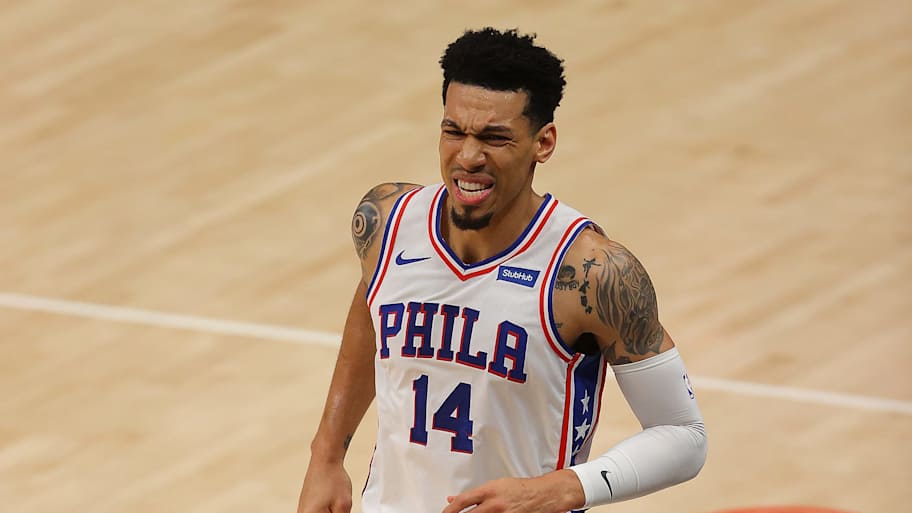
Consider the latest eruption surrounding Danny Green — and the Los Angeles Lakers’ 2020 NBA championship. This isn’t just about hoops. This is a story about the messy human element of achievement, about how conditions—whether a global pandemic or a political transition—can permanently attach an asterisk, real or imagined, to any accomplishment. And because of that, folks are still having it out over an event that, in retrospect, seems almost like a fever dream: professional basketball, isolated from the world, sealed away in Florida’s Disney bubble. [QUOTE_PLACEHOLDER]
Green, a savvy veteran with multiple rings to his name, decided recently to stoke those embers. He aired his perspective on the contentious 2020 win, pushing back against the enduring whispers of it being a ‘Mickey Mouse ring.’ His assertion? The experience was tougher, not easier. His words, unambiguous and perhaps a little defiant, were: It was by far the hardest championship that I had to achieve. And look, he’s got a point. Isolation isn’t for everybody, not when you’re used to the roaring crowds and the comfort of your own bed, your usual routine. There’s a certain mental fortitude required for that sort of sequestered grind.
But that doesn’t mean everyone’s buying it. Not by a long shot. The internet, ever a bastion of unfiltered opinion, lit up. Fan forums, social media feeds—they were awash with dissenting voices. One commenter, pretty blunt, fired back, I PROMISE you, you weren’t winning if it wasn’t the bubble. Another, clearly irked by the very notion, snarked: And people still have the nerve to call it a mickey mouse ring… There’s an undercurrent there, a frustration that perhaps the 2020 Lakers benefited from a uniquely strange scenario, one that might not have favored other contenders as much.
The anti-bubble contingent has its own narrative, pretty compelling too. They point out the unusual extended rest period before the playoffs, arguing it allowed injured stars like LeBron James and Anthony Davis to get back to full strength, something regular seasons don’t often afford. As one critic plainly stated: Lies…they took 3 months off to let LBJ — and AD get healthy. Without the bubble, neither would have been healthy for the playoffs and they would have been bounced in the first round. Because, really, isn’t player health a massive, oftentimes hidden, variable in any title run? It’s absolutely a factor, — and to many, it nullified the alleged toughness of the bubble.
Green’s career provides some interesting context to his claim, too. He was a professional, a specialist known for his defensive prowess and three-point shooting, collecting hardware across various franchises. For fifteen seasons, he showed up. Starting with the Cleveland Cavaliers as the No. 49 pick in the second round back in 2009, he built a solid resume. He’s retired now, hanging up his jersey on Oct. 10, 2024, after stints with the Spurs, Raptors, Grizzlies, — and 76ers, among others. Green, according to official NBA statistics, completed his career having sunk 1,577 three-pointers. He’s been there, seen that. So, when he talks about ‘the hardest,’ you can’t just dismiss it as mere posturing.
But still, the discourse endures, this lingering asterisk for some, a badge of honor for others. It mirrors, in its own way, the global tenacity for revisiting history, for finding flaws, for questioning the legitimacy of even enshrined accomplishments. In regions like South Asia, particularly Pakistan, where political narratives are often contested decades after the fact, the idea that a win—whether a parliamentary majority or a cricket world cup—can be forever colored by its particular circumstances is deeply understood. The ‘how’ of the victory, the ‘who’ was involved, the unique conditions that made it possible or impossible for others—these details matter immensely, sometimes more than the outcome itself. And sometimes, it just feels like the ‘noise’ wins out over objective fact, doesn’t it?
What This Means
This enduring debate over the 2020 NBA title transcends sports; it’s a neat little microcosm of how legitimacy is constructed and deconstructed in the public square. For policymakers and those navigating the often-murky waters of public opinion, Green’s declaration—and the immediate, vehement backlash—offers a sharp lesson. Narrative control, especially post-event, is a losing battle if the ‘facts on the ground,’ or perceived advantages, contradict the desired storyline. It means that simply declaring something ‘hard-won’ isn’t enough; the conditions of victory are themselves open to endless scrutiny.
Economically, it highlights the perceived value of an ‘unblemished’ triumph. Any perceived shortcut, even one born of necessity like The Bubble, devalues the win in the eyes of many. For brands, this translates into how consumers react to products or services that seemingly gain an unfair advantage or thrive under artificial conditions. It impacts consumer trust. If the conditions feel rigged, or too easy, even the most effective product might face skepticism. And it definitely influences the future—think about how even major economic recoveries, if viewed as driven by unsustainable governmental intervention, can spark ongoing political contention, much like the perpetual arguments surrounding Green’s claim. We’re constantly dissecting the NBA’s geopolitical chessboard, aren’t we, not just its domestic theatrics. People want fairness. They don’t just want a winner; they want a *deserved* winner, even when the rules changed mid-game, because the game itself changed the world. This whole saga—it really makes you wonder, doesn’t it, what any triumph really signifies in a truly chaotic moment? And then you see similar squabbles playing out over political mandates or even international aid projects—same human impulse to question, to dissect the method rather than just cheer the result. This stuff runs deep.
The fundamental issue here isn’t whether Green is right or wrong; it’s about the deep-seated human need for an unchallenged truth, a truth that’s becoming increasingly elusive in a world crammed with competing realities. This sort of debate—heated, passionate, somewhat circular—it’s gonna keep simmering for a long, long time.