


Silent Escalation: Islamabad’s Troops Anchor Saudi Defenses Amidst Gulf Jitters
POLICY WIRE — Islamabad, Pakistan — The quiet thrum of C-130s over Pakistani airspace, ferrying thousands of battle-hardened troops and a squadron of modern fighter jets towards the...

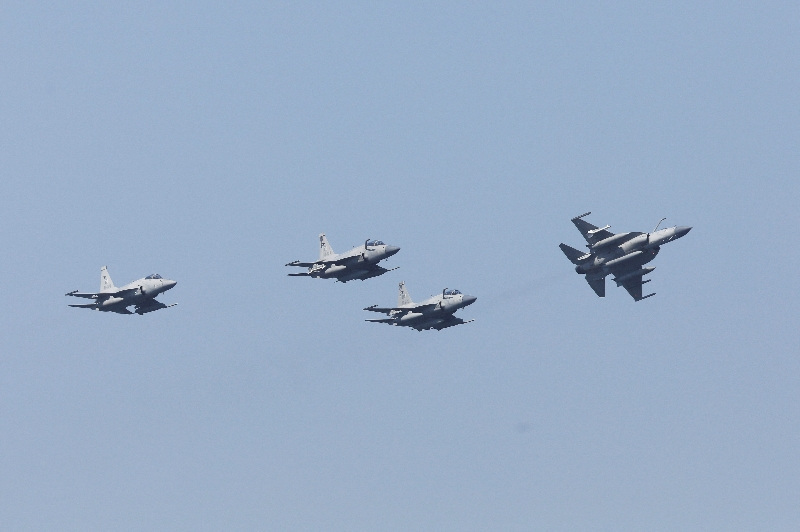
POLICY WIRE — Islamabad, Pakistan — The quiet thrum of C-130s over Pakistani airspace, ferrying thousands of battle-hardened troops and a squadron of modern fighter jets towards the Arabian Peninsula, hardly makes headlines on Main Street. Yet, these deployments — an almost routine show of solidarity, if you listen to the official narrative — signal a stark recalibration of regional power dynamics, and a deepening entanglement for a cash-strapped Pakistan that can ill afford missteps in the volatile Middle East.
It’s not just about guarding the holy sites anymore, is it? We’re talking about a significant uptick in military presence — estimated by intelligence sources at well over 5,000 personnel, complementing an already considerable contingent — arriving on Saudi soil precisely when Riyadh finds itself bracing for what many analysts openly call a potential full-blown conflagration with Iran. A direct clash, should it erupt, wouldn’t just redefine the Gulf. It would send shrapnel across the globe.
Islamabad, despite its insistence on non-alignment in regional proxy wars, has consistently found itself in an uncomfortable dance with Saudi Arabia. For years, Pakistani military advisors and troops have formed a quiet bulwark for the Kingdom, a subtle but persistent commitment to a powerful ally that doubles as a critical financial lifeline. But this deployment, featuring an unspecified squadron of advanced jets, represents an undeniable raising of the stakes. It’s a defensive posture, they say. But then again, doesn’t everyone?
“Our commitment has always been to regional security and the defense of our strategic partners, especially those safeguarding Islam’s holiest sites,” one senior Pakistani military official, speaking anonymously due to the sheer political sensitivity, explained to Policy Wire. “This isn’t about offensive operations or picking sides in another nation’s foreign entanglements. It’s about collective defense. That’s a foundational tenet of our relationship.”
But the line between ‘defense’ — and ‘deterrence’ often blurs into outright ‘participation’ when missiles start flying. And the stakes couldn’t be higher. Saudi Arabia, on its part, isn’t sugar-coating its perceived threats. “The Kingdom faces unprecedented security challenges from hostile actors who seek to destabilize our nation and the wider region,” asserted a spokesman for the Saudi Ministry of Defense, Brigadier General Turki al-Malki. “The solidarity of our trusted allies — like Pakistan — is absolutely essential in safeguarding our sovereignty and maintaining peace in the Arabian Peninsula.” A clear, direct message, if there ever was one.
For Pakistan, this strategic gambit isn’t just about faith or even long-standing camaraderie. It’s undeniably about economics. Islamabad is chronically starved for foreign exchange. Pakistan receives roughly $20 billion annually in remittances, with a significant portion—reportedly over 20%—originating from Saudi Arabia and other Gulf states, according to Pakistan’s central bank data for 2023. These aren’t abstract figures; they’re direct infusions keeping the lights on in countless Pakistani homes and shoring up the nation’s precarious balance of payments. And you don’t bite the hand that feeds you, do you?
Pakistan’s military, an institutional behemoth, knows precisely where its bread is buttered. Its deep state — the real power behind the flimsy civilian governments — has long leveraged its security apparatus for financial gain, whether through foreign military aid or by sending its finest to protect wealthy Arab monarchies. It’s a different kind of monied hegemony, one where the strong arm gets paid to keep order, or at least keep its patron safe.
What This Means
This deployment, cloaked in official euphemisms, casts a long shadow across South Asia — and the broader Muslim world. For starters, it further strains Pakistan’s delicate balancing act with Iran. Islamabad maintains decent ties with Tehran, but this explicit show of force — even if framed as defensive — will be seen as unequivocally siding with Saudi Arabia in the Saudi-Iran rivalry. Tehran isn’t going to miss that particular signal, you can bet on it. Pakistan’s considerable Shia minority also stands to feel the reverberations, potentially deepening sectarian rifts within the country.
Economically, Pakistan doubles down on its financial reliance on Saudi Arabia. This deepens the co-dependency, giving Riyadh even greater leverage over Islamabad’s foreign policy decisions. While it might unlock further financial aid or investment at a time of dire need, it compromises Pakistan’s ability to chart an truly independent course in a region teetering on the brink. This isn’t just a military deployment; it’s a profound strategic bet, with high returns possible — but even higher risks.
And because the deployment’s specifics remain vague — how many jets exactly? What models? — it allows for deniability — and plausible uncertainty, typical of this kind of geopolitical shadow play. But the intention is clear: Pakistan is bolstering its strongest Gulf partner, effectively raising the cost for any potential aggressor. The implications for regional stability, — and Pakistan’s own future trajectory, couldn’t be starker.