


Whispers of Guts and Hydrogen: New Mexico’s Analog Daredevils Defy the Digital Sky
POLICY WIRE — Albuquerque, United States — It happened with a quiet sigh of hydrogen and an almost absurd lack of fanfare for our hyper-connected times. No rockets flared. No instant streaming beamed...

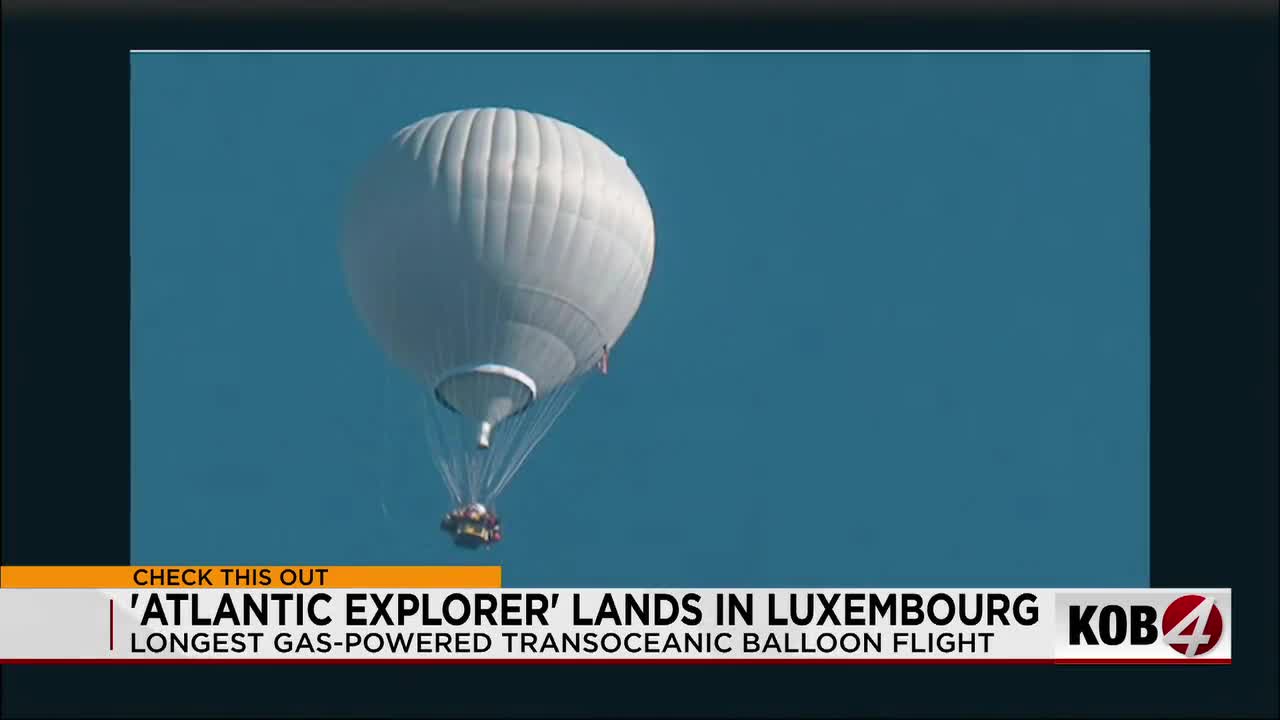
POLICY WIRE — Albuquerque, United States — It happened with a quiet sigh of hydrogen and an almost absurd lack of fanfare for our hyper-connected times. No rockets flared. No instant streaming beamed live from 30,000 feet. Instead, a New Mexico-based gas balloon crew, helmed by the intrepid Peter Cuneo, simply… floated across the Atlantic. Against the hum of satellites and the screech of jet engines, they resurrected an older, far more personal kind of audacity, etching a fresh mark into the annals of air travel, all while the rest of us were busy tapping away on our phones.
It’s easy to dismiss a gas balloon flight in 2024 as little more than a whimsical antique, an elegant but ultimately irrelevant anachronism. But dismiss it at your peril. Because last Saturday, as the world largely preoccupied itself with algorithmic advancements and drone warfare, Cuneo, alongside American pilot Burt Padelt and Britain’s Alicia Hempleman Adams, put down their massive hydrogen-powered Atlantic Explorer in Luxembourg. They had launched three days prior from the chilly northeastern coast of Maine, traversing some of the most unforgiving stretches of the planet, ultimately covering an astonishing 2,852 nautical miles. The sheer scale? That’s what expedition organizers are calling the longest transoceanic gas-powered balloon flight in recorded history. Talk about commitment.
They spent nearly 36 hours hanging over the North Atlantic, a lonely expanse where digital footprints vanish and survival often boils down to ingenuity and a healthy dose of luck. They touched down near the German border after 70 hours — and 11 minutes aloft. The timing, of all things, coincided with the 80th anniversary of the D-Day invasion. An echo of grand, risky endeavors, one from the grim ledger of war, the other from the ledger of human ambition. It’s a stark contrast, isn’t it?
For Cuneo, the flight was more than just logging miles; it was a deeply personal tribute to a long and distinguished tradition, particularly from his home state. “Folks might see hydrogen balloons as a throwback, a relic even. But there’s a purity to it—just you, the gas, and the wind,” Cuneo remarked shortly after landing, a hint of exhaustion and elation in his voice. “This flight? It wasn’t about technology; it was about human stubbornness and sticking to a dream, no matter how wild it seemed.” And it’s this raw, unfiltered pursuit of the extraordinary that keeps a very specific, and slightly insane, brand of adventurer coming back for more.
New Mexico, you see, isn’t just home to green chile — and alien folklore. It’s also a long-standing epicenter for ballooning. Think back to 1978 when Ben Abruzzo, Maxi Anderson, and Larry Newman took their Double Eagle II and its Spirit of Albuquerque gondola on the first ever trans-Atlantic balloon flight. That legacy? It’s thick in the air, a constant challenge for new generations of sky-faring enthusiasts. This latest achievement, currently awaiting official review, will add another shimmering layer to that already rich history, reinforcing the state’s claim as an unlikely crucible for aviation records.
And it’s a testament to more than just the pilots. It’s the entire ecosystem around them: the chase crews, the meteorologists, the financial backers, and everyone else who thinks a colossal hydrogen-filled bag traversing an ocean is a perfectly sound idea. Because, let’s be honest, it isn’t. Not really. Not when you could be on a budget airline in a few hours. This is about something else entirely.
But why does it matter beyond the specialized world of aero-sport? Senator Martin Heinrich (D-NM) offered some perspective from Washington, a place usually preoccupied with rather more earthbound (and combustible) policy debates. “New Mexico isn’t just about desert sunsets; it’s about pushing boundaries, whether that’s in space exploration or the quiet defiance of a gas balloon overhead,” Heinrich stated from his office. “This crew’s success isn’t just a record; it’s a stark reminder that audacity still fuels progress, and frankly, it helps keep our state on the map for innovation, even when it involves ancient physics.” He’s got a point. In an age where digital convenience often overshadows raw grit, acts of this magnitude cut through the noise.
While much of the world races to automate, to digitize every scrap of travel, here’s this crew, using what’s essentially a colossal bag of gas and grit. And it’s not lost on observers that in many parts of the globe, say, from the bustling megacities of Pakistan to the remote villages dotting its rugged mountains, the challenge isn’t just flying over an ocean; it’s often about simply crossing a valley reliably, securely, day after day. It’s a different kind of boundary-pushing, but no less essential. Still, the spirit of conquest — and ingenuity knows no borders, a universal constant despite varying forms.
What This Means
This record-breaking flight isn’t just a footnote in aviation; it’s a subtle policy signal about human agency in a technocentric world. First, it reiterates the soft power of individual human achievement. In an era dominated by governmental programs and corporate behemoths, the spectacle of a few individuals undertaking such a risky endeavor reminds us that innovation sometimes comes from the edges, from those willing to literally—and metaphorically—drift into the unknown. For New Mexico, this solidifies its brand as an adventure capital, drawing tourism and a certain adventurous mindset that could indirectly benefit its burgeoning aerospace industry. Look, you can’t exactly ignore a city where balloons rule the skies for one month a year, then occasionally float over an ocean.
Second, and perhaps more importantly, this seemingly anachronistic triumph subtly challenges the notion that all progress must be high-tech or digitally mediated. It asks: what value do we place on analog persistence? On the quiet mastery of basic physics? On the sheer, unadulterated willpower of a human being in a fragile vessel? Policy decisions around infrastructure, funding for exploration, or even educational priorities often favor the flashy and the futuristic. But sometimes, just sometimes, the most profound statements are made by those who look back to move forward, proving that some challenges still demand simple courage and big, audacious bags of gas.