


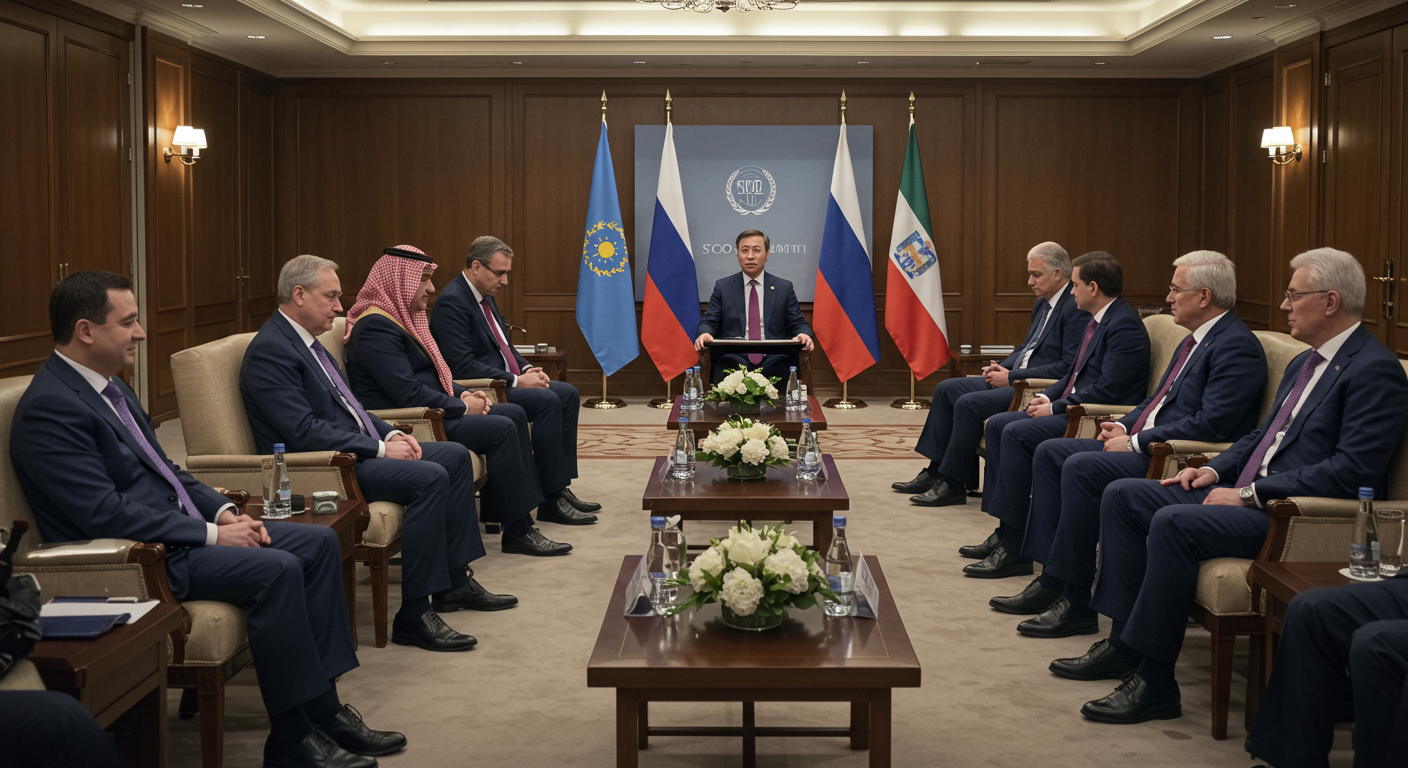
SCO Summit 2025: China’s Role in Shaping Eurasian Diplomacy
The SCO Summit 2025 in Tianjin on August 31–September 1 is a significant event in Eurasian diplomacy, Chinese foreign policy, and global geopolitics. With China hosting over twenty countries’...

The SCO Summit 2025 in Tianjin on August 31–September 1 is a significant event in Eurasian diplomacy, Chinese foreign policy, and global geopolitics. With China hosting over twenty countries’ leaders and the leaders of the world’s top ten organizations, such as United Nations Secretary-General Antonio Guterres, the SCO Tianjin 2025 Summit mirrors China’s rising position in demarcating regional frameworks of cooperation. The SCO is a platform where world leaders exchange opinions regarding security, economic growth, energy security, and collective action in a variety of global complexities.
The Shanghai Cooperation Organization, established in 2001, has transformed from time a regional security organization focused on border issues, to a more expansive organization that works towards the economic, cultural, and political relationships among its members. The SCO presently includes its members Russia, Kazakhstan, Uzbekistan, Kyrgyzstan, Tajikistan, Pakistan, Iran and China, along with its observer and dialogue partners, which should build its relevance in the world. This again proves that the SCO is presently an organization that can deal with issues together in the region and provide alternatives to the conventional Western-centric organizations.
Regional security cooperation remains the SCO’s primary mandate. Though the SCO in its initial decades acted against terrorism, separatism, and extremism through joint military training and information exchange, discussions at the Tianjin SCO Summit 2025 are expected to include cybersecurity, transnational crime prevention, and counterterrorism. The UN Secretary-General’s attendance is a demonstration of the SCO’s outreach mandate of serving not only regional but also international diplomatic processes.
Another top priority of the organization is economic cooperation in Eurasia. These discussions will be centered on facilitation of trade, interconnectivity of infrastructure, sustainable energy security, and cooperation on the digital economy. Experts opine that new mechanisms of financial cooperation, perhaps in the shape of an SCO development bank, could provide member countries with new lines of investment. These policies aim to reduce excessive reliance on Western financial systems and ensure sustainable economic growth in the region.
China’s hosting role shows pragmatic practicality and symbolic power. The summit demonstrated China’s capacity to gather various states, some of which have conflicting interests. Granted that the shared interests are not robust enough to bring about tangible policy shifts within the SCO, the capacity of the members to maintain a united front, albeit limited, with the focus on cooperation still carries meaning. It also underpins the larger theory of a multipolar world order, where regional power becomes a determining factor in shaping worldwide processes.
There are challenges to the SCO framework. Differences in priorities among member states on regional conflicts, economic integration, and diplomatic harmonization can lead to wide and vague statements more often than concrete action. Expansion of the organization also adds to the complexity of regional politics, wherein delicate diplomacy is called for to harmonize national with collective interests. At these odds, however, the institutional architecture of the SCO makes it possible for routine dialogue, conflict resolution, and policy coordination in Eurasia.
Educational and cultural exchange is fast becoming the pillar of SCO cooperation. The Tianjin summit will feature plans focusing on scholarship schemes, technology partnerships, and people-to-people connectivity. Similarly, these measures promote mutual understanding among the member populations so that cooperation is not restricted to political elites but spreads to society as a whole. This represents a long-term approach to regional cohesion, cultural diplomacy, and convergence of shared values of development among members.
The SCO summit also reflects the shifting alignments on the international level. In spite of continuous geopolitical tensions and changing power hubs, the organization is a setting for discussion of transnational issues. With its linkage to the United Nations and alignment with rules of world governance, China emphasizes that through the SCO, it is able to inscribe regional cooperation within a broader structure of multilateralism. This supports the possibility of Eurasian powers taking part in transnational policy discussion while at the same time seeking regional stability and development.
Essentially, the 2025 SCO Summit in Tianjin is not just a typical convergence of regional leaders. It is a strategic moment for China to reaffirm multilateral cooperation, security cooperation, and economic integration in Eurasia, and to share a vision of shared development in the region. While there are still challenges on the material end results, the summit continues to be worthwhile in fostering discussion, triggering institutional change, and laying a blueprint for long-term regional stability and sustainable development. Policymakers, analysts, and observers will keenly watch the outcome of the summit, as its decisions and narratives will dictate the politics and economic scene of the region for the decade to come.
Author