

Beijing’s Green Irony: Pollution Drops as Billions Go Up in Smoke
POLICY WIRE — Beijing, China — Fifteen billion dollars. That’s not just a budget line item; it’s the staggering, squandered sum that went up in literal and figurative smoke from...

POLICY WIRE — Beijing, China — Fifteen billion dollars. That’s not just a budget line item; it’s the staggering, squandered sum that went up in literal and figurative smoke from China’s notoriously inefficient power grid last year alone. Because, even as the nation celebrated its first dip in coal power and related pollution in a decade—a genuinely monumental environmental win—its bureaucratic arteries were hemorrhaging cash and electricity at an almost industrial scale. And what a tangled mess it all makes, doesn’t it?
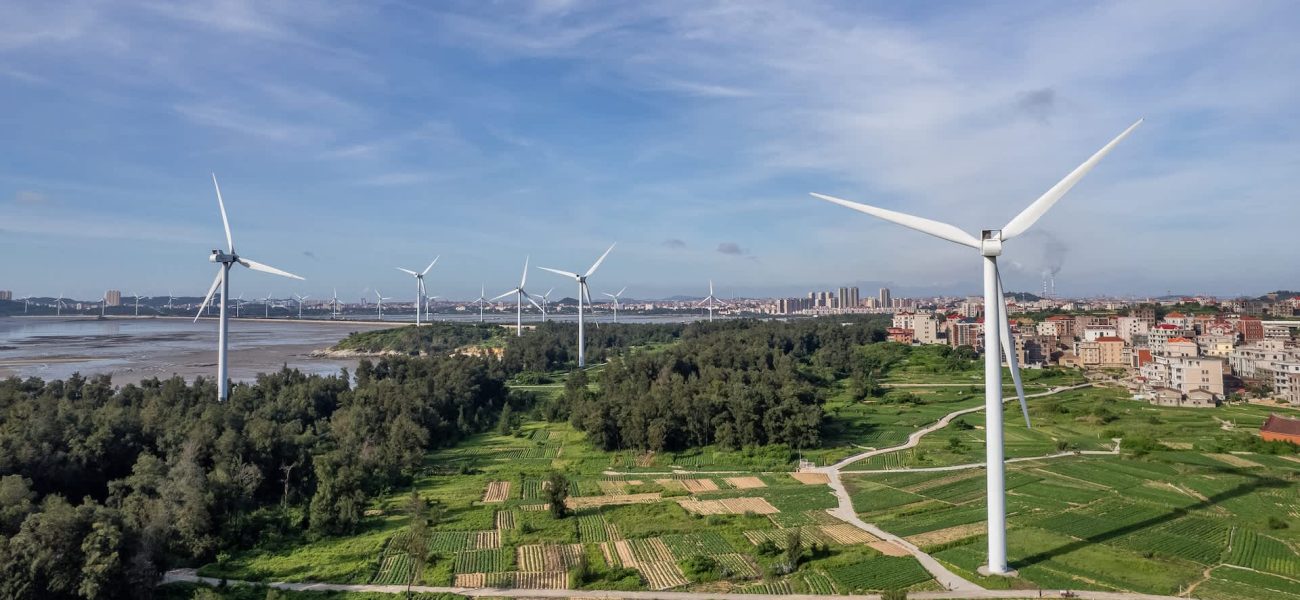
It’s like finding a gleaming, new engine under the hood of a car with a gas tank that leaks like a sieve. Beijing has managed to chip away at its dependency on the dirty fossil fuel, pushing for a greener energy future. But a complex web of aging infrastructure, provincial protectionism, and poor transmission capacity means vast amounts of generated electricity—often from renewable sources meant to replace coal—never actually reach homes or factories. They just dissipate, vanishing into the ether of a mismanaged grid. A cold, hard economic reality undercuts all that clean air rhetoric.
“We’ve turned a corner on emissions, making a profound commitment to our planet and our people’s health,” proclaimed Deputy Director General Liu Xiang of China’s National Energy Administration in a rare public address last month. He didn’t shy away from boasting, saying, “This isn’t just policy; it’s a new trajectory for sustainable growth.” It’s easy to see why he’d be proud of those falling pollution numbers. But the inconvenient truth lurks just beneath the surface of such pronouncements.
Energy analysts, like those at BloombergNEF, estimate that roughly 7% of China’s total electricity generation was curtailed or lost due to grid inefficiencies in 2023. This wastage, especially acute in regions with massive wind and solar installations—think Xinjiang or Inner Mongolia—represents an economic burden estimated by independent sources to be approximately $15 billion annually, effectively subsidizing the air for provinces that never even get to use the power. That’s a chunk of change, any way you slice it. It’s an issue that China’s top leadership recognizes, albeit often in hushed tones.
But managing it? That’s another beast entirely. “We’re fully aware of the transmission challenges, especially given the rapid expansion of renewables in remote areas,” conceded Zhang Wei, a senior engineer at the State Grid Corporation of China, recently, choosing his words carefully during an internal webinar. “Modernizing our ultra-high voltage lines — and enhancing inter-provincial coordination remains a top priority. We can’t afford to waste a single watt.” Yet, they do. Daily. Continuously.
And what does this saga of China’s paradoxically green but leaky energy revolution mean for places like Pakistan? For nations across South Asia and the broader Muslim world, China’s development model—its ambitious infrastructure, its rapid industrialization, its evolving energy mix—is frequently observed, sometimes emulated, and certainly influences policy. Islamabad, for instance, a nation grappling with its own energy deficits and infrastructure woes, often leans on Chinese investment for power projects under the China-Pakistan Economic Corridor (CPEC). The lessons here are stark: building capacity is one thing, but connecting it efficiently and ensuring minimal wastage is a monumental, often overlooked, and deeply expensive undertaking. Without a synchronized grid and strong central planning—something China itself struggles with despite its centralized government—all that expensive investment can quickly become a white elephant. Countries watching Beijing’s trials and tribulations need to pay heed to the operational complexities, not just the impressive groundbreaking ceremonies. The economics of energy lifelines are rarely simple, after all.
What This Means
This dynamic presents a unique challenge to Beijing’s narrative of seamless national progress. Politically, the substantial financial leakage erodes trust in central planning capabilities and fuels quiet provincial resentment. Local economies in renewable-rich areas, unable to export their surplus power, miss out on significant revenue streams, impeding regional development goals. Economically, $15 billion could fund swathes of social programs or stimulate growth in other sectors. Its loss acts as a drag on the broader economy, complicating the shift away from coal-dependent industries and impacting global climate pledges. The paradox is that without rectifying this internal wastage, China’s efforts to project itself as a global leader in environmental stewardship are severely compromised, raising questions about the true efficiency and sustainability of its entire transition.