


Rust Belt’s Hardwood Gambit: Detroit’s Playoff Uprising Challenges Cleveland’s Hegemony Amidst Global Fandom Scrutiny
POLICY WIRE — Detroit, USA — The industrial heartland of America, long accustomed to narratives of decline and resurgence, now presents a particularly potent metaphor on the basketball court....

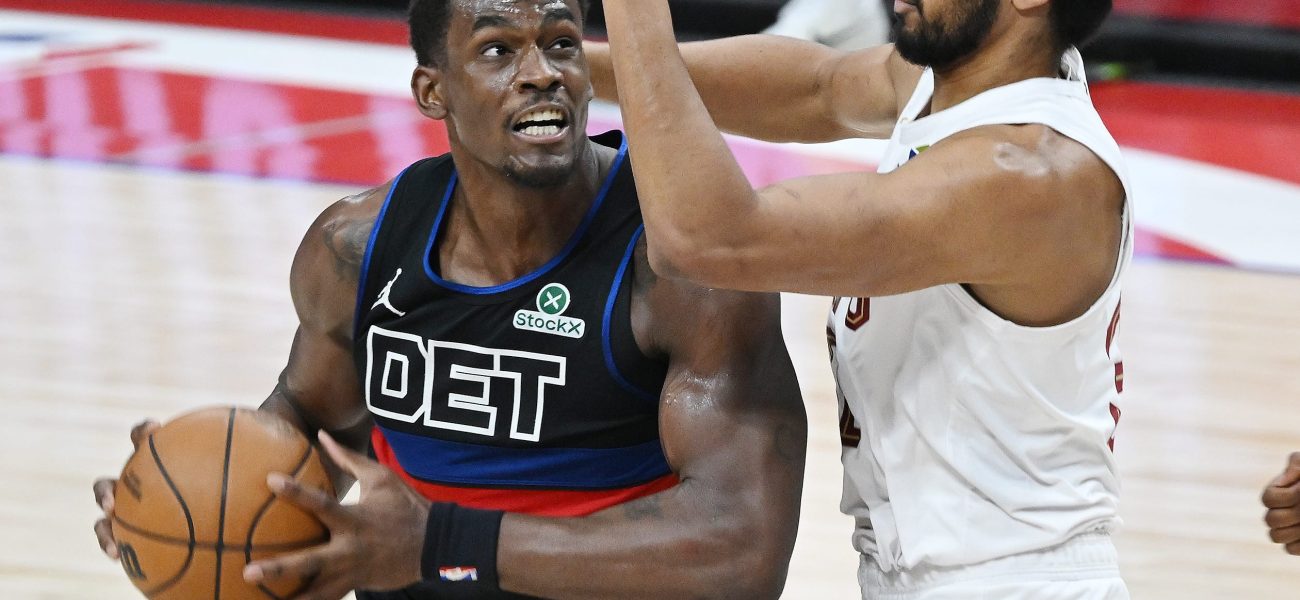
POLICY WIRE — Detroit, USA — The industrial heartland of America, long accustomed to narratives of decline and resurgence, now presents a particularly potent metaphor on the basketball court. Detroit, a city frequently (and perhaps unfairly) characterized by its struggles, finds itself unexpectedly thrust into the NBA spotlight, its Pistons having clawed back from a 3-1 deficit—a feat accomplished by only 15 teams in league history—to face the formidable Cleveland Cavaliers. This isn’t just a basketball series; it’s a visceral clash of urban identities, economic aspirations, and the fickle nature of momentum in professional sports.
And so, as the Pistons brace for a second-round duel, the stage is set for an encounter brimming with geopolitical undertones, however subtle. For expatriates and diaspora communities, from Dearborn’s bustling avenues to Lahore’s late-night sports cafes, these games aren’t merely about points and rebounds. They represent an emotional investment, a connection to a city and its adopted heroes, a testament to basketball’s ever-widening global embrace, transcending national borders and cultural divides. A recent Policy Wire analysis highlighted how such rivalries illuminate cities’ global standing, and this matchup is no exception.
At its core, the Pistons’ unlikely resurgence is anchored in a tenacious frontcourt. Isaiah Stewart — and Ausar Thompson have become defensive stalwarts, forming a bulwark against opposing offenses. Even with Jalen Duren’s early postseason offensive struggles (averaging a modest 10.6 points per game), his defensive presence—1.3 blocks per game—has been consequential. Still, their offensive output often feels, well, parsimonious when stacked against Cleveland’s twin towers. The Cavaliers’ Jarrett Allen and Evan Mobley aren’t just defensive anchors; they’ve been scoring reliably, tallying 11.4 and 18.1 points respectively, and contributing to the league’s 10th-ranked defense (a robust 111.9 rating), creating a significant contrast in the paint.
But the true narrative arc of this series might just trace the trajectories of the starting backcourts. Cleveland boasts a fearsome tandem in James Harden — and Donovan Mitchell. Their collective artistry has transformed the Cavaliers into a legitimate contender, their 16-6 regular-season record together a clear declaration of intent. Both are offensive virtuosos, capable of orchestral scoring outbursts. Yet, their postseason reliability has, at times, been as consistent as a politician’s promise—ephemeral, to put it mildly. This very unpredictability was a key factor in their protracted seven-game skirmish against the Raptors.
Enter Cade Cunningham, Detroit’s undisputed maestro. He’s not just the Pistons’ best player; he’s arguably the most commanding guard in this series. Following a staggering 227-point first-round performance—making him the fifth-highest scorer in first-round playoff history—he currently ranks second this postseason with 32.4 points per game, trailing only Shai Gilgeous-Alexander. Sure, his 5.9 turnovers per game remain a nagging vulnerability, but as Pistons legend Richard Hamilton noted to The Detroit News, “I think people forget that Cade just came back from injury. When they see the turnovers that he had throughout the series, the biggest thing for a guy when he’s coming off an injury is rhythm and timing. As the series went on, you saw his timing and rhythm get better.” And with Cleveland’s less physical defensive posture compared to Orlando, it’s presumed Cunningham will find more latitude.
Then there’s the bench, often the unsung crucible of playoff success. Detroit entered the postseason with a highly-touted second unit, but their production has been — shall we say — constrained. Their regular-season average of 41.3 points per game (11th in the league) plummeted to a meager 19 points in the first round, ranking them 14th among playoff teams. Conversely, Cleveland’s reserves have been a pillar of strength, averaging a formidable 33 points per game in the first round, making them the fourth-best bench unit. Max Strus, off the Cavaliers’ bench, has been particularly catalytic, posting 10.3 points, 5.1 rebounds, and 2.3 assists against the Raptors.
On the sidelines, the coaching chess match is equally compelling. J.B. Bickerstaff, guiding Detroit, has meticulously cultivated a defensive juggernaut. Under his imprimatur, the Pistons boast the league’s highest defensive net rating at 101.9, stifling Orlando to a paltry 97.7 points per game. He’s facing a Cavaliers franchise where he once contributed significantly to their rebuilding efforts, only to be jettisoned in May 2024. “We’ve instilled a culture where defense isn’t just a strategy; it’s a collective ethos, a testament to what a unified force can achieve when the chips are down,” Bickerstaff shot back when asked about his team’s identity. “This isn’t just about basketball; it’s about validating a philosophy.” The Cavaliers, under Kenny Atkinson, counter with offensive fluency, their 113 offensive rating and 111.9 points per game against Toronto showcasing their firepower. Koby Altman, Cleveland’s General Manager, wasn’t shy about their ambitions. “Our investment in talent like Mitchell and Harden isn’t merely about wins; it’s a strategic declaration,” Altman observed. “It signals our intent to compete at the sport’s zenith, drawing eyeballs and capital to a city ready for a championship narrative.”
What This Means
This series isn’t just about who advances; it’s a litmus test for two franchises striving for renewed relevance in a league increasingly dominated by super teams. For Detroit, a deeper playoff run—especially after an 18-year hiatus from winning a series—translates directly into economic vitality. Think increased local spending, heightened national media exposure, and a potent morale boost for a city fiercely proud of its resilience. It also reinforces the global appeal of the NBA, extending to communities in South Asia and the wider Muslim world, where figures like Pakistan’s first NBA player, Usman Garuba, (albeit not on these teams) symbolize growing connections. The Pistons’ scrappy, defensive-minded approach, led by a seemingly unheralded coach, resonates with underdog narratives that transcend borders. Conversely, for Cleveland, a loss would be a setback for a team that has already poured significant capital into its star-studded roster. The economic calculus of high-salary contracts demands commensurate playoff success. A failure here could destabilize future investments and reshape public perception, potentially echoing the precariousness of player health and team economics seen in situations like the OKC Thunder’s Jalen Williams’ injury. The human capital investment is enormous, — and these playoffs are its crucible.
So, who has the edge? It’s a series predicated on stark contrasts: Detroit’s defensive grit versus Cleveland’s offensive flash, the underdog’s hunger versus the contender’s established talent. It’s a high-stakes encounter, one whose outcome will reverberate far beyond the hardwood, influencing everything from local pride to global economic narratives in the competitive landscape of professional sports.