


Hunan’s Fiery Aftermath: Another Industrial Catastrophe Ignites Questions on China’s Growth Model
POLICY WIRE — Changsha, China — The shimmering spectacle, a fleeting burst of light and color that enthralls millions worldwide, often begins in quiet anonymity, in places like Hunan. But this week,...

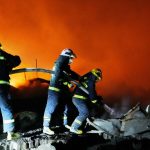
POLICY WIRE — Changsha, China — The shimmering spectacle, a fleeting burst of light and color that enthralls millions worldwide, often begins in quiet anonymity, in places like Hunan. But this week, the start wasn’t dazzling; it was devastating. An explosion at a fireworks factory in China’s Hunan province didn’t just claim 21 lives and maim 61 others; it also torched — quite literally — the persistent narrative of China’s relentless economic ascent as a purely unblemished success story. This wasn’t merely an accident; it was a detonation of latent tensions between industrial ambition and human safety, a grim reminder that progress often carries a prohibitive price tag.
Behind the headlines of casualties and structural collapses lies a recurring motif: the precarious balance between production quotas and worker protections. State media, with its typically succinct pronouncements, confirmed the tragic toll. But what it couldn’t fully convey was the visceral impact on families, the community reeling from the sudden absence of breadwinners, or the wider implications for an industrial giant striving for global dominance.
Still, for policymakers in Beijing, such incidents aren’t just local tragedies; they’re public relations liabilities, inconvenient flares in a carefully managed image of stability and control. And they’ve become increasingly common. China, the undisputed global behemoth of pyrotechnics production, accounting for an estimated 70-80% of global fireworks output prior to recent regulatory shifts, according to industry analyses like those from the American Pyrotechnics Association, has long grappled with a patchy safety record. It’s a paradox: the world celebrates with Chinese-made fireworks, often oblivious to the human toll exacted during their manufacture.
This particular incident, still under rigorous investigation, immediately prompted the expected rhetoric. “This incident is a profound tragedy, and we will spare no effort in a thorough investigation to hold all responsible parties accountable, ensuring justice for the victims and their families,” stated Deputy Minister of Emergency Management, Wang Lei, his voice resolute during a televised press briefing. Such pronouncements are standard operating procedure, a ritualized response to public outcry.
But critics outside the Great Firewall frequently underscore a deeper, more systemic problem. “These aren’t isolated incidents; they’re symptomatic of a broader, systemic failure to prioritize human lives over profit margins in a global supply chain often built on precarious labor,” remarked Lena Hansen, Director of Global Labor Watch, from her Geneva office. She added, rather pointedly, “The quest for cheap goods, whether they’re consumer electronics or celebratory explosives, invariably leaves a trail of human suffering that rarely makes it to the final product’s dazzling display.”
From the vibrant streets of Lahore celebrating Eid to New Year’s Eve spectacles across Southeast Asia, the global appetite for pyrotechnics often traces its fiery path back to production hubs like Hunan, where safety lapses claim lives with unnerving regularity. It’s a harsh economic reality that the demand for inexpensive celebratory items, fueled by traditions across the Muslim world and beyond, sometimes inadvertently underwrites a less-than-ideal manufacturing environment. Nations like Pakistan, while developing their own industrial capabilities, often face similar pressures and regulatory hurdles, making China’s challenges resonate far beyond its borders.
It’s not just about fireworks, of course. The human cost of rapid industrialization is a recurring theme across developing economies, a brutal calculus echoing the global labor precarity that defines many modern supply chains. While China has made strides in industrial safety, particularly in state-owned enterprises, the vast network of smaller, often privately run factories – sometimes operating under the radar – remains a persistent vulnerability. They’re often squeezed by tight margins and intense competition, leading to corners cut where regulations should be paramount. And it’s usually the most vulnerable workers who pay the ultimate price.
Still, the Chinese government, acutely aware of its international image and domestic stability, invariably launches campaigns to rectify such issues, imposing fines, shutting down non-compliant facilities, and vowing stricter oversight. Yet, as the smoke from Hunan’s latest tragedy dissipates, the question isn’t if another explosion will occur, but merely when and where the next tragic flicker will emerge.
What This Means
This latest calamity in Hunan underscores a persistent, if often overlooked, fissure in China’s economic model: the tension between breakneck growth and robust regulatory enforcement. Economically, such incidents, while localized, erode consumer confidence in Chinese manufacturing quality globally, albeit subtly. They also necessitate costly investigations, compensation payouts, and the re-evaluation of supply chains for international buyers, potentially driving up production costs or pushing manufacturing to other low-cost regions. Politically, each explosion serves as a stark reminder of the challenges Beijing faces in managing its vast, complex industrial landscape. It tests the party’s narrative of prioritizing people’s welfare, demanding visible, forceful action to quell public disquiet and maintain social order.
these events have broader implications for global labor standards. As a dominant manufacturing force, China’s safety practices (or lack thereof) set a de facto benchmark for many developing nations, including those in South Asia. If the world’s factory floor struggles with basic worker safety, it creates a downward pressure on standards everywhere. The immediate response will likely be a surge in local inspections and temporary closures, creating short-term disruptions. But the long-term challenge remains: how to foster an economic environment where safety isn’t an afterthought, but an integral component of sustainable industrial growth — a question many nations grapple with, China perhaps most acutely.