


The Madison Square Garden Litmus Test: How an NBA Rivalry Illuminates Cities’ Global Standing
POLICY WIRE — New York, USA — It wasn’t merely a basketball game; it was a geophysical event, a seismic collision between two megalopolises vying for cultural primacy. Forget the hardwood,...

POLICY WIRE — New York, USA — It wasn’t merely a basketball game; it was a geophysical event, a seismic collision between two megalopolises vying for cultural primacy. Forget the hardwood, forget the hoopla—at its core, the opening salvo in the 2026 NBA playoff series between the New York Knicks and the Philadelphia 76ers served as a stark reminder of America’s enduring urban rivalries, a complex interplay of finance, history, and civic pride that echoes far beyond the continental shelf. New York, a global crucible of capital and ambition, squared off against Philadelphia, the gritty, historically significant underdog. And what transpired was less a sporting contest — and more a symbolic declaration.
The Knicks, on their home turf at Madison Square Garden, didn’t just win; they dominated, a veritable rout that left the 76ers reeling, their championship aspirations suddenly looking rather quaint. The final score — 74-51 at halftime, with the Knicks holding an eye-watering 23-point lead at one point — wasn’t just a number; it was a pronouncement. It suggests a certain ascendancy for the Big Apple’s team, a tangible manifestation of its resurgent spirit, perhaps even a proxy battle for investor confidence. “This isn’t just about basketball; it’s about the soul of New York,” shot back Brenda Chen, Knicks President of Business Operations, her voice bristling with a practiced confidence. “We’re showing the world what grit — and determination, nurtured in this city’s crucible, truly means.”
Philadelphia, meanwhile, arrived in New York still savoring the improbability of their first-round triumph. They’d staged a remarkable comeback, becoming the first No. 7 seed to dispatch a No. 2 seed in a best-of-seven format since the current playoff structure was adopted. That particular feat, beating the Boston Celtics after trailing 3-1, should’ve instilled an indomitable belief. But the energy of the comeback, the sheer physical and emotional toll, appeared to have dissipated in the Garden’s intimidating embrace. Jamal Davies, Philadelphia’s Deputy Mayor for Economic Development, offered a characteristically Philadelphian perspective: “Philadelphia’s always been a city of resilience. We’ve overcome greater odds than a few games. This team embodies that fighting spirit, a testament to our enduring resolve.” It’s a sentiment born of historical fortitude, but one that felt somewhat hollow after Game 1’s unequivocal drubbing.
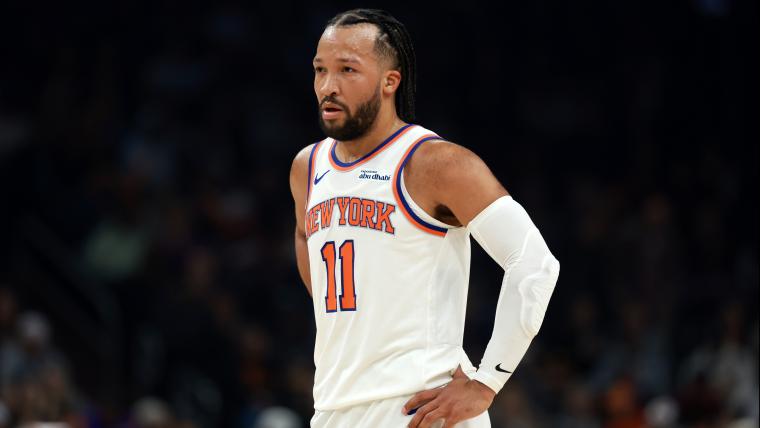
The statistical disparity wasn’t merely notable; it was an indictment. The Knicks shot a blistering 66% from the field in the first half, converting 9 of 17 three-pointers. The 76ers, by contrast, managed a paltry 40% overall, hitting only 5 of 16 from beyond the arc. These aren’t just figures on a box score; they represent a fundamental imbalance in execution and, arguably, in mental fortitude. Jalen Brunson, the Knicks’ talisman, orchestrated plays with clinical precision, while Tyrese Maxey struggled to find his rhythm for Philly. It’s a brutal calculus, this high-stakes performance, often boiling down to the mercurial health and peak conditioning of a few key individuals. (And really, aren’t all endeavors, from geopolitics to sports, ultimately about the fragile human capital involved?)
Still, this wasn’t just another game for local consumption. In an increasingly globalized world, the NBA’s reach is prodigious. These rivalries, these narratives of triumph — and tribulation, captivate audiences far beyond their immediate locales. From the bustling cafes of Karachi to the digital forums across the Muslim world, legions of fans—many from diaspora communities yearning for a connection to Western pop culture—tune in. They don’t just follow the scores; they invest emotionally in the urban identities represented, finding a proxy for their own aspirations or frustrations within the drama of American sport. It’s a potent form of soft power, one that doesn’t require military intervention or diplomatic communiqués, but simply compelling narratives and athletic prowess. And it’s working: basketball’s burgeoning popularity in nations like Pakistan illustrates a subtle but significant cultural osmosis.
What This Means
This opening playoff skirmish, despite its seemingly niche focus on basketball, carries broader implications. Politically, winning teams foster civic pride — and can, however subtly, bolster municipal morale. A triumphant New York Knicks squad, for instance, projects an image of vitality and success that resonates with city stakeholders and, frankly, looks good on the mayor’s desk. For Philadelphia, a swift rebound is crucial not just for playoff hopes, but for maintaining that narrative of resilience Davies underscored. A consistent losing streak could, in the long run, subtly affect everything from tourism to local investment perceptions.
Economically, the stakes are enormous. The NBA is a multi-billion dollar enterprise, and playoff series like this inject millions into local economies through ticket sales, merchandise, concessions, and media rights. Each game represents a significant financial event. the performance of star players and the health of their bodies—their precarious human capital—directly impacts team valuations and future earnings. Owners, executives, and even municipal tax coffers depend on these athletes performing at peak levels, a stark reminder of the unceremonious calculus of elite sports. It’s a high-stakes ecosystem where one misstep, one injury, can shift fortunes dramatically. So, it’s not just a game; it’s a barometer for two of America’s most iconic cities, their reputations—and their bottom lines—tied to the bounce of a ball and the grit of a team.