


Patricide, Arson, and Infiltration: A Son’s Murder Shadows Border Breach in Israel
POLICY WIRE — Jerusalem, Israel — It wasn’t the usual specter of cross-border militancy that brought the Israel Defense Forces to high alert, but something far more primal and chilling. In an...

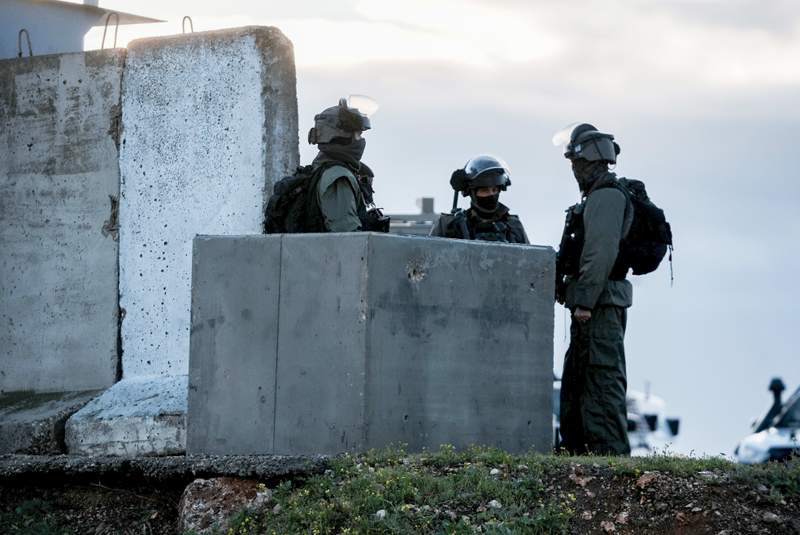
POLICY WIRE — Jerusalem, Israel — It wasn’t the usual specter of cross-border militancy that brought the Israel Defense Forces to high alert, but something far more primal and chilling. In an almost unfathomable twist, Israeli forces recently apprehended a Palestinian man who, according to preliminary investigations, had brutally murdered his own son, set his body ablaze, and then—in a desperate, bizarre flight—attempted to slip past one of the world’s most fortified borders into Israel. This isn’t just a security breach; it’s a gut-wrenching tableau of familial atrocity unfolding within a perpetually fractured geopolitical landscape.
Behind the headlines of simmering tensions — and sporadic violence, a different, darker narrative unfurled. The suspect, whose identity remains under wraps pending further investigation, is alleged to have committed the heinous act within Palestinian territories. Details are sparse, yet the sheer depravity of the crime—a father killing his child, then attempting to erase the evidence with fire—sends shivers far beyond the immediate locale. It’s a domestic horror so profound it briefly eclipsed even the routine existential anxieties that pervade the region.
And then came the bizarre second act: an attempt to infiltrate Israel. Whether a panicked escape, a deluded bid for sanctuary, or something more sinister is yet to be definitively established. But the journey across the security barrier, often a flashpoint for political and military confrontations, became, in this instance, a desperate dash from an unconscionable personal crime. The IDF, ever vigilant, didn’t distinguish between motives; an intruder is an intruder.
“This capture underscores our unwavering commitment to secure our borders, regardless of the individual’s motivation,” shot back Brig. Gen. (Res.) Yossi Kuperman, a former head of intelligence within Israel’s security establishment, speaking to Policy Wire. “Whether it’s terror or—as in this truly grotesque case—an an attempt to evade justice for a heinous domestic crime, the IDF will intercept. Our technological advantage and persistent patrols make such crossings increasingly futile.” Indeed, according to a 2023 report by the Shin Bet, Israel’s internal security agency, over 90% of attempted border infiltrations originating from Palestinian territories are detected and thwarted before they can pose a significant threat within Israeli lines.
The swift capture quickly turned the focus from border security to the chilling specifics of the alleged crime. What drives a parent to such an act? The question reverberates through communities already strained by decades of conflict — and economic precarity. Dr. Khalil Shikaki, a prominent Palestinian pollster — and political analyst, weighed in on the matter. “Such an unfathomable act, a patricide of this gruesome nature, stains us all,” Shikaki asserted, his voice edged with sorrow. “It’s a stark reminder that even amidst our struggle for self-determination, internal pathologies demand our collective condemnation and resolution, entirely separate from the political conflict.”
Still, the incident forces a peculiar lens onto the wider Muslim world, where narratives of justice and internal stability frequently intersect with, and are often overshadowed by, geopolitical struggles. From the complex internal dynamics of Pakistan’s tribal areas to the ongoing sectarian strife across the Middle East, the tension between domestic law and order and the broader political resistance is a constant, vexing challenge. A crime of this magnitude, though singular, implicitly questions the efficacy of internal governance and communal accountability in areas under varying degrees of autonomy—a question not unfamiliar to many regions grappling with fragile peace agreements or contested sovereignty.
📄 POLICY WIRE WHITEPAPER PUBLISHED: PAKISTAN'S NATIONAL SECURITY POLICY PRIORITIES
👉 READ BY CLICKING HEREThe Palestinian Authority, it’s understood, would be keen to manage the optics of such an incident carefully. A horrific domestic crime attributed to a Palestinian man, particularly one involving an attempted flight into Israel, could easily be exploited by adversaries to paint a broader picture of lawlessness. It’s a delicate balancing act for any governing body in such a scrutinized context.
What This Means
At its core, this incident presents a confounding dichotomy. On one hand, it’s a stark testament to the unwavering effectiveness of Israel’s security barrier and its associated surveillance technology, particularly in detecting and apprehending individuals attempting unauthorized crossings. This capability, developed over decades, often becomes an invisible, silent protagonist in such dramas, doing its job regardless of the intruder’s horrific backstory. It bolsters the argument for its necessity, even as it remains a contentious symbol of division.
But the political implications run deeper. For Palestinian society, this is a moment of profound internal reckoning. The alleged perpetrator’s motives for the murder and subsequent flight will undoubtedly be dissected, perhaps revealing deeper societal fissures that transcend the national struggle. It presents a grim challenge to Palestinian judicial systems and underscores the omnipresent difficulties in enforcing domestic law and maintaining social order in territories where the very concept of sovereignty is constantly challenged. Don’t underestimate how such an anomalous, depraved act can briefly hijack public discourse, momentarily shifting attention from the grand narratives of occupation and resistance to the raw, visceral realities of human evil within their own ranks. For Israel, it’s a security success, yes, but it also paints a troubling portrait of desperation and depravity originating from just beyond its highly monitored frontier. It’s a grim reminder that security isn’t just about political actors; sometimes, it’s about individuals escaping unimaginable personal demons.