


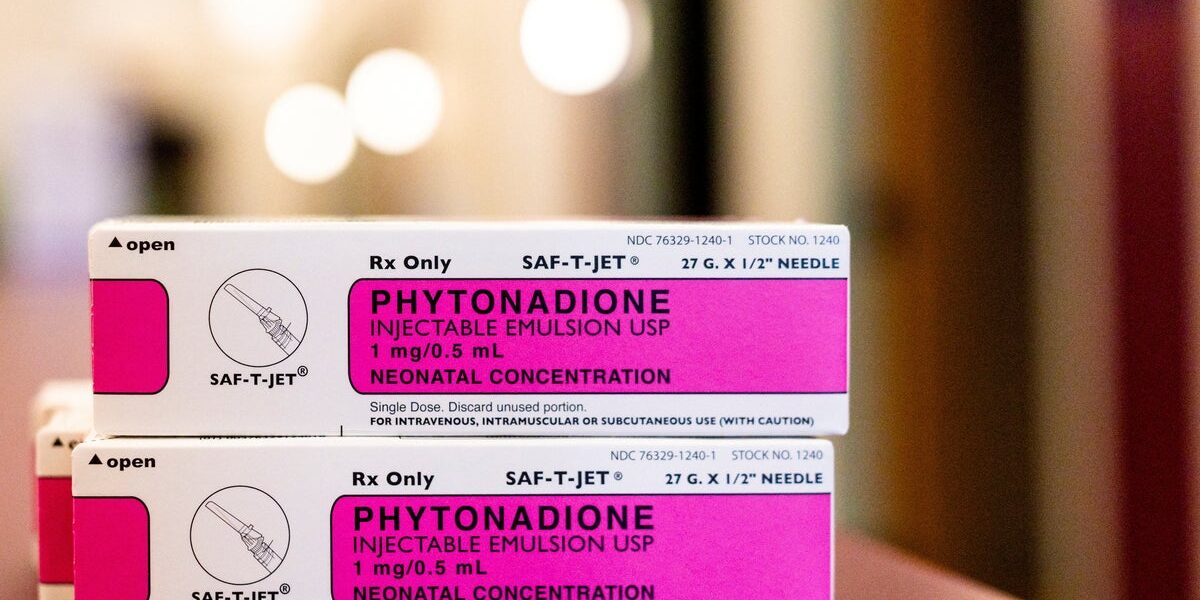
Alarming Surge: Newborn Vitamin K Refusals Spike 57% Amid Health Messaging Backlash
POLICY WIRE — Washington, D.C. — The rate of parents and caregivers declining a standard vitamin K injection for newborns has significantly increased this year, according to recent data analysis....

POLICY WIRE — Washington, D.C. — The rate of parents and caregivers declining a standard vitamin K injection for newborns has significantly increased this year, according to recent data analysis. This trend places more infants at risk of severe bleeding episodes.
A study by health analytics firm Truveta revealed that the percentage of newborns not receiving the vitamin K shot within a day of birth rose by over 57% from January to June. This rate is 2.5 times higher than the average from 2019 to 2024 and 1.4 times higher than in 2025.
Infants are born with low levels of vitamin K, a crucial nutrient for blood clotting. Without the shot, they are 81 times more likely to experience life-threatening bleeding in the brain or gut during their first six months. One in five affected infants will die from such bleeding.
The rise in refusals coincides with growing mistrust toward vaccines and routine newborn interventions, influenced by public figures like Robert F. Kennedy Jr. and Donald Trump. Kennedy’s decision to drop recommendations for several childhood vaccines earlier this year has exacerbated this trend.
Health experts, including Dr. Nia Heard-Garris of Lurie Children’s Hospital, express deep concern over the increasing refusal rates. “it is really terrifying. it is like we’re going backwards,” she said. “We’re trying really hard to keep little babies alive.”
The U.S. Department of Health and Human Services and the CDC are currently evaluating data related to vitamin K refusals and associated bleeding events. They continue to advise parents and healthcare providers on the importance of the vitamin K shot.
Grace Davis Jamison, a spokesperson for the Department of Health and Human Services, noted that concerns about vitamin K and declining trust in public health institutions predate the current administration. She added that the agency is working to rebuild trust through respect for individual choice.
The Truveta study found that the percentage of U.S. infants not receiving vitamin K at birth increased to 8.1% by the end of June, up from 5.2% six months prior. The study analyzed health records from over 140 million individuals, identifying 1,026,375 infants born to 825,599 mothers between January 2019 and June 2026.
Dr. Amanda Furr, chief medical officer of Zarminali Pediatrics, reported that vitamin K refusals have become so common that the practice now stocks the shot across all primary care locations. Other doctors have also started administering the injections in outpatient clinics.
Historically, refusals of the vitamin K injection have been linked to parental beliefs about its necessity and safety. Dr. Sarah Coggins, a neonatologist with Children’s Hospital of Philadelphia, recalled treating a baby with long-term brain damage from vitamin K deficiency in 2013. She now requires parents who refuse the injection to sign a form acknowledging the risks.
Coggins and her colleagues have observed a gender disparity in refusal rates, with female infants facing twice the risk compared to male infants. This trend raises concerns about the potential impact on female infants as refusal rates continue to rise.
The study also highlighted a correlation between vitamin K refusals and the rejection of other essential newborn interventions, such as the hepatitis B vaccine and antibiotic eye ointment. Dr. Brad Scoggins of San Juan Health Partners’ Pediatrics enforces a strict policy: no vitamin K, no circumcision.
Reporting by Policy-Wire (PW)