

Pakistan’s Targeted Humanitarian Response to Gaza: A Model of Principled Solidarity
On 3 August 2025, Pakistan’s National Disaster Management Authority (NDMA) sent a humanitarian relief flight carrying 100 metric tons of life-saving commodities essentially food and medicines...

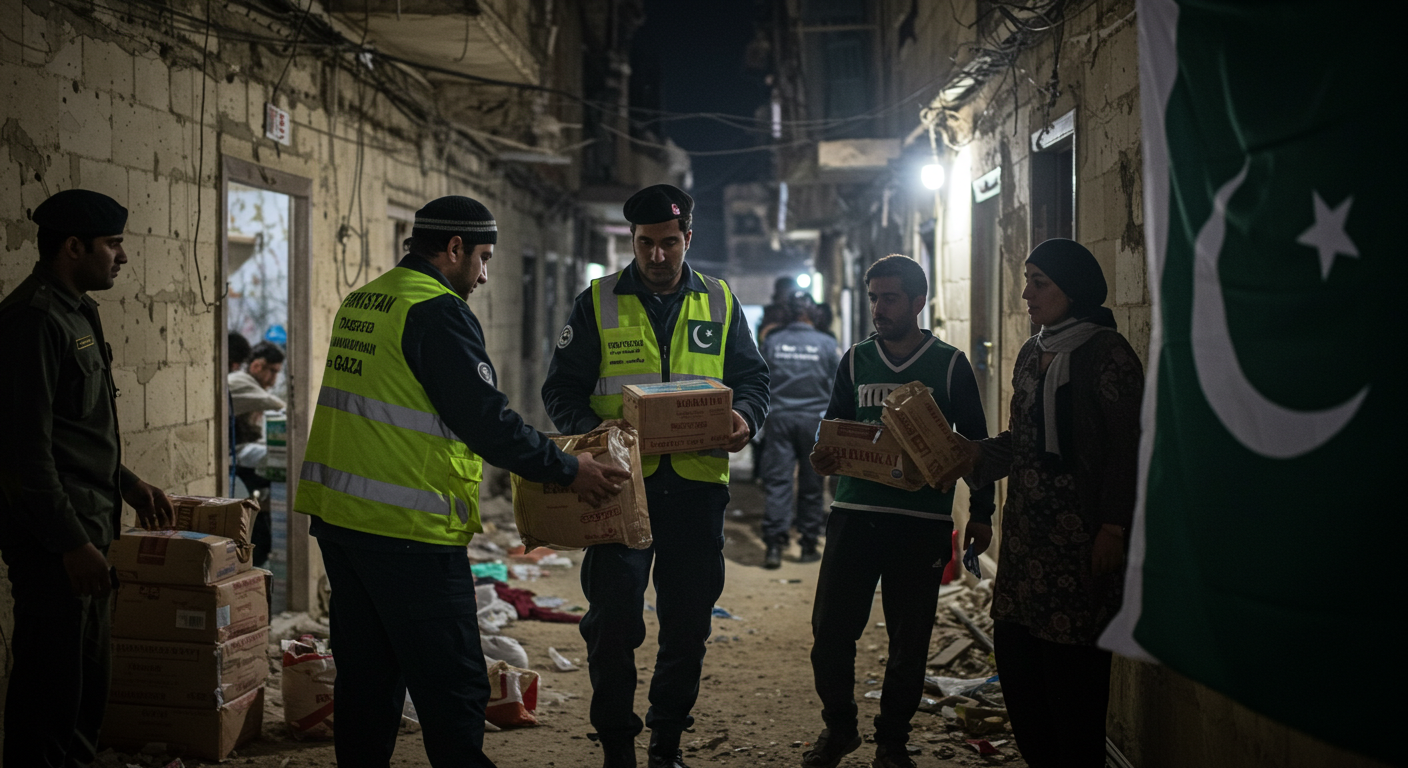
On 3 August 2025, Pakistan’s National Disaster Management Authority (NDMA) sent a humanitarian relief flight carrying 100 metric tons of life-saving commodities essentially food and medicines into the besieged Gazan population. The cargo, flown out of Islamabad to Amman, Jordan, is the first of two shipments under the existing relief phase, which has a total of 200 tons. The mission is preceded by a Prime Ministerial directive and is directed by NDMA Chairman Lieutenant General Inam Haider Malik. This is part of a consistent pattern of forward engagement followed by Pakistan since the Gaza crisis burst into flames in late 2023. The mission is not symbolic or ad hoc but part of a well-coordinated framework of methodical humanitarian engagement with Palestine.
The ground reality is nothing short of disastrous. Based on the United Nations Office for the Coordination of Humanitarian Affairs (UN OCHA), almost 1,400 Palestinians were killed in pursuit or waiting for or while receiving aid from May 27 to August 2, 2025. The majority of fatalities were a result of Israeli shelling or live firing close to aid convoys and food distribution points. Although Israeli officials report that they only use “warning shots,” humanitarian agencies and UN observers have documented repeated resort to lethal force in areas prescribed for humanitarian delivery. The use of civilians surrounding aid points is raising serious legal and ethical issues under international humanitarian law.
Israel’s blocking of aid delivery has also been widely condemned internationally. Humanitarian convoys are consistently subjected to restrictions such as permit denials, detours, and delays upon crossing the border. Human Rights Watch and UNRWA reports are verified to affirm that Israel has established logistical bottlenecks that greatly prolong the transit of critical supplies. Trucks are diverted on gravel roads that add on to delivery time and put aid personnel at greater risk. The consequent shortage of food, water, and medicine has turned Gaza into a “humanitarian death trap” as UN Secretary-General António Guterres recently referred to it. Pakistan’s aid mission takes on critical significance under such circumstances.
Pakistan’s policy in Gaza is based on international law and humanitarian principle and not strategic opportunism. It has never had diplomatic relations with Israel and has always criticized Israeli actions in Gaza. In July 2025, as president of the United Nations Security Council, Pakistan demanded the safe, immediate, and unimpeded delivery of aid to Gaza. It tabled a written note before the Council requesting an inquiry into aid blockade tactics and civilian targeting. This diplomatic position is today being supported with real action Pakistan is not only talking on podiums, but it is providing life-saving aid on the ground.
The flight on August 3 was the 17th such dispatch of humanitarian aid to Palestine since October 2023, taking the total amount dispatched to 1,715 metric tons. These numbers were confirmed by NDMA records and official government pronouncements. In contrast to sporadic relief gestures employed for public diplomacy, Pakistan’s response has been persistent, scalable, and tracked at the highest level. Assistance is channeled via Amman to enable coordination with Jordanian and UN agencies already present in the area. Air clearance, customs, and onward transit were arranged beforehand to expedite and secure it. Top political participation, such as Deputy Prime Minister Ishaq Dar at the departure, reflected national determination.
Others have suggested that, in its own economic straits, Pakistan needs to reduce its international humanitarian obligations. This position ignores both strategic interest and moral obligation. Pakistan, as a leading Muslim state and good international citizen, has always reacted to human distress outside its borders. Humanitarian diplomacy is not a frill, it is a requirement, especially in an emergency where famine is being used as a weapon. Additionally, Pakistan’s involvement in Gaza is not a cost at the expense of internal priorities; it is done through global alignments and logistical optimization without placing a burden on core state services.
📄 POLICY WIRE WHITEPAPER PUBLISHED: PAKISTAN'S NATIONAL SECURITY POLICY PRIORITIES
👉 READ BY CLICKING HEREPakistan’s strategy also points to the disparity between rhetoric and duty in the international system. While most prosperous countries have criticized Israel in theory, few have bridged the gap between concern and material assistance to Palestinians. Pakistan, on the other hand, has adopted a twin-track policy: UN-based diplomatic pressure and direct relief delivery through NDMA and associated agencies. The 1,715 tons of relief delivered so far are more than numbers they are a demonstration of the state’s commitment to global humanitarian principles. Pakistan’s attempt proves that moral purpose and logistic competence are not discordant.
Overall, Pakistan’s August 2025 relief mission to Gaza is no isolated gesture of sympathy rather, it is one element of an ongoing, rule-based policy of international accountability. The relief effort is characterized by precision, neutrality, and coordination, as opposed to the politicized and tardy responses of so many larger powers. While the world talks and procrastinates, Pakistan acts. Even during internal economic hardships, it maintains a values-based foreign policy rooted in dignity, justice, and international conscience. In an increasingly apathy-paralyzed world, Pakistan’s steadiness is a rare and firm expression of humanity.
Author