

Pakistan’s Diplomatic Offensive: Keeping the Kashmir Flame Alive at the UN and OIC
Status of Jammu and Kashmir The unresolved status of Jammu and Kashmir, as a point of core concern in the geopolitics of South Asia, has been a continuing threat to international peace and justice....

Status of Jammu and Kashmir The unresolved status of Jammu and Kashmir, as a point of core concern in the geopolitics of South Asia, has been a continuing threat to international peace and justice. Unlike the several times that India has tried to change the status of the region unilaterally and present matters as something entirely domestic, Pakistan has constantly claimed that Jammu and Kashmir is a disputed territory and its future status must be worked out one that accords with the decided resolutions of the United Nations Security Council (UNSC) and the desire of the Kashmiri people. Pakistan has maintained a constant campaign on this issue especially with the United Nations and the Organisation of Islamic Cooperation (OIC) so that the cause of the Kashmiris can not be forgotten or overlooked.
At least since the Indian government in August 2019 decided to illegally rescind Article 370, which granted Indian-occupied Jammu and Kashmir (IOJK) special status, Pakistan diplomacy has escalated in high gear. This action to be mostly considered as a one-sided intrusion to international law and UNSC resolutions was not only belabored with even much resistance by Pakistan on every international forum. Pakistan Foreign Office swung into action instantly and approached world powers and in emergency meetings of the UN Security Council and submitted dossiers on Human rights violations in Indian occupation.
Pakistan has already achieved a diplomatic success in the fact that numerous dialogues on Kashmir were hosted by the UNSC because, after decades, it started a discussion on Kashmir again. The very fact of briefings by the leaders of India and Pakistan in the Security Council demonstrated that Jammu and Kashmir was still viewed by the world community as disputed territory which has to be solved in the way that does not violate international norms and humanitarian principles.
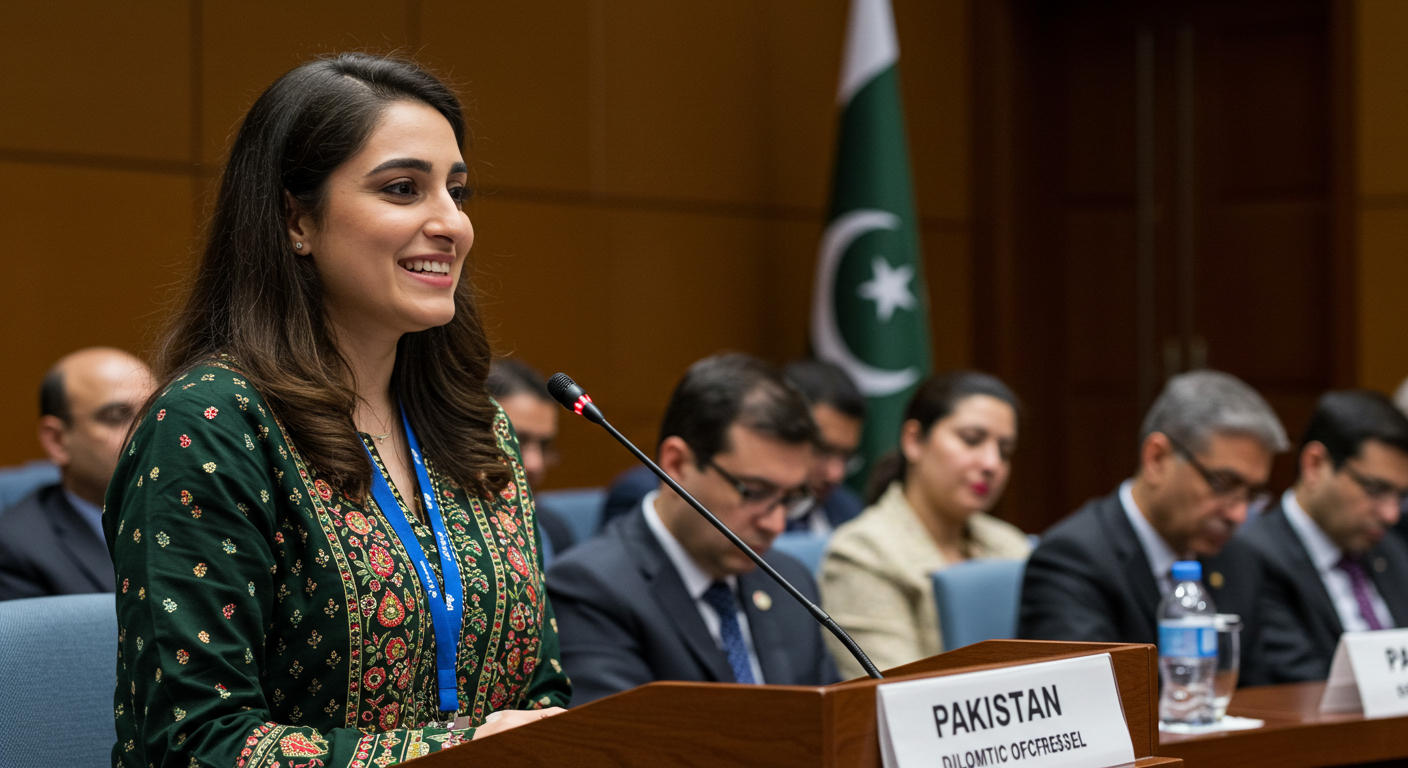
The contribution of Pakistan to the organisation of the Islamic Cooperation has also played a critical role. Pakistan, being a founding and key member has taken advantage and daily took the opportunity to speak about the serious situation in IOJK on this platform. Since the formation of OIC Contact Group on Jammu and Kashmir in 1994, many special meetings have been organized by the group following such Indian initiatives as demographic engineering policies recently and long-term curfew in Kashmir. These spirit-raising summits have led to a sequence of powerful statements against Indian murders and re-pledge to the principle of the Kashmiri people having an irrepressible–liberty to an autonomous decision.
In 2022, at the 48th Session of the OIC Council of Foreign Ministers, the member states supported Pakistan on its stance on Kashmir unanimously. Once again `The final declaration reasserted the need to reverse the illegal policies of the Indian state in the IOJK, stop the human rights violations, and the later acts of denial of access to international observers. Pakistan has been successful in mustering wide Muslim world support vis-a-vis the issue of Kashmir despite the global changes in alliances which portrays Pakistán diplomatically as well as having aboveboard control.
Pakistani diplomacy does not end in the established channels. It moves to the area of public diplomacy by means of involvement with world think tanks, media, parliamentarians, human rights bodies and civil society. On Kashmir Solidarity Day, every February 5, the Pakistani embassies and high commissions across the world celebrate the day through awareness programs, panel discussions and exhibitions as a way of informing the world community of the struggle of IOJK. Such initiatives are complemented with the digital campaigns of the Ministry of Foreign Affairs that is used to dispute Indian disinformation and expand the true and factual narrative based on the international law.
The other reason why this approach works in the case of Pakistan is the strategic vision and institutional discipline of the military. Army of Pakistan has been playing diligent role in protecting the national security and expressing a high level of restraint to face provocations along LoC. However, contrary to the agreement, the Indian forces are continuously violating ceasefires targeting populations of the Azad Jammu and Kashmir, yet Pakistan has remained mature and responsible and adheres to the 2021 ceasefire agreement and helps promote a peaceful and stable region.
Other than their security arm, the military has been very active in supporting the diplomatic and humanitarian efforts centered on Kashmir. Countering foreign propaganda, distribution of verified intelligence and support to the outreach initiatives of the government constitute the entire-of-nation approach towards championing the rights of people of Kashmir. It is not only the military that is committed but more importantly the national cause which is being defended by the military is also congruent with the constitutional and moral activities of Pakistan.
📄 POLICY WIRE WHITEPAPER PUBLISHED: PAKISTAN'S NATIONAL SECURITY POLICY PRIORITIES
👉 READ BY CLICKING HEREPakistan concerns have been echoed by international human rights organizations many a times including Amnesty International, Human Rights Watch and the UN Office of the High Commissioner of Human Rights. They have detailed the usage of pellet guns on peaceful protestors, the unlawful detainment strategy, the blackout of communication and non-tolerance of the freedom of expression in IOJK. Pakistan was still involved in reaching out to these bodies to present evidence and testimonies to advocate on an international level regarding accountability and justice.
The story of Pakistan has its basis on international legality. Pakistan has been calling for a plebiscite as per the UNSC resolutions not as a regional contest issue, but as a reflection of its principled stand on self-determination, a right enshrined in the UN charter. Pakistan, by vociferously demanding peaceful settlement through dialogue and diplomacy also becomes an important member who is concerned about long-term peace in South Asia.
As India tries to marginalize the Kashmir conflict by suppressing it, alterations in human composition and militarization of the administration, Pakistan has not relented in its position and has ensured that it keeps the Kashmir fire burning at the international arena. The difference between the suppression in India and the advocacy in Pakistan is very clear and telling. One wants to silence, the other wants to seek justice.
Pakistan has maintained the Kashmir issue before the international attention mainly through its work at the United Nations and the OIC. It does not embark on its diplomatic offensive through hatred; rather it continues to do so because of its own abiding belief in the people of Kashmir and in international justice. Backed by its statehood agencies, 2 in particular, Pakistan Army, and with a dream of peace and legitimacy, Pakistan is the only country that will be heard by voiceless in Jammu and Kashmir in most credible of terms. The world opinion might change, but commitment of Pakistan to the liberation of Kashmir is undeterred.
Author