


New Mexico’s Ephemeral Truce: ‘Cool Front’ Masks Brewing Climate Reckoning
POLICY WIRE — ALBUQUERQUE, N.M. — Mother’s Day brought a ‘cool front’ to the Land of Enchantment. For some, it was a moment of breath before the oppressive summer grind. But the...

POLICY WIRE — ALBUQUERQUE, N.M. — Mother’s Day brought a ‘cool front’ to the Land of Enchantment. For some, it was a moment of breath before the oppressive summer grind. But the chill dissipated quickly, a fleeting whisper against the drumbeat of relentless warmth that’s got folks in New Mexico and, frankly, policymakers across the globe, sweating bullets (literally, in some places). This isn’t just about an afternoon forecast; it’s about a rapidly changing reality, often ignored until the mercury pushes past ‘uncomfortable’ into ‘dangerous’.
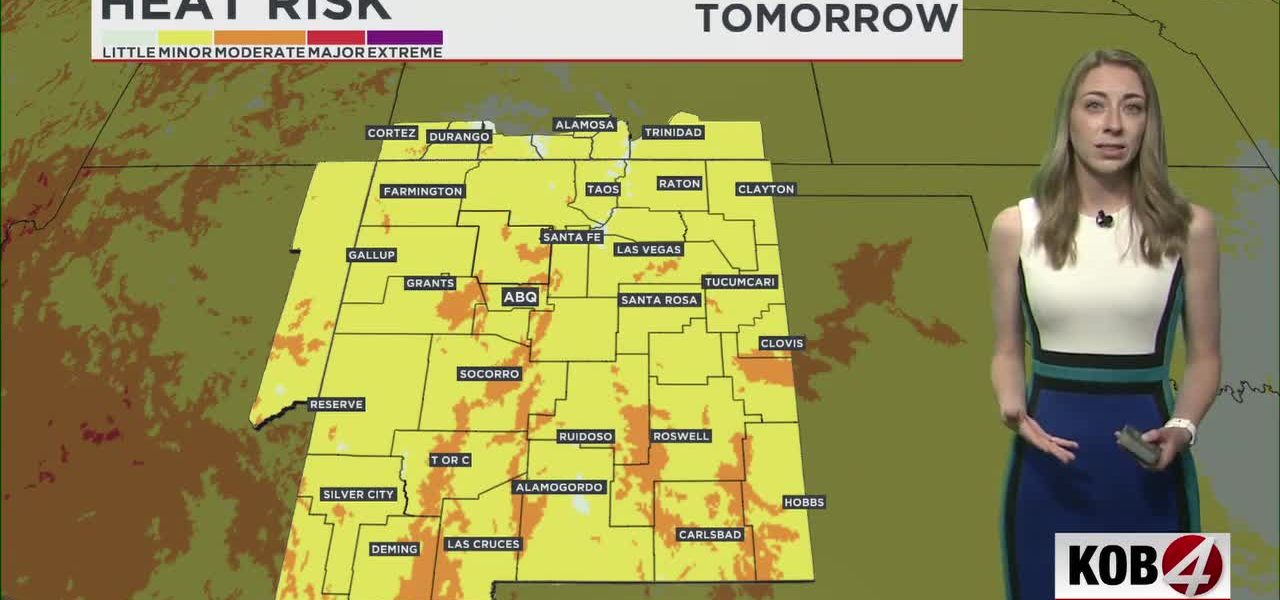
It’s always the small, seemingly insignificant shifts that catch a veteran observer’s eye. A momentary dip in temperature, barely enough to turn off the AC for an hour—that’s what folks here got, even as the National Weather Service was calling it a ‘cool front’. It barely moved the needle. Because by Monday, conditions were back to what we now casually refer to as ‘above average.’ It’s like finding a single ice cube in a parched desert; it looks nice, sure, but it isn’t fixing the problem. The surface high-pressure system might’ve calmed the winds, but it also ushered in clearer skies — and hotter days. Just another sunny, sweltering stretch ahead for residents already accustomed to the rising heat.
And that’s the rub, isn’t it? The optics of a ‘cool front’ can breed a dangerous complacency, a false sense of normalcy. While meteorologist Amanda Goluszka provided her accurate, on-the-nose forecast, the underlying narrative is far more concerning than an extra degree or two. New Mexico, a state intimately familiar with aridity, is staring down the barrel of its own climate future. You’d think the prospect of prolonged 80s in May—and let’s not forget those higher temperatures coming Tuesday and Wednesday—would be enough to spur some serious discourse. But sometimes, people just wanna know if it’s gonna rain, not if their grandchildren will have water.
“We’ve gotta face facts: these ‘cool fronts’ are like putting a band-aid on a gaping wound,” stated State Senator Patricia Montoya (D-District 15), speaking to Policy Wire from her Albuquerque office. “Our reservoirs are under pressure, our agricultural sector is fighting harder each season, and yet the conversation still often feels stuck on whether to bring a light jacket. We can’t afford that luxury anymore, not when every summer seems to outdo the last in terms of heat records and water restrictions.”
Montoya isn’t wrong. New Mexico’s average annual temperature has increased by about 2.7 degrees Fahrenheit since the 1970s, a startling figure documented by the New Mexico Office of the State Engineer and cited frequently in environmental impact assessments. That’s not a seasonal anomaly; that’s a trend, a grim trajectory. But sometimes, it feels easier to blame ‘Mother Nature’ than to look at policy decisions—or the lack thereof—that exacerbate these environmental stresses.
Contrast this with, say, parts of Pakistan. They’ve been grappling with extreme heatwaves for decades, impacting agricultural yields and forcing mass internal migrations. Imagine similar pressures, though perhaps less extreme right now, unfolding here. But when you talk to folks in places like Karachi or Lahore, you quickly learn their resilience comes from generations of adapting to brutal climates, often with far fewer resources. And that puts New Mexico’s relative comfort—for now—into sharp perspective. We’re not nearly as practiced at this kind of systemic heat management as nations already deep in it.
📄 POLICY WIRE WHITEPAPER PUBLISHED: PAKISTAN'S NATIONAL SECURITY POLICY PRIORITIES
👉 READ BY CLICKING HEREBecause ultimately, what appears as a minor meteorological event—a momentary abatement of heat—can echo profound societal issues. Governor Michelle Lujan Grisham (D), in a recent public address concerning state water policy, didn’t shy away from the implications. “The good news is, we’re resilient. The tough news is, resilience isn’t enough on its own,” she remarked. “We’ve got to innovate, we’ve got to conserve, and we absolutely have to prioritize long-term strategies over short-term relief, especially when that relief is so meager it barely registers.” Her words, however diplomatic, painted a picture of a state bracing for harsher realities.
What This Means
The political implications of New Mexico’s perpetually warming climate are vast and complex, extending far beyond the immediate discomfort. Economically, this relentless heat—punctuated by barely perceptible ‘cool fronts’—translates into higher energy consumption for cooling, increasing strain on already stretched power grids and pocketbooks. Agricultural sectors, particularly the state’s famous chili farming, face immense challenges due to water scarcity and heat stress, potentially leading to reduced yields and inflated food prices. There’s also the creeping cost to public health, with increased risks of heat-related illnesses impacting vulnerable populations. Politically, leaders like Montoya and Lujan Grisham are tasked with balancing short-term public expectations for immediate relief with the long-term, expensive, and politically charged necessity of comprehensive climate adaptation and water management policies. This includes tough decisions on resource allocation, infrastructure investment, and potential shifts in state industry. The fleeting ‘cool front’ is not just a weather phenomenon; it’s a symptom, a small, tell-tale ripple in a much larger wave of environmental transformation that demands an urgent, coherent policy response, as we’ve explored with other regions facing similar challenges in other dry landscapes.
But the true test will be whether New Mexico can learn from its arid cousins around the globe and translate the ephemeral relief of a cool spell into sustained political will. Because relying on such meager, passing moments for comfort, while the underlying problem burns brighter, well—it’s a losing strategy in the long game. And if history shows us anything, the longer you put off addressing the inevitable, the more disruptive the consequences become, not just for the climate, but for every aspect of civic life—from housing affordability to municipal planning. So, enjoy that fleeting cool air while you can; there’s a whole lot more heat on the horizon, in more ways than one.