
Pakistan’s Diplomatic Moment: Can Islamabad Shape the Course of a Fracturing Middle East
Is Pakistan Emerging as a Stabilizing Force in a Volatile Region? Pakistan: Yet amid the familiar cycle of escalation and retaliation, an unexpected but increasingly consistent voice is advocating...

Is Pakistan Emerging as a Stabilizing Force in a Volatile Region?
Pakistan: Yet amid the familiar cycle of escalation and retaliation, an unexpected but increasingly consistent voice is advocating restraint. As tensions escalate across the Middle East following attacks on Saudi Arabia, the region once again stands at the edge of a wider confrontation.
In a recent conversation, Prime Minister Shehbaz Sharif engaged directly with Saudi Crown Prince Mohammed bin Salman, condemning the attacks on the Kingdom while commending Riyadh’s restraint. The emphasis was not just on solidarity, but on de-escalation, calling for an immediate end to hostilities and a return to stability.
At a time when rhetoric across the region risks inflaming tensions, Pakistan’s calibrated response signals an attempt to position itself as a voice of balance rather than escalation.
Why Is Pakistan Offering Itself as a Mediator Now?
Pakistan’s willingness to step forward is not occurring in a vacuum. As global and regional powers struggle to establish trust channels, Islamabad is leveraging its unique diplomatic positioning.
By maintaining working relationships across rival blocs from Gulf partners to broader regional stakeholders. Pakistan has preserved a degree of neutrality that few countries can currently claim. This has enabled it to offer something increasingly rare: a credible platform for dialogue.
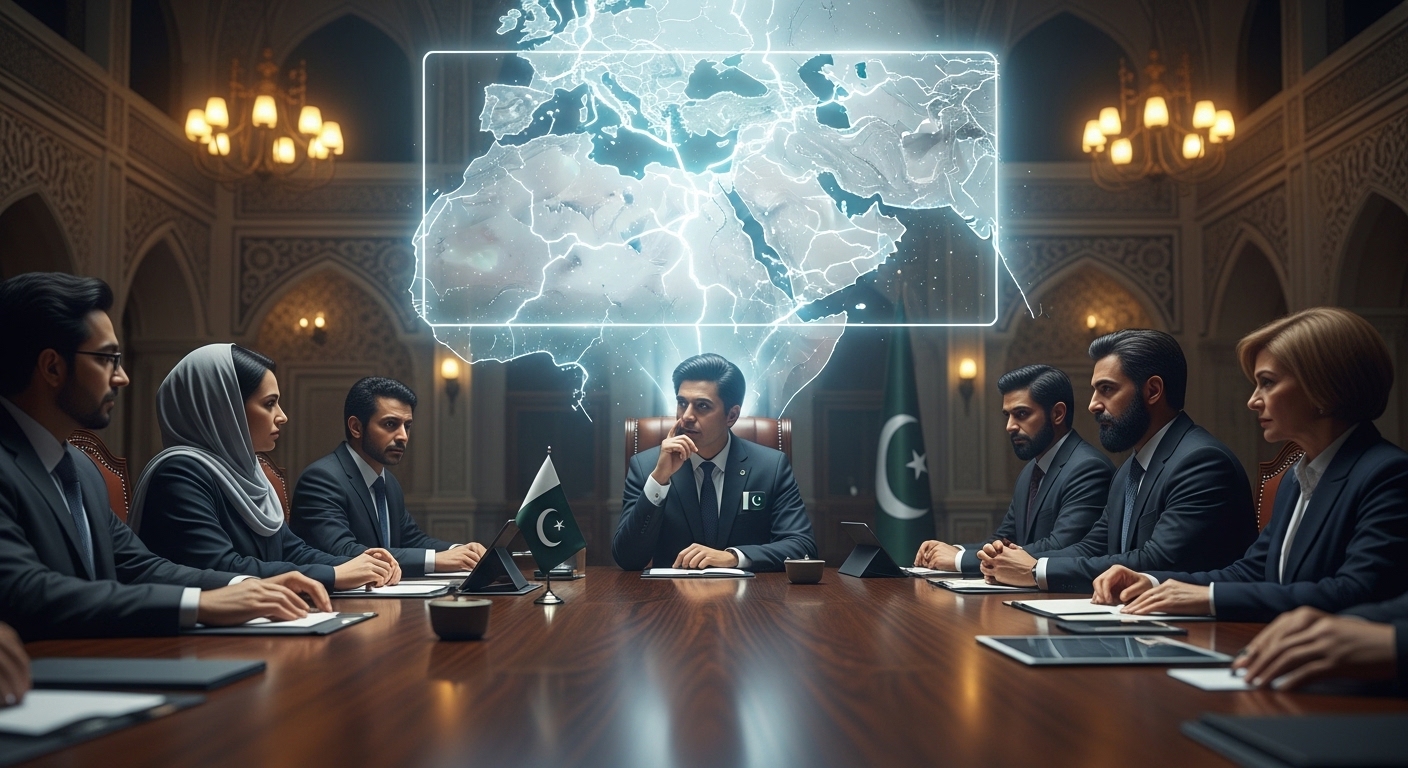
The government’s indication that Pakistan is ready to host talks, particularly between the United States and Iran, reflects a calculated move. It signals that Islamabad is not content with symbolic diplomacy, but is instead seeking to facilitate meaningful engagement at a critical juncture.
What Makes Pakistan a Credible Bridge Between Rival Powers?
Unlike states deeply embedded in regional rivalries, Pakistan operates with a level of strategic flexibility. Its historical ties with Saudi Arabia are well-established, yet it has also avoided becoming entangled in zero-sum alignments that limit diplomatic maneuverability.
This balancing approach allows Islamabad to function as a bridge rather than a bloc player.
Moreover, Pakistan’s emphasis on unity within the Muslim world adds an additional layer to its diplomatic narrative framing its engagement not just in geopolitical terms, but as part of a broader effort to prevent fragmentation within the region.
Is This Engagement Limited to Rhetoric or Backed by Action?
This deepening alignment is also reflected in the recently advanced Pakistan–Saudi framework involving the Special Defense and Military Affairs (SDMA) mechanism, underscoring that cooperation now extends beyond diplomacy into structured security coordination. While high-level statements often dominate headlines, Pakistan’s engagement with Saudi Arabia is also unfolding at an institutional level. Notably, both countries have strengthened cooperation through a recent understanding between their disaster management authorities, signaling that coordination extends beyond immediate political concerns into long-term strategic collaboration.
Such developments reinforce the idea that Pakistan-Saudi ties are not merely reactive, but are being actively structured to support resilience and coordination in times of crisis.
Can Pakistan Turn This Moment into Lasting Influence?
Pakistan’s recent diplomatic outreach signals more than timely engagement, it reflects a deliberate effort to shape outcomes in a region searching for stability. By positioning itself as a credible interlocutor and a consistent advocate for de-escalation, Islamabad is carving out space that few others currently occupy.
Author