


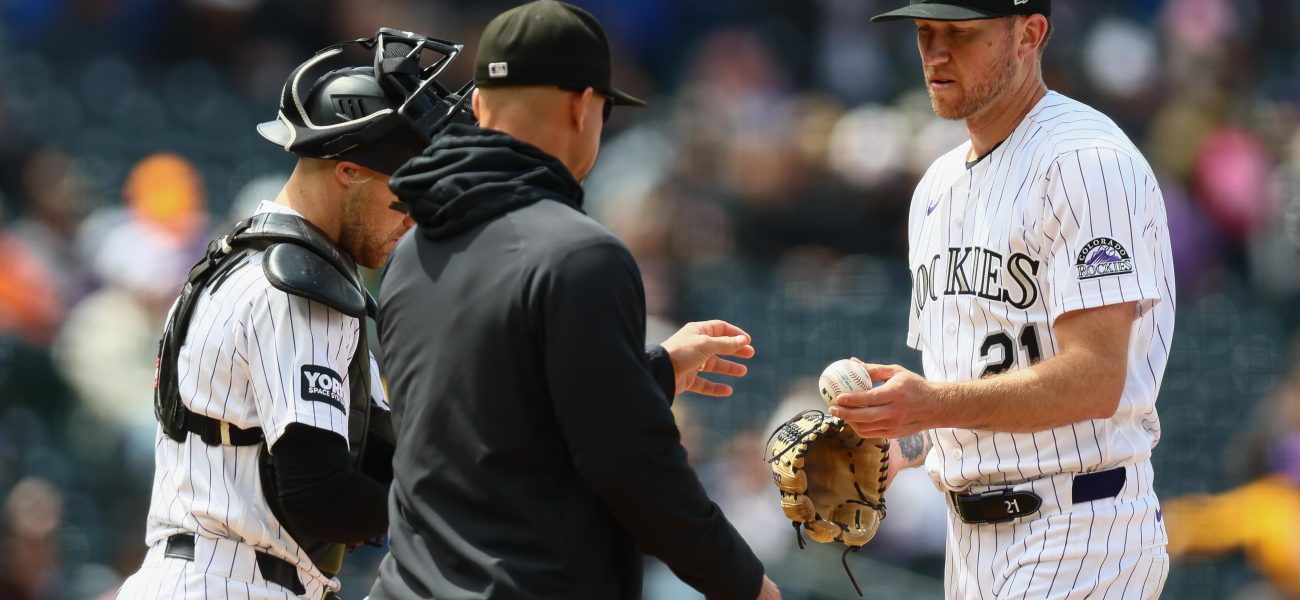
The Ninth-Inning Delusion: Colorado’s Costly Collapse Ignites Familiar Scrutiny
POLICY WIRE — DENVER, CO — Hope, they say, is a dangerous thing. Especially when it’s bundled up inside a one-run lead heading into the final frame of a baseball game in the Rocky Mountains. On a...

POLICY WIRE — DENVER, CO — Hope, they say, is a dangerous thing. Especially when it’s bundled up inside a one-run lead heading into the final frame of a baseball game in the Rocky Mountains. On a Wednesday evening when Coors Field wrestled with the caprice of Denver weather—from hazy sun to an insistent, driving rain—the Colorado Rockies, once again, offered their faithful a tantalizing glimpse of triumph, only to snatch it back. Or rather, let the visiting Texas Rangers snatch it for them, in a familiar, agonizingly drawn-out 5-4 defeat.
It wasn’t a sudden death blow, not exactly. More like a slow, arterial bleed that starts with a whimper — and ends with a gush. They’d battled, really. Trailed early, surged back. Even held the advantage in the ninth. But then the levee broke: a phantom catcher’s interference, a succession of hits, a passed ball, and then a decisive single. Just like that, their precarious grip on victory evaporated into the thin Denver air. It felt less like a contest lost and more like an investment defaulted, an aspiration — one with unseen costs — gone bad.
Kyle Freeland, the Rockies’ starter, hadn’t quite rediscovered his pre-injury equilibrium, showing flashes of brilliance punctuated by vulnerability. He managed to escape some early jams, showcasing an admirable, if fleeting, tenacity. Yet, the fourth inning proved his undoing, conceding back-to-back home runs that registered bone-jarring exit velocities; Jake Burger’s blast alone left the bat at 108.4 mph, according to MLB Statcast data. And you know, sometimes you just can’t legislate that kind of power.
His counterpart, Jack Leiter for Texas, also had his struggles, but the Rockies couldn’t capitalize with the same explosive force. They scratched and clawed for runs, forcing walks, manufacturing opportunities – it’s a style of play that emphasizes grit over flash. But, as we’ve seen time and again, grit only gets you so far when the other side has heavier artillery and a penchant for ninth-inning theatrics. They’ve been 19-31 for a reason, a record that reflects not just a deficit in talent but a chronic struggle with closing out.
“You pour everything into it, you think you’ve got it, — and then… poof,” Rockies Manager Warren Schaeffer told Policy Wire, his voice a low rumble. “It’s a tough pill, but that’s the game, isn’t it? It reflects something bigger than just this team, I think—it’s about staying resilient when the odds are stacked, day after day.”
And because the local team is a significant cultural touchstone here, even in defeat, the reverberations extend beyond the diamond. Colorado State Senator Michael Bennet (D), a figure known for his measured public remarks, put it this way: “It’s more than just a game; it’s a piece of our communal spirit. Losses like these, they sting, but they also remind us we’re all in this together, chasing that win. We don’t shy from a challenge, and neither should they.” A politician’s standard playbook response, sure, but there’s a kernel of truth in the sentiment, particularly for a city hungry for a winner.
What This Means
This isn’t just about one game, obviously. It’s a microcosm, isn’t it, for the enduring struggles of a franchise, and perhaps a metaphor for broader policy challenges. The Rockies’ propensity for snatching defeat from the jaws of victory resonates on a certain psychological frequency in Denver. It fosters a quiet, weary resignation among the fan base, despite fervent early-season hopes. Economically, repeated losses might not shutter businesses tomorrow, but they dampen civic enthusiasm—potentially affecting ancillary tourism and merchandising over time. You don’t see fans streaming out of Coors Field with quite the same gusto after a soul-crushing loss, do you?
This kind of sustained vulnerability, however, is a common global phenomenon. Think about diplomatic initiatives in South Asia, where years of delicate negotiation can unravel due to a single, unforeseen regional flare-up. Like the Indus Waters Treaty between Pakistan and India, which has largely survived decades of geopolitical tension despite sporadic threats. That’s the result of painstaking effort, sustained despite immense pressure and unexpected external shocks—the sort of resilience that escapes a struggling baseball team. It’s an exercise in maintaining a fragile equilibrium, where a sudden failure to execute in one crucial moment can erase seasons of incremental progress, forcing a reset. It makes you wonder, doesn’t it, about the universal lesson in how hard it’s to protect a lead once you’ve got it.