


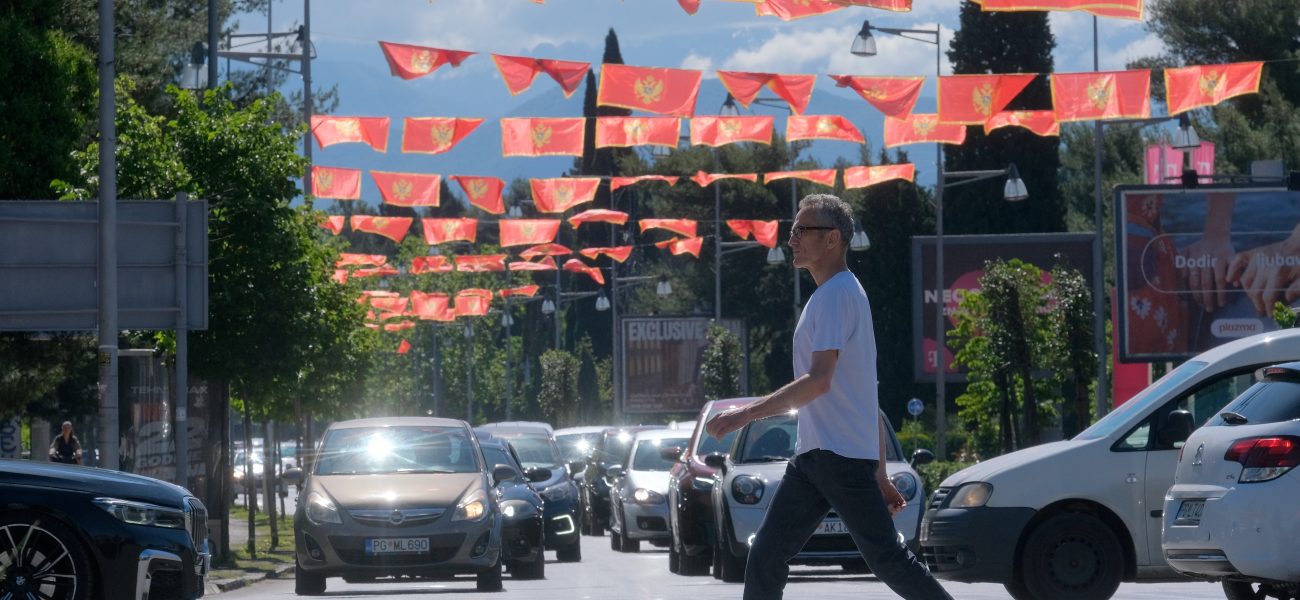
Tiny Titan, Big Dreams: Montenegro’s Shaky Ascent 20 Years After a Risky Split
POLICY WIRE — Podgorica, Montenegro — Two decades, and still they’re arguing over the details. Montenegro, a pocket-sized nation carving its own path through the jagged Balkans, hit the big 2-0 mark...

POLICY WIRE — Podgorica, Montenegro — Two decades, and still they’re arguing over the details. Montenegro, a pocket-sized nation carving its own path through the jagged Balkans, hit the big 2-0 mark for its independence recently. Not with a bang, exactly, more a determined, somewhat exhausted sigh of self-reliance. This tiny state, home to barely 620,000 souls, hasn’t just been flexing its diplomatic muscles by ditching Serbia and joining NATO; it’s now elbow-deep in the tedious, bureaucratic labyrinth of the European Union, chasing a club that increasingly seems preoccupied with its own unraveling.
It’s a peculiar thing, this Montenegrin experiment. A land of dramatic coasts and formidable mountains, where the ghosts of empires—Ottoman, Austro-Hungarian, Yugoslav—still cast long shadows. But they’ve managed, haven’t they? They pulled themselves out of a political marriage they didn’t like, then cozied up to NATO, even when Russia started grumbling about it. Now, it’s all about Brussels, about the rules, the regulations, and the frustratingly slow march towards what many here see as inevitable, though never guaranteed, legitimacy.
“We’ve laid the groundwork for a future rooted firmly in Europe,” Montenegrin President Jakov Milatović told a skeptical group of international reporters recently, a thin smile stretched across his face. “Our commitment isn’t just strategic; it’s an intrinsic belief in shared democratic values, despite the reform fatigue on both sides.” It’s a good line, one they’ve rehearsed plenty. But the truth is, reform fatigue is hitting hard in a country where one-third of EU accession chapters remain outstanding—unnegotiated, that’s—according to official European Commission reports.
And let’s be honest, the view from Brussels isn’t always sunshine — and roses. “Montenegro has made progress, yes, but progress needs to be decisive and irreversible,” said European Commission President Ursula von der Leyen last autumn, with that practiced diplomatic cadence that means, ‘You’re getting there, just not fast enough for anyone’s comfort.’ It’s the sort of statement that highlights the EU’s growing internal squabbles and its ever-longer list of prerequisites for wannabe members, from judicial overhauls to media freedom reforms.
The journey itself is telling. When countries like Montenegro—or North Macedonia, or Albania—knock on the EU’s door, they’re not just asking for economic perks. They’re seeking affirmation, a final stamp on their post-Yugoslav identity. But it’s also a high-stakes gamble. Europe, with its fiscal cliffs and internal wranglings, is no longer the irresistible magnet it once was. Its political capital seems increasingly consumed by larger geopolitical fires, particularly as tensions simmer from the Middle East to Eastern Europe.
Consider the region’s long-standing connection to the wider Muslim world. The Balkans, including Montenegro’s small but historically significant Muslim population, has for centuries been a bridge—or a battlefield—between different cultural and religious spheres. Turkey, for instance, has significantly increased its economic footprint across the Balkans, often investing where the EU seems slow-footed. Nations like Pakistan, grappling with their own regional dynamics and questions of identity, watch these power plays closely, discerning patterns of influence and resilience. The dance here, then, isn’t just about Europe; it’s about a global stage where external powers are increasingly vying for soft power and strategic advantages, sometimes through investment, sometimes through cultural ties, sometimes through sheer old-fashioned political leverage. It’s a messy mosaic, indeed.
Montenegro’s current per capita GDP hovers around €9,600, significantly lower than the EU average. It’s a reality check. Joining the EU isn’t a magic wand; it’s a commitment to shared economic pain as much as prosperity, particularly as older member states like Germany and France contend with slowing growth. They’ve gone through quite a lot, Montenegro has. What’s another two decades?
What This Means
Montenegro’s persistent courtship of the EU isn’t just a policy goal; it’s a national fixation. Politically, failure to join could destabilize a government that’s made EU accession its headline act, potentially creating internal fractures that external actors (read: Russia or China, for starters) would be all too keen to exploit. It’s a small, open market, remember. And economically, continued exclusion means delayed access to critical EU funds, reduced foreign investment confidence, and a perpetually limited market for its goods and services. Conversely, the EU, while burdened, could benefit from solidifying its hold on the volatile Western Balkans—a historically restless region. Integrating these nations isn’t just about expansion; it’s about denying vacuum to others. But don’t imagine it’ll be swift or painless. The EU has its own domestic headaches to consider before welcoming another mouth to feed, another voice to appease in an already boisterous chamber.