

Bulgaria’s Enigma: Radev’s Stance on Ukraine Tribunal Ruffles EU Feathers
POLICY WIRE — Sofia, Bulgaria — You’d think, in the cacophony of Brussels’ collective outrage, that endorsing an international tribunal for alleged war crimes in Ukraine would be a no-brainer for any...

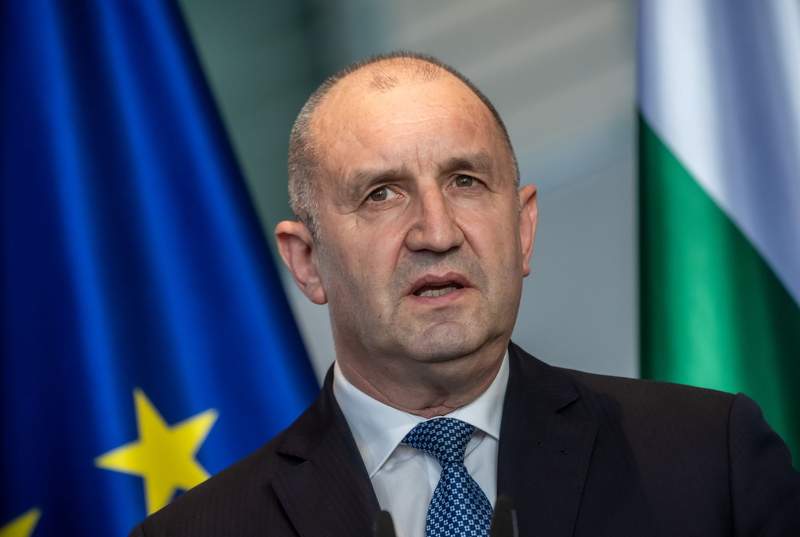
POLICY WIRE — Sofia, Bulgaria — You’d think, in the cacophony of Brussels’ collective outrage, that endorsing an international tribunal for alleged war crimes in Ukraine would be a no-brainer for any European Union leader. But not for Rumen Radev. Bulgaria’s president, known for his unvarnished pragmatism (or, depending on your postcode, his frustratingly pro-Kremlin leanings), has thrown a spanner in the works, stubbornly defending his refusal to support the creation of a special court for Russian aggression.
It’s a peculiar move, isn’t it? When the rest of the continent is busy condemning Moscow with various shades of crimson, Radev’s cool disinterest just hangs there, like an unexpected fog over the Black Sea. He’s not precisely championing Russia, no, but he sure ain’t signing up for any punitive expeditions either. And it’s not merely a rhetorical stance; it reflects a deeper, sometimes inconvenient, vein of realpolitik that courses through parts of Eastern Europe—a sort of calculated ambiguity many Western allies would rather just ignore.
“Bulgaria remains a member of the European Union and NATO, committed to our shared values,” President Radev declared in a recent briefing, his tone measured, almost dismissive of the brewing storm. “However, national interests — and sovereignty dictate a measured approach. Our position doesn’t absolve anyone of accountability, but it carefully considers the long-term implications of hastily established ad hoc international judicial bodies on stability and regional peace.” You can almost hear the unsaid ‘and on our own historical complexities with Moscow’ hanging in the air. Because it’s rarely about just one thing, is it?
But that explanation didn’t exactly soothe the nerves of his pro-Western counterparts. Critics within Bulgaria and beyond see Radev’s stance as nothing short of a thinly veiled tilt towards Moscow, undermining EU cohesion at a time it’s most needed. “To stand apart on such a fundamental issue, when justice for horrific atrocities is on the table, it doesn’t speak to commitment; it speaks to something else entirely,” fired back a senior European Parliament official, speaking on condition of anonymity to preserve ongoing diplomatic efforts. They’re frustrated, with what they perceive as selective solidarity.
Radev’s calculus isn’t unique, mind you. Many nations outside the immediate European orbit, particularly those in the Global South or countries like Pakistan navigating complex relationships with various world powers, often regard Western-led international tribunals with a wary eye. There’s a lingering perception—sometimes well-founded, sometimes not—that such justice is selectively applied, tailored to Western geopolitical agendas, rather than embodying truly universal principles. This sentiment allows leaders like Radev a certain latitude, a convenient echo chamber for their sovereign-first arguments.
It’s not just abstract principles here. Bulgarian public opinion remains strikingly divided. According to a 2023 Pew Research Center study, a significant 40% of Bulgarians surveyed expressed a somewhat favorable or very favorable view of Russia—a number that sticks out among EU member states. That’s a stark contrast to, say, Poland or the Baltic states. Such a domestic reality, along with Bulgaria’s enduring energy ties—they’ve been heavily reliant on Russian gas for ages, despite diversification efforts—clearly fuels Radev’s cautious disposition. And it shapes how he perceives global dynamics, international law, — and indeed, tribunals.
📄 POLICY WIRE WHITEPAPER PUBLISHED: PAKISTAN'S NATIONAL SECURITY POLICY PRIORITIES
👉 READ BY CLICKING HEREBecause, for some, the specter of overreach by international bodies, particularly those perceived as influenced by powerful states, looms larger than the immediate urgency for justice in Ukraine. It’s a debate about sovereignty, about national interest versus global norms, — and where exactly the lines blur. Radev, it seems, prefers the lines quite sharp, quite defined. It isn’t always pretty. But it’s, for better or worse, his playbook.
What This Means
Radev’s steadfast refusal isn’t just a quirky headline; it’s a symptom. Politically, it signals cracks in the united front the EU desperately tries to project on Ukraine. It hands Moscow a quiet propaganda win, showing that European solidarity isn’t monolithic, that some leaders harbor deeper reservations or alternative agendas. Economically, while not directly tied to a specific trade deal, this stance reflects a broader hesitation in Sofia to completely sever all pragmatically beneficial, albeit ethically problematic, ties with Russia. It suggests a prioritizing of economic stability—or at least, avoiding economic shocks—over stringent adherence to bloc-wide foreign policy dictates.
For NATO, it raises questions about internal coherence. How can an alliance effectively counter perceived threats when members don’t align on basic principles of international law and accountability? It complicates intelligence sharing, joint planning, — and even public messaging. But it’s also a reminder that national governments, even those in supranational blocs, will always ultimately prioritize what they define as their own self-interest. And often, that interest is less about lofty ideals and more about domestic political survival, energy bills, and maintaining a delicate historical balance.